


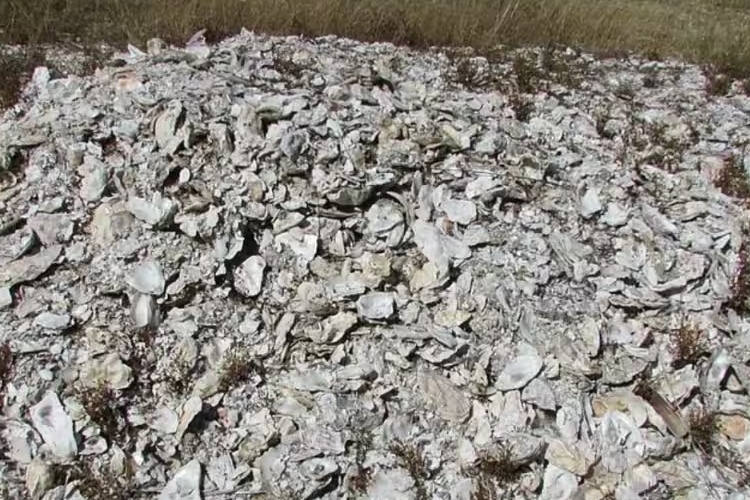
Gambiaj.com – (BANJUL, The Gambia) – Discarded oyster shells could soon find a new purpose on Gambian farms as researchers investigate whether the calcium-rich waste can help neutralize highly acidic soils and improve conditions for growing groundnuts.
Instead of being dumped after oyster meat is removed, the shells can be crushed into a fine powder and incorporated into farmland, where their high calcium carbonate content works in a similar way to agricultural lime.
The approach is attracting growing interest in The Gambia, where soil acidity remains a major challenge for farmers, and groundnuts, one of the country’s most important agricultural crops, can struggle to reach their full production potential under poor soil conditions.
According to the experiment project, Improving Soil Health with Oyster Industry ‘Waste,’ agricultural soils in parts of The Gambia have pH levels below 5, making them highly acidic.
Such conditions can reduce the availability of essential nutrients to plants, limit the effectiveness of fertilizers, and ultimately reduce crop yields.
A Local Alternative to Limestone
Limestone is commonly used around the world to raise soil pH and reduce acidity. However, conventional agricultural lime is not widely available in The Gambia, creating interest in locally available alternatives.
Oyster shells are largely composed of calcium carbonate, the same basic compound found in limestone. Once ground into powder, they can potentially neutralize soil acidity while adding calcium to the soil.
Researchers involved in the Gambian project are now testing different quantities of ground oyster shells to determine the most effective application rate for improving soil conditions for groundnut cultivation.
The research is also examining whether the initiative could create a link between oyster-harvesting communities and farmers, turning what is currently a disposal problem into a useful agricultural resource.
Unlike manufactured soil amendments that may need to be imported or transported over long distances, oyster shells are locally abundant in coastal communities where oyster harvesting and processing take place.
Evidence From Other Countries
Previous research has suggested that ground oyster shells can improve acidic soils and support groundnut production.
A greenhouse experiment in south-eastern Nigeria, published in the Journal of Soil Science and Environmental Management, tested six application rates of ground oyster shell on groundnuts grown in degraded soil.
Researchers found that oyster-shell application affected root development and several soil properties. Higher application rates were associated with increased soil calcium and reduced total exchangeable acidity, indicating that the calcium-rich waste could help improve acidic farmland used for groundnut production.
The findings are particularly relevant to The Gambia because groundnuts are also the main crop targeted by the current research.
However, scientists caution that results from one location cannot automatically be applied to another. Soil chemistry, rainfall, shell composition, application rates, and farming practices can all influence the outcome.
Testing What Works for Gambian Farms
The Gambian project is therefore focused on practical local testing rather than simply assuming that oyster shells will produce the same results seen elsewhere.
Researchers and farmers are testing different quantities of crushed shell material across several farming areas while monitoring changes in soil pH and crop yields.
The objective is to establish how much oyster-shell meal is needed to produce meaningful improvements without applying more material than necessary.
This is considered important because excessive application could increase processing and transport costs and potentially alter soil chemistry beyond the desired range.
Earlier research from China also provides supporting evidence. A five-year study published in Frontiers in Plant Science examined the use of oyster-shell powder on acidic red soil used for peanut production in Jinxian County, Jiangxi Province.
The experiment found that application rates of 750, 1,500, and 2,250 kilograms per hectare increased soil pH by up to 0.65 units and reduced exchangeable hydrogen and aluminum.
Peanut yields in the study were between 5.55 percent and 37.01 percent higher than plots receiving chemical fertilizer alone, with the largest increase recorded at the highest application rate.
But researchers say such findings should be treated as supporting evidence rather than a direct prediction of what will happen on Gambian farms, given the differences in climate, soil types and agricultural practices.
Turning Waste Into an Agricultural Resource
Beyond its potential benefits for farmers, the initiative could also help address waste management challenges in coastal communities.
Oyster harvesting generates large quantities of shells that often have little immediate economic value after processing. Discarded shells can accumulate around harvesting and processing sites.
Using them as a soil amendment could reduce waste while returning calcium and carbonate compounds to agricultural land.
For farmers, crushed oyster shells could provide a locally available alternative to conventional liming materials, especially where commercial agricultural lime is expensive or difficult to obtain.
For oyster harvesters and coastal communities, the shells could become a valuable resource rather than a waste product.
The long-term success of the approach, however, will depend on whether shells can be collected, processed, and transported to farms at an affordable cost and whether field trials demonstrate consistent improvements in soil health and crop production.
If successful, the project could offer a simple circular solution for The Gambia—transforming waste from coastal oyster harvesting into an agricultural input that helps farmers tackle soil acidity and potentially improve one of the country’s most important crops.











Leave a Reply