


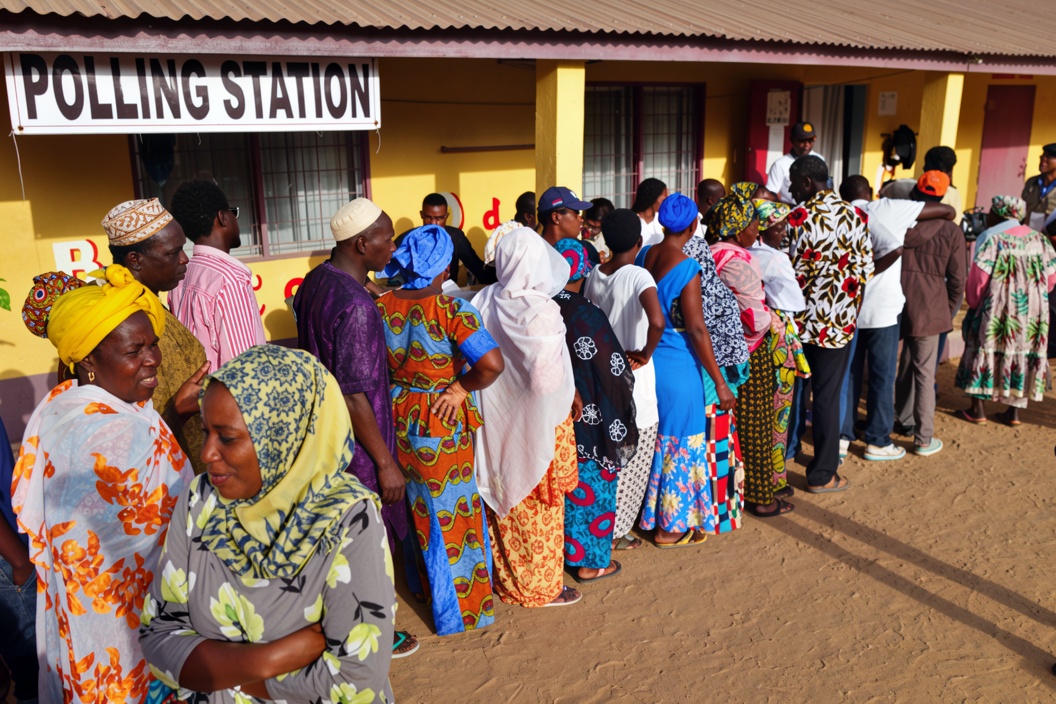
Gambiaj.com – (BANJUL, THE GAMBIA) – The Independent Electoral Commission (IEC) has confirmed that The Gambia has 1,146,474 registered voters ahead of the December 5 presidential election, providing the most detailed breakdown yet of the electorate across the country’s 53 constituencies and individual polling locations.
In two documents released on Friday, November 20, the electoral body published the final 2026 registered-voter figures, including the number of polling centers and polling stations in each constituency.
The figures show that the electorate is spread across 730 polling centers, comprising 1,773 polling stations in the country’s seven administrative areas.
The release provides a more detailed picture of the geographical distribution of voters as political parties intensify their campaigns ahead of the presidential election.
Brikama And Kanifing Account For 56.5% Of Voters
The constituency-level figures reveal significant differences in the size of electorates across the country, with Kombo South emerging as the largest constituency, with 77,307 registered voters.
Other constituencies with large electorates include Busumbala, with 65,339 voters; Sanneh Mentereng, with 63,456; Old Yundum, with 62,494; and Serekunda West, with 51,522.
Brikama North has 45,807 registered voters, while Brikama South has 44,722 and Latrikunda Sabiji has 42,274.
At the administrative-area level, Brikama has the largest concentration of voters, with 437,020, representing approximately 38.1% of the national register.
Kanifing follows with 210,437 registered voters, accounting for about 18.4%.
Combined, the two administrative areas account for approximately 56.5% of all registered voters in The Gambia, highlighting the concentration of the electorate in the country’s most densely populated urban and peri-urban areas.
However, the distribution of registered voters does not necessarily indicate how constituencies or administrative areas will vote on election day.
Women Outnumber Men Across All Seven Administrative Areas
The IEC’s published registration statistics also provide a gender breakdown of registered voters across the seven administrative areas.
The figures show that women account for a higher proportion of registered voters than men in every administrative area.
Banjul has 52.53% female voters against 47.47% male voters, while Basse records the highest proportion of women, at 60.72%, compared with 39.28% men.
In Brikama, women represent 55.74% of registered voters, against 44.26% men. Janjanbureh records 57.67% women and 42.33% men.
Kanifing has 54.19% female voters and 45.81% male voters, while Kerewan records 56.54% women and 43.46% men.
In Mansakonko, women account for 54.05% of registered voters, compared with 45.95% men.
The figures suggest a consistent female majority across the country’s seven administrative areas. However, the IEC has not provided corresponding gender breakdowns for individual constituencies.
Age Breakdown Remains Unavailable
Despite the additional information, an important gap remains in understanding the demographic composition of the electorate, particularly the age distribution of registered voters.
The two documents released on Friday, as well as the IEC’s registration statistics, do not provide figures showing how many registered voters are aged between 18 and 25, those between 26 and 35, or the proportion of the electorate below 35.
The absence of age-related information also makes it difficult to establish how young voters are distributed across the country’s seven administrative areas and 53 constituencies.
It also leaves unanswered the question of how many registered voters will be voting for the first time.
Importantly, registration during the 2026 supplementary voter registration exercise does not necessarily mean that an individual is a first-time eligible voter, as some people may have qualified to vote in previous elections but only registered recently.
The publication of aggregated age statistics would therefore help provide a more comprehensive understanding of the electorate while protecting individual voter information.
Polling Centre Figures Provide Further Electoral Insight
The second IEC document provides a breakdown of registered voters at individual polling locations and polling streams, offering additional information about the distribution of voters within constituencies.
The data could help assess the number of polling streams serving different communities, variations in the size of polling-station electorates and the administrative demands facing election officials.
It could also help identify polling locations where large numbers of registered voters may require particular attention to queue management and election-day arrangements.
The IEC figures distinguish between 730 polling centers and 1,773 polling stations, two administrative categories that should not be used interchangeably.
The published figures represent the allocation of registered voters and do not indicate how many people will actually turn out to vote on December 5.
The release marks an important addition to publicly available electoral information ahead of the presidential election, allowing a more detailed examination of the country’s electoral geography.
However, the absence of age statistics and national totals for registered men and women means that a complete demographic picture of the electorate remains unavailable.












Leave a Reply