


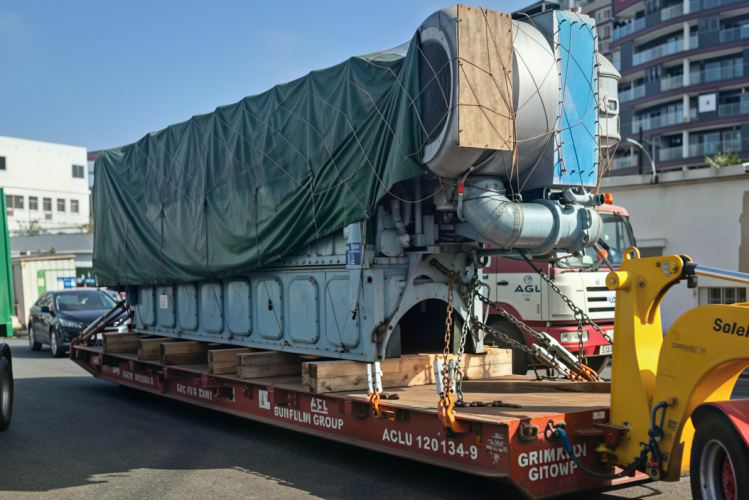
Gambiaj.com – (BANJUL, The Gambia) – The arrival of new generators in The Gambia has brought a potentially important moment for President Adama Barrow’s government, with authorities moving quickly to get the equipment to the Brikama Power Station as the country struggles with an electricity crisis that has increasingly become a political issue.
The generators arrived in The Gambia on Monday as part of government measures to increase domestic generation capacity, stabilize the national grid, and reduce the prolonged load shedding that has frustrated households and businesses across the country.
There was little time for ceremony.
From Banjul to Brikama, the race is on.
The Gambia Police Force announced on Monday that the generators would be transported from Banjul to the Brikama Power Station via the Mamadi Manjang Highway. Heavy-duty vehicles carrying the equipment were expected to move slowly, with Traffic Police deployed along the route to manage traffic and facilitate diversions where necessary.
The authorities urged motorists to allow extra travel time, avoid unsafe overtaking, and follow the instructions of police officers as the unusually large cargo made its way towards the power station.
The urgency surrounding the movement is difficult to separate from the urgency surrounding the electricity crisis itself.
For months, unreliable electricity supply has become one of the most visible sources of public frustration with the government. Communities have endured prolonged blackouts, businesses have struggled to operate, and households have increasingly relied on generators and other costly alternatives.
In recent weeks, the frustration spilled onto the streets.
In Banjul, Manjai, Kotu, and Kotu Quarry, residents reported cumulative outages lasting around 26 hours before a protest was organized. In Ebo Town and Churchill’s Town, residents also took to the streets under the banner “Li Dafa Doyi,” “Enough is enough,” demanding an end to the persistent power cuts.
The protests transformed what had long been treated as an infrastructure problem into a political liability for the Barrow administration.
The electricity crisis becomes a political liability.
Against that backdrop, the arrival of the generators carries significance beyond the machinery itself.
President Barrow had promised Gambians that new generators would arrive by October to help address the electricity shortage. The equipment’s arrival therefore gives the government an opportunity to demonstrate that a commitment made publicly has translated into something tangible.
But bringing the generators into the country is only the first part of that promise.
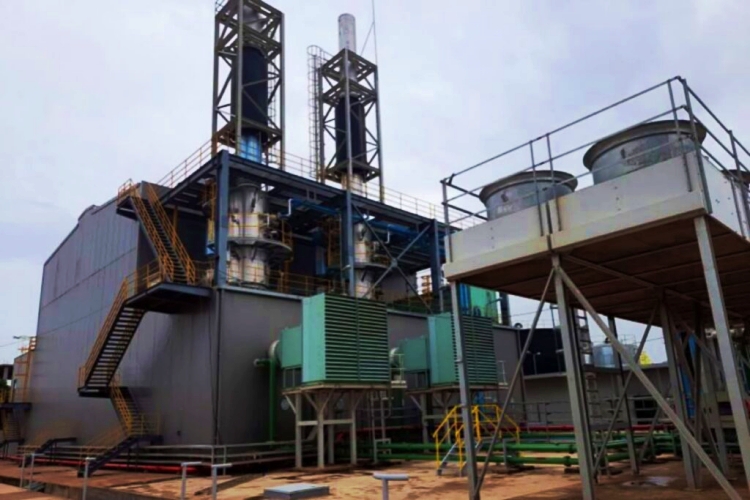
The real test begins when the machines are installed, commissioned, and connected to the national grid, and, crucially, when consumers begin to feel the difference.
For Gambians who have spent long nights without electricity, the question is not how quickly the generators crossed the highway. It is how quickly they can begin producing reliable power.
If the new units significantly increase generation and reduce the frequency and duration of blackouts, the political implications for Barrow could be substantial.
The president is seeking another mandate in the December 5 presidential election, and electricity has emerged as one of the issues most capable of directly shaping voters’ everyday experience of government. A sustained improvement in power supply before polling day could therefore provide the incumbent with one of the clearest examples of his administration delivering on a promise.
It could also change the political conversation.
For an administration that has faced mounting criticism over electricity shortages, the difference between promising more power and actually delivering more power could become a powerful campaign message. The government can point to the generators as evidence that it responded to public pressure and moved to strengthen the country’s own generation capacity.
Yet expectations will be high.
The Gambia’s electricity difficulties are not caused by generation capacity alone. The stability of the grid, transmission and distribution infrastructure, fuel availability, maintenance, and NAWEC’s wider operational challenges will all determine whether additional generation translates into reliable electricity for consumers.
That means the generators will ultimately have to do more than arrive.
They will have to work.
And they will have to keep working.
For now, however, the government’s immediate message is straightforward: the generators promised for October are here, and authorities are wasting little time getting them to the power station.
After months in which the electricity crisis has fueled anger, protests, and political criticism, the race is now on to get the machines producing power, before Gambians decide at the ballot box whether Barrow’s promises have been matched by delivery.









Leave a Reply