


Gambiaj.com – (BANJUL, THE GAMBIA) – The Gambia is reviewing its progress towards meeting the economic and monetary convergence requirements of the Economic Community of West African States (ECOWAS), with fiscal discipline, inflation control, public debt and foreign exchange reserves remaining central to the country’s readiness for regional monetary integration.
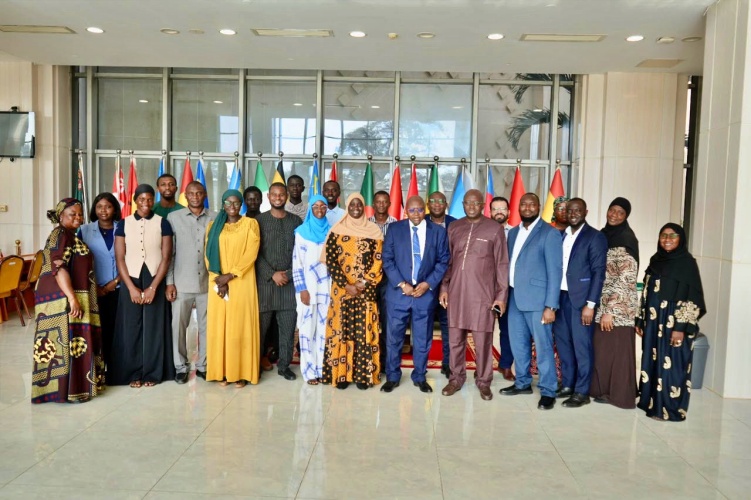
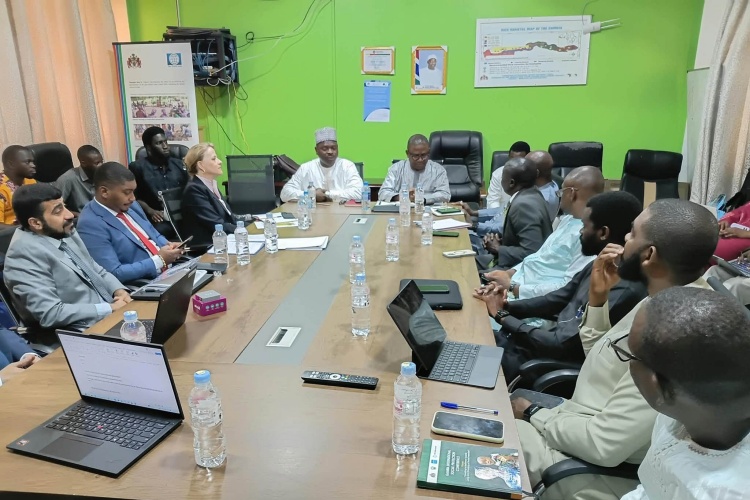
The Ministry of Finance and Economic Affairs (MoFEA), through its Directorate of Economic Policy and Research, on Tuesday commenced a validation exercise for the 2026 First Half National Coordinating Committee (NCC) Report and the Multiannual Convergence Report at the Sir Dawda Kairaba Jawara International Conference Centre.
The exercise brings together stakeholders to examine the underlying economic data, assess the country’s macroeconomic performance and ensure that the reports accurately reflect progress towards meeting ECOWAS convergence criteria.
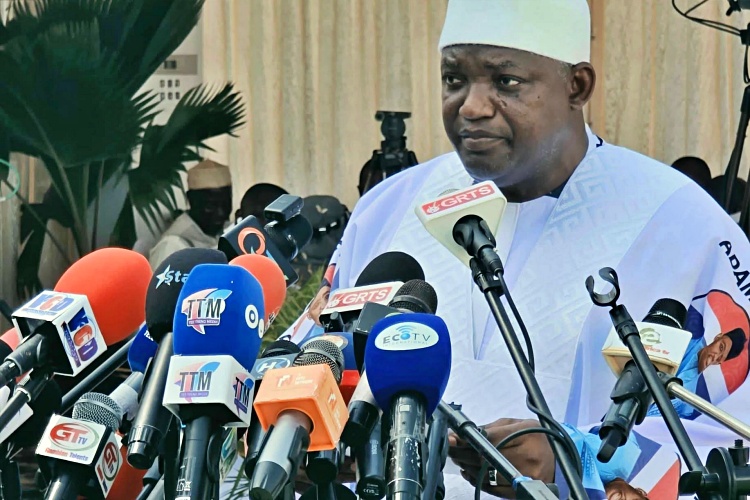
Speaking at the opening ceremony, Permanent Secretary Mod A.K. Secka said the reports fulfill The Gambia’s obligations under the ECOWAS Monetary Cooperation Program, which seeks to coordinate economic policies and promote macroeconomic stability among member states as part of the region’s monetary integration agenda.
Director of Macroeconomic Policy and Research Lamin Bojang urged participants to scrutinize the data, challenge assumptions and address inconsistencies to ensure the credibility and comprehensiveness of the reports.
Four Primary Criteria Remain The Main Challenge
Under the ECOWAS Macroeconomic Convergence and Stability Pact, member states are assessed against four primary criteria designed to ensure that their economies are sufficiently stable to support a common monetary policy and eventually a single regional currency, the ECO.
The criteria require countries to maintain an annual average inflation rate of no more than 5 percent, a fiscal deficit not exceeding 3 percent of GDP, central bank financing of the government deficit below 10 percent of the previous year’s tax revenue, and gross external reserves sufficient to cover at least three months of imports.
The assessment also considers seven secondary indicators, including public debt not exceeding 70 percent of GDP, tax revenue equivalent to at least 20 percent of GDP, a wage bill not exceeding 35 percent of tax revenue, positive real interest rates and exchange rate stability within a margin of plus or minus 10 percent.
The most recent ECOWAS-wide convergence report covering 2024 showed that The Gambia met only two of the four primary criteria: central bank financing and foreign exchange reserves.
The country’s fiscal deficit stood at 4.2 percent of GDP, exceeding the 3 percent threshold, while average annual inflation was 10.2 percent, more than twice the permitted level.
On the positive side, the Central Bank of The Gambia provided no financing for the fiscal deficit in 2024, while foreign exchange reserves covered 4.1 months of imports, above the three-month minimum.
The country also met the exchange rate stability requirement, with the dalasi’s depreciation against the regional unit of account recorded at approximately 10 percent, within the prescribed margin. However, public debt stood at 81.1 percent of GDP, above the 70 percent ceiling.
Fiscal Deficit And Inflation Continue To Weigh On Progress
More recent economic assessments suggest that the two major weaknesses identified in the 2024 regional assessment have not yet been fully resolved.
According to the International Monetary Fund’s 2026 assessment, The Gambia’s fiscal deficit widened to 5 percent of GDP in 2025, against an earlier program projection of 1.1 percent.
Although tax revenue increased to 12.9 percent of GDP from 10.9 percent in 2024, the improvement was offset by unbudgeted government expenditure, including transfers, arrears payments, emergency subsidies to the National Water and Electricity Company (NAWEC) and support to the state-owned groundnut purchasing and processing agency.
The IMF said the government would need stronger expenditure controls, improved public financial management and additional domestic revenue mobilization to reverse the fiscal slippage.
Inflation has also remained above the ECOWAS threshold despite a substantial decline from the 18.5 percent recorded in September 2023.
The IMF’s July 2026 assessment put average inflation at 7.9 percent in 2025 and projected it at 7.5 percent for 2026, still above the regional 5 percent requirement. Renewed pressure from international food and energy prices has complicated efforts to bring inflation down.
Public debt presents another significant challenge. The IMF estimated that government debt rose to 82.1 percent of GDP in 2025, considerably above the ECOWAS ceiling of 70 percent.
However, the country’s external reserves provide a more encouraging picture. The IMF projected reserve coverage at 3.8 months of imports in 2026 without additional financing, with the proposed financing support expected to help maintain coverage at around 3.6 months in 2027. This suggests that The Gambia’s external reserve position remains above the regional minimum, although it is vulnerable to external shocks.
Government Faces Pressure To Sustain Reforms
The latest review comes as ECOWAS continues preparations for the proposed launch of the ECO single currency in 2027.
At its Fourteenth Session of the Convergence Council on September 7, 2026, the regional bloc reviewed member states’ economic performance and outstanding requirements for monetary integration. The council maintained that the 2027 target remained achievable and called for accelerated implementation of the remaining requirements.
For The Gambia, meeting the convergence requirements will depend not only on maintaining the gains already achieved in monetary and external stability but also on correcting persistent weaknesses in public finances, inflation management and debt sustainability.
The IMF’s October 2026 mission reached a staff-level agreement with the government on the sixth review of its Extended Credit Facility program and the third review of its Resilience and Sustainability Facility program. The agreement, which remains subject to approval by the IMF Executive Board, could unlock approximately US$28 million in additional financing.
The IMF has emphasized the importance of fiscal discipline, stronger public financial management, improved governance and reforms in the energy sector to protect macroeconomic stability.
The validation exercise is therefore an important opportunity for the authorities to establish how much progress has been made during the first half of 2026, identify areas where the country remains off track and determine the corrective measures needed.
However, the actual first-half performance against the convergence thresholds will depend on the figures contained in the NCC and Multiannual Convergence Reports, which were being validated at the time of the exercise. The 2024 ECOWAS assessment and subsequent IMF projections provide important context but should not be mistaken for the final 2026 first-half results.






Leave a Reply