


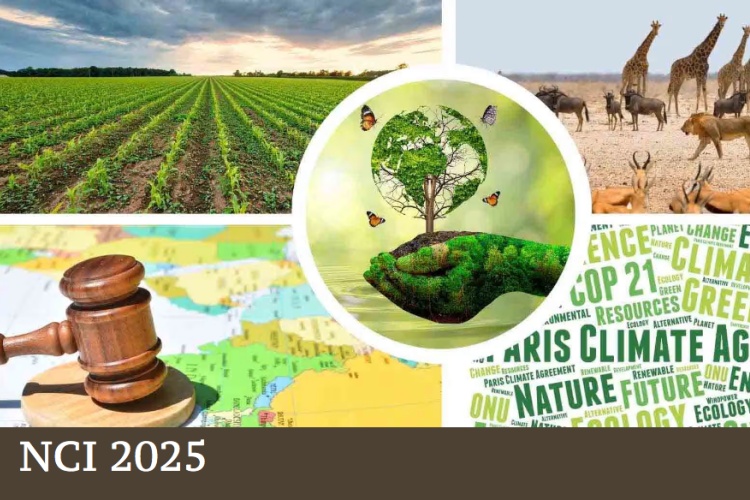
Gambiaj.com – (BANJUL, The Gambia) – The Gambia has fallen seven places to 131st out of 180 countries in the Nature Conservation Index (NCI) 2025, a global assessment that measures how effectively countries protect biodiversity and manage their natural environment. The country scored 51.1 points, placing it in the bottom third of the global rankings and highlighting persistent challenges in conservation and environmental management.
The Nature Conservation Index, published by BioDB, assesses countries using 25 indicators grouped under four pillars: Land Management, Threats to Biodiversity, Capacity and Governance, and Future Trends. The index evaluates how well nations protect ecosystems and wildlife while ensuring the long-term sustainability of their natural resources.
Seven-place Decline Raises Concerns
The Gambia’s decline from the previous edition suggests that the country is struggling to keep pace with global conservation efforts at a time when biodiversity loss, climate change, and land degradation are becoming increasingly urgent concerns.
Although the index does not provide country-by-country scores for each of its indicators, the overall ranking reflects a combination of factors related to environmental governance, habitat protection, species conservation, and future sustainability.
For The Gambia, the latest results point to continuing pressure on forests, wetlands, and other ecosystems that support the country’s rich biodiversity and provide livelihoods for thousands of people.
Conservation Challenges Remain
The country’s low ranking comes despite the existence of protected areas, forest parks, and internationally recognized wetlands that form the backbone of its conservation efforts.
Environmental experts have long identified deforestation, habitat degradation, unsustainable land use, coastal erosion, climate change, and limited resources for conservation as some of the key threats facing The Gambia’s natural environment. These pressures continue to affect biodiversity and undermine efforts to safeguard ecosystems.
As Africa’s smallest mainland country, The Gambia also faces the difficult task of balancing population growth, agricultural expansion, and infrastructure development with the need to conserve its limited natural resources.
Room For Stronger Environmental Governance
The Nature Conservation Index places considerable emphasis on the effectiveness of environmental governance, including the implementation of conservation policies, the management of protected areas, and measures to prevent biodiversity loss.
The Gambia’s latest ranking underscores the need to strengthen environmental institutions, improve the management of protected areas, restore degraded ecosystems, and invest more in biodiversity conservation if it is to improve its standing in future editions of the index.
Regional Comparison and Global Leaders
The Gambia ranked below several African countries that performed strongly in this year’s assessment. Zimbabwe emerged as Africa’s highest-ranked nation, placing eighth globally, followed by Tanzania (15th), Botswana (23rd), South Africa (30th), and Gabon (37th).
Within the sub-region, Guinea-Bissau ranked 78th, while Senegal placed 102nd, both outperforming The Gambia. However, The Gambia ranked slightly ahead of Cape Verde, which came in 133rd.
Globally, Estonia topped the 2025 Nature Conservation Index with a score of 69.9, followed by Denmark and Luxembourg. Australia ranked fourth, while Costa Rica was the highest-performing country outside Europe, reflecting sustained investment in biodiversity conservation, environmental governance, and sustainable land management.
The 2025 Nature Conservation Index serves as a reminder that while The Gambia has made commitments to environmental protection, translating those commitments into measurable conservation outcomes remains a significant challenge.
Improving environmental governance, protecting habitats, and addressing the growing impacts of climate change will be critical if the country is to reverse its decline in future rankings.




Leave a Reply