



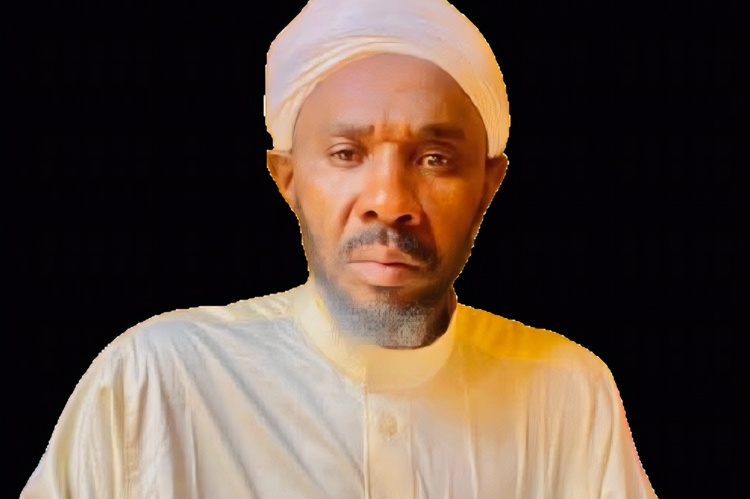
Gambiaj.com – (VIRGINIA, United States) – The Gambia, Africa and the international development community have lost one of their accomplished sons with the death of Dr.. Sidi Cherno Jammeh, a distinguished development expert, agricultural economist, advocate, and international public servant whose career spanned more than three decades.
Dr. Jammeh, who was based in Virginia in the United States, died, leaving behind a remarkable body of work that touched The Gambia, several African countries, the World Bank and IMF communities, and the broader global development agenda.
For his family, his death marks the loss of a father, uncle, and friend. For The Gambia, it is the passing of a professional who carried the country’s name into some of the most influential institutions and development programs in the world.
From The Gambia to the world
Dr. Jammeh’s journey was one of extraordinary transformation.
His early public life was connected to broadcasting and sports. He was among the pioneering voices of sports commentary at Radio Gambia during the formative years of the country’s broadcasting history.
By around 1970, he had emerged as one of the country’s leading football commentators before leaving The Gambia for the United States in the early 1970s.
That transition from the microphone to academia and eventually international development institutions would produce a career of unusual breadth.
He went on to earn advanced academic qualifications and establish himself as an authority in agricultural development, economic policy, poverty reduction, and public-private partnerships.
For more than 20 years, he worked with the World Bank, advising governments, private-sector actors, and multilateral, regional, and bilateral institutions across Africa.
His professional life was therefore not simply a personal success story. It became a vehicle through which he sought to influence how African countries approached development.
The man known as “Baba Fadama”
Perhaps nowhere was Dr. Jammeh’s contribution more visible than in Nigeria’s agricultural transformation.
He was instrumental in designing three major Fadama projects, Fadama II, Fadama III, and Fadama III Additional Financing, with combined project costs of about $1 billion.
His work became so closely associated with the Fadama program that he was known in Nigeria as “Baba Fadama.”
The projects became regarded as success stories in Nigeria and were recognised as examples of innovative approaches to agricultural development.
But Nigeria was only one part of a much larger African footprint.
Dr. Jammeh worked on major agricultural and development initiatives in Senegal, Niger, Burkina Faso, Rwanda, Chad, and The Gambia, among others.
Between 1989 and 2005, he served in leadership and technical roles at the World Bank, including managing the Niger Pilot Private Irrigation Project, which was subsequently cited as an international best practice, and creating the Burkina Faso Private Irrigation Project.
His work demonstrated a consistent belief that agriculture could be transformed from subsistence activity into a commercially viable engine of economic growth and poverty reduction.
A son who continued to serve The Gambia
Despite spending much of his professional life abroad, Dr. Jammeh retained a strong connection to The Gambia.
In 2013 and 2014, he served as Lead Consultant on the Gambia Commercial Agriculture and Value Chain Management Project, assisting the World Bank and the Gambian Government in preparing the $20 million project.
His assignment involved project design, economic and financial viability, investment opportunities, risk assessment, and implementation arrangements.
He also served as Lead Consultant to GAMWORKS, undertaking work connected to the Community Infrastructure and Livelihood Improvement Project, including its impact assessment and project completion report.
His contribution was not limited to agriculture. He participated in major development initiatives designed to improve livelihoods and infrastructure while advocating a broader transition towards commercially oriented agriculture and value-chain development.
In doing so, he brought back to The Gambia the expertise he had accumulated through years of working at the highest levels of international development.
Beyond projects: building African capacity
Dr. Jammeh’s legacy was also institutional.
As Chairman of the World Bank-IMF African Society from 1996 to 2003, he represented the interests of approximately 1,800 African professionals working within the Bretton Woods institutions.
Under his leadership, the African Society developed initiatives aimed at addressing African staffing, racial diversity, and career advancement within the World Bank and IMF.
His advocacy sought to create greater opportunities for African professionals and staff of African descent within institutions that wield enormous influence over the continent’s economic development.
The impact of that work earned him the prestigious title of Chairman Emeritus of the World Bank-IMF African Society in 2000.
It was recognition not merely of the position he had held but of the institutional legacy he had helped create.
A bridge between Africa and the world
One of Dr. Jammeh’s most significant achievements was his ability to build bridges.
In October 1998, he organized the first Africa Business Forum hosted by the Bretton Woods Institutions.
The week-long event brought together about 600 business leaders from all 54 African countries, creating a platform for African entrepreneurs to establish relationships with business counterparts in the United States and Europe.
The initiative produced relationships that endured beyond the event. Six African business leaders who later appeared on the Forbes list of African billionaires were among the forum’s alumni.
For Dr. Jammeh, this was another expression of his conviction that Africa’s development could not depend solely on governments and international aid. African businesses, entrepreneurs, and professionals also had to be connected to global capital, knowledge, and markets.
His work also contributed to strengthening relations between African countries and the World Bank, IMF, and policymakers in Washington.
Among the institutional achievements attributed to the African Society during his leadership was its role in efforts surrounding the settlement of outstanding African arrears to the IDA and in helping overcome opposition to the $4 billion Chad-Cameroon Pipeline project before its approval by the World Bank Group Board.
A champion of inclusion and diversity
Dr. Jammeh’s advocacy for Africa did not stop at development projects.
He also fought for greater inclusion of Africans and people of African descent within the institutions where he worked.
His Lifetime Achievement Award, presented by the Africa Trade and Investment Global Summit in Washington, DC, in 2018, specifically recognized his contributions to African agriculture, business, and private-sector development; relations between the Bretton Woods institutions and African client countries; and advocacy for diversity and inclusion.
That recognition was one of many honors he accumulated during his career.
In 1997, he received a World Bank Group President’s Award for pioneering work and outstanding performance in the delivery of new World Bank lending instruments.
He was also honoured by the Constituency for Africa for his contribution to US-Africa relations.
These accolades tell only part of the story. The more important measure of his contribution lies in the professionals he mentored, the institutions he strengthened, and the development projects that continued to affect communities after his direct involvement had ended.
A scholar as well as a practitioner
Dr. Jammeh was not only a development practitioner. He was also a scholar and author.
His academic work included research into agricultural pricing and marketing policies in Senegal, including his doctoral thesis at Johns Hopkins University examining state intervention in agricultural pricing and marketing and the politics of budgetary reallocation.
His publications reflected the same issues that defined his professional career: agriculture, markets, public policy, and the challenge of designing economic systems capable of improving livelihoods.
He was fluent in Mandingo, Wolof, English, and French, a linguistic ability that complemented his work across the diverse political and cultural landscape of Africa.
A legacy that belongs to The Gambia and Africa
Dr. Sidi Jammeh’s life ultimately defied a narrow definition of nationality.
He was Gambian by origin, African by commitment, and international in the reach of his work.
He demonstrated that a professional from a small country could enter the world’s most influential development institutions and not merely participate but lead, innovate, and advocate.
His legacy stretches from the early days of Radio Gambia to the corridors of the World Bank and IMF; from Gambian agricultural development to Nigeria’s Fadama projects; from African business networking to advocacy for African professionals; and from local public service to international development policy.
For The Gambia, his story is a reminder of the extraordinary contributions Gambians in the diaspora have made to the continent and the wider world.
The void he leaves behind
But beyond the awards, projects, institutions, and professional titles is a more intimate loss.
For his family, the death of Dr. Jammeh is not the passing of an international development expert. It is the loss of a father, brother, uncle, relative and friend whose presence cannot be replaced by professional achievements or public recognition.
For colleagues and former mentees, it is the loss of a mentor whose experience was built over decades and freely shared with others.
For The Gambia, it is the loss of one of its accomplished sons, a man who left home, built an extraordinary career abroad and continued to use his knowledge and influence in ways that benefited his country and continent.
And for Africa, it is the departure of a professional who spent much of his life arguing, through both words and practical action, that Africans should have a greater voice in shaping Africa’s economic future.
Dr. Sidi Cherno Jammeh leaves behind more than a résumé.
He leaves behind projects, institutions, ideas, relationships, protégés, and generations of professionals who encountered his work.
That is perhaps the enduring measure of his life: he did not simply build a career; he built a legacy.
And while his family now confronts the deeply personal pain of his absence, The Gambia and Africa must also reckon with the loss of a son whose professional journey reached far beyond the country’s borders but whose achievements continued to carry the name of The Gambia into the world.
May Allah grant him Jannatul Firdaus.












Leave a Reply