


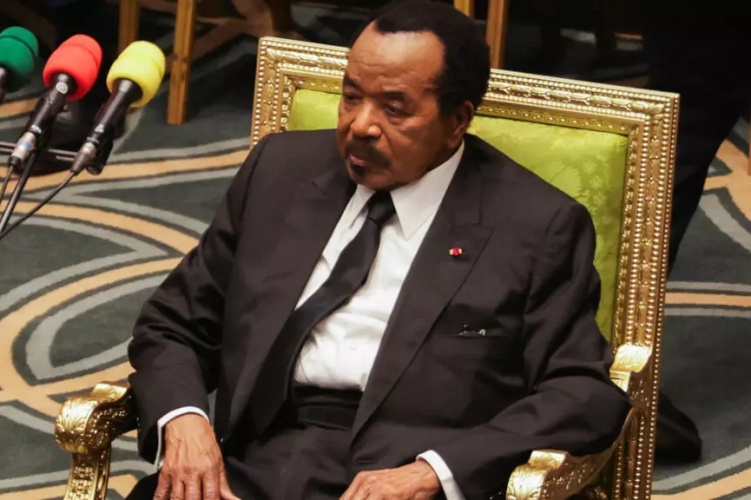
Gambiaj.com – (DOUALA, Cameroon) – Cameroon’s ruling party has dismissed growing concerns over President Paul Biya’s prolonged absence from the country, insisting there is no constitutional or political vacuum despite the 92-year-old leader being away for more than 40 days.
In a statement issued on Monday, Jacques Fame Ndongo, Minister of state and national secretary for communication of the ruling Cameroon People’s Democratic Movement (RDPC), said there was “no vacancy of power at the top of the State.”
His remarks come amid mounting public and political debate over President Biya’s continued absence from Cameroon, which has now stretched to 45 days.
Ruling party rejects claims of power vacuum
Fame Ndongo described suggestions that the presidency had become vacant as a “legal, political, and logical absurdity.”
He argued that Cameroon’s laws do not prescribe a maximum period that a sitting president can remain outside the country, adding that no one could invoke a constitutional provision that simply does not exist.
According to him, attempts to declare a vacancy in the presidency are based on what he called the “fertile and wandering imagination” of those relying on non-existent legal principles.
The minister also maintained that President Biya remains fully engaged in governing the country. He said the president continues to review official files submitted by his collaborators, either during in-person meetings or through electronic means.
Opposition Questions Remote Governance as Debate Intensifies
The statement was swiftly challenged by the opposition Movement for the Rebirth of Cameroon (MRC), led by Maurice Kamto.
Responding on behalf of the party, MRC Vice-President Mamadou Mota questioned how long a president could remain physically absent before the effective exercise of presidential authority became questionable.
“After 45 days outside the national territory, this is no longer a stay abroad; it is a de facto exile,” Mota said.
He also mocked the government’s explanation that President Biya continues to govern remotely, describing Cameroon as “the first country in the world to be governed through clandestine teleworking.”
The exchange has reignited public debate over President Biya’s absence and his ability to effectively lead the Central African nation from abroad.
While the government insists that the president remains fully in charge and that no constitutional issue arises from his prolonged stay outside the country, opposition figures argue that the situation raises important questions about transparency, accountability, and the practical exercise of executive power.






Leave a Reply