


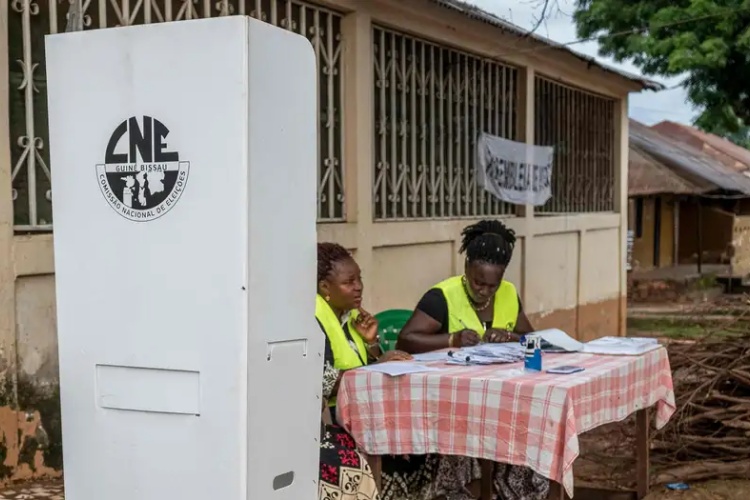
Gambiaj.com – (BISSAU, Guinea-Bissau) – Guinea-Bissau is heading into a new political phase after the National Electoral Commission (CNE) announced that voters had approved a new constitution in Sunday’s referendum, with 70 percent voting in favor.
CNE president Carmem Lobo announced the result on Tuesday, saying 30 percent voted against the proposed Constitution. The electoral body also put abstention at around 37 percent.
The announcement clears the way for the country to begin implementing a new constitutional order, but the referendum result is already facing strong resistance from opposition parties and civil society groups, raising the prospect that the political crisis could deepen rather than end.
From Referendum to Implementation
The immediate question following the victory of the “Yes” vote is when and how the new Constitution will formally enter into force.
With voters having approved the text, attention is expected to shift to the transitional authorities and institutions responsible for publishing, promulgating, and implementing the new constitutional framework. The process could require adjustments to existing institutions and laws to bring them into line with the new Constitution.
The political significance of the vote will therefore depend not only on the referendum result but also on how the new constitutional provisions are translated into practice.
The implementation phase could become particularly contentious if the new constitutional arrangements alter the balance of power between state institutions or establish a new framework for future elections and political governance.
Opposition Rejects Vote as Illegal
The result, however, has been rejected by major opposition groups that had called for a boycott of the referendum.
The PAI–Terra Ranka and API–Cabas Garandi coalitions, along with the Firkidja di Pubis movement, have challenged the credibility of the process and claimed that nationwide voter participation was below 10 percent.
The National Transitional Council rejected those claims and challenged opposition groups to provide evidence.
The PAIGC has gone further, describing the referendum as a “sham” and rejecting the results announced by the CNE.
Party spokesperson Muniro Conté told DW that the party considered the referendum the equivalent of a “second coup d’état in less than a year,” following the political upheaval of November 27.
According to Conté, the announced turnout figures do not reflect what the opposition believes happened on the ground.
The opposition’s rejection means that the constitutional vote is unlikely to close Guinea-Bissau’s political divide. Instead, the next stage could see a battle over the legitimacy of the new constitutional order itself.
Pressure on Regional Mediators
The dispute is also likely to increase pressure on ECOWAS and Senegal, which was designated to mediate the Guinea-Bissau political crisis.
Conté criticised what he described as the slow response of the international community, arguing that the ECOWAS-backed mediation process should have moved quickly after the regional bloc’s summit.
He said the positions of the country’s major political platforms could not be ignored, particularly PAI–Terra Ranka and API–Cabas Garandi, which he said together represented 88 deputies in the dissolved Parliament.
The coming days could therefore test whether regional mediation can bring the transitional authorities and opposition groups into a political dialogue over the country’s future.
A New Constitution, But No End to the Crisis Yet
The 70 percent “Yes” vote gives the authorities a declared popular mandate to proceed with the new Constitution. But the opposition’s outright rejection of the referendum means implementation could become the next front in Guinea-Bissau’s political crisis.
The key questions now are whether the results will face formal legal or political challenges, how quickly the new Constitution will be brought into force, and whether ECOWAS-mediated dialogue can secure broader acceptance of the new political framework.
For now, the referendum has produced a clear official winner. Whether it also produces political stability remains far less certain.







Leave a Reply