


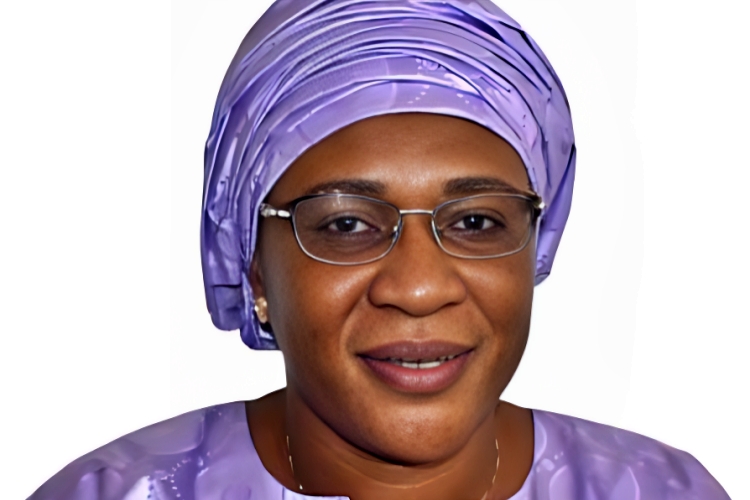
Gambiaj.com – (BANJUL, The Gambia) – A recent statement attributed to National Assembly Member Maimuna Ceesay during a gathering in Baddibu has revived an old and unfortunate political narrative: Banjulians on one side and the people of the provinces on the other.
According to a transcription of her remarks, she said, “Banjulians don’t have farmland; Banjulians don’t have wetlands; Banjulians don’t work in gardens, but the privileges and interests that Banjulians enjoy, we the Kiangkas and Baddibunkas don’t have.” She went on to argue that while people in the provinces endure the hardships of political mobilization and elections, Banjulians sit comfortably at home, later “take ownership” of the President and see their children appointed to high positions.
Let us be clear. Banjulians do not owe The Gambia an apology for being Banjulians. They do not need farmland, wetlands, or gardens to establish their value as Gambians. A citizen’s contribution to the country cannot be measured by geography or occupation.
The suggestion that Banjulians sit at home while others do the political work of the country is not only unfair; it is contradicted by our own history.
There is nothing wrong with asking what ordinary Gambians gain from politics. People in Kiang, Baddibu, and every other part of the country have every right to demand development, fair opportunities, and accountable government. But those legitimate concerns should not be converted into a collective indictment of Banjulians.
If particular appointments are believed to be based on family connections, political loyalty, or regional preference, let us identify the appointments, examine the qualifications, and establish how the decisions were made. But being a Banjulian is not evidence of privilege, just as being from the provinces is not evidence of disadvantage.
The historical roots of the Banjul and provinces divide are real, but the history is more complicated than the modern political narrative sometimes suggests.
Under British colonial rule, the Colony, centred on Bathurst, and the Protectorate were administered differently, and early electoral politics were largely confined to the Colony. But the gradual extension of political participation into the Protectorate transformed Gambian politics.
The Protectorate People’s Party, later the People’s Progressive Party, emerged in 1959, and the PPP went on to form government after the 1962 elections. The history, therefore, does not support the idea of a permanent Banjul monopoly.
That distinction matters. We should not take a colonial administrative arrangement and turn it into a permanent accusation against people living in Banjul today. Banjulians did not create the colonial system. They did not decide where the capital would be located. They did not create the historical circumstances that gave the capital a different administrative and political role. They are simply Gambians living in the country’s capital city.
Our own history also provides powerful evidence against the suggestion that Banjulians merely sit comfortably at home while others do the hard work of national life.
Consider the attempted coup of 30 July 1981. When Kukoi Samba Sanyang and his followers attempted to overthrow the Jawara government, the late Inspector General of Police Abdoulie Sulayman Mboob, a Banjulian, and loyal police officers held Central Police Station in Banjul. The Police Headquarters became an important center of resistance and helped prevent the rebels from securing complete control of the capital.
Vice President Assan Camara and other senior officials sought refuge there. This was not a Banjulian sitting comfortably at home while others did the work. It was a son of Banjul and other Gambians standing at the frontline in defense of the constitutional order.
The same episode provides another lesson. Sheriff Mustapha Dibba, a Baddibunka and former Vice President, was detained and charged in connection with the rebellion and was later acquitted. The historical record notes that the Inspector General was among the witnesses whose evidence helped exonerate him.
Think about the significance of that moment. A senior officer from Banjul was part of a process that helped establish the innocence of a prominent son of Baddibu. That is not a story of Banjulians versus Baddibunkas. It is a story of Gambians and national institutions.
More recently, Halifa Sallah became spokesperson for Coalition 2016 and was at the center of efforts to negotiate a peaceful resolution to the 2016–17 political impasse. Whatever one’s political views, his role was part of a national effort to navigate a potentially dangerous constitutional crisis without widespread violence.
Again, our history does not support the simplistic proposition that people in one part of the country simply sit back while people elsewhere do the work of defending the nation.
And this is not only about famous names. Banjulians have served in the security services, civil service, political parties, businesses, schools, hospitals, and countless other institutions. They have voted, campaigned, contested elections, defended governments, opposed governments, and paid the price for political disagreements. Some have prospered; others have struggled. Some have benefited from government; others have been overlooked. That is the reality of every Gambian community.
The argument about farmland and gardens, therefore, deserves a straightforward response. A Gambian does not become more patriotic because he owns a farm, and another does not become less deserving because he works in an office in Banjul.
Farmers feed the nation. Teachers educate it. Nurses and doctors save lives. Police officers protect citizens. Civil servants administer the state. Traders and businesspeople move goods and create livelihoods. Artisans build and repair. Fishermen provide food. Every occupation has its place in national development.
If the concern is that some communities feel neglected, then let us address that problem honestly. If the concern is unequal development, let us examine budgets, infrastructure, schools, hospitals, roads, water, electricity, and employment opportunities.
If the concern is unfair appointments, let us examine the appointments. If the concern is political exclusion, let us examine the evidence. But turning Banjulians into a collective explanation for every grievance does not solve any of those problems.
There is also something particularly troubling about telling citizens that another community will “take ownership” of the President they elected. Presidents are elected by Gambians, not by Banjulians, Baddibunkas, Kiangkas or any other single community. Once elected, a President belongs constitutionally to the entire nation. The same applies to public institutions and national resources. They belong to The Gambia.
We should, therefore, be careful about reviving a politics that divides Gambians geographically. It is an old narrative, partly rooted in the Colony and Protectorate experience, but repeatedly given new political meaning. It reduces complicated questions of development, representation, and governance to an easy story of “us” and “them.” That does nothing to build the national cohesion we need.
A politician has every right to criticize the government and speak for the people she represents. But citizens have an equal right to challenge arguments they believe are unfair. The answer is not to silence anyone. The answer is to respond with history, evidence, and reason.
Banjul is not the enemy of Baddibu. Baddibu is not the enemy of Banjul. Kiang is not the enemy of either. The Gambia is not a collection of competing communities fighting over ownership of the same country. We are one country, and every community has contributed to its making.
So, yes, let us ask the question: What do Gambians gain from politics? Let us ask it of every government, every political party, and every public institution. But let us not answer it by blaming Banjulians.
Banjulians are Gambians too. They have contributed to this country, served it, defended it, and, like every other Gambian, have both benefited from and suffered under the political choices made in its name.
They do not need to apologize for being Banjulians.
And neither should any Gambian have to apologize for where he or she comes from.







Leave a Reply