



Gambiaj.com – (BANJUL, The Gambia) – Coalition 2026 plans to establish a Coalition Governing Council to safeguard agreements reached among its political partners and ensure that a future president remains accountable to commitments made during coalition negotiations.
Assan Martin, Esq., spokesperson for the Coalition 2026 mediation committee, said the proposed structure is intended to strengthen collective leadership and prevent coalition agreements from being abandoned once the coalition’s candidate assumes the presidency.
Martin said the president would ultimately retain constitutional authority, but the coalition’s flag bearer would be expected to consult the Governing Council and take the coalition’s agreements into consideration when making major decisions.
“Authority always resides with a president when it comes to a country,” Martin said, while stressing that the coalition’s broader political project must also be respected.
Safeguarding Coalition Agreements
Martin said the council would serve as the custodian of agreements reached by coalition partners and ensure that those commitments remain relevant beyond the election campaign.
He said the arrangement was considered necessary because political agreements can lose their force once an individual assumes power.
Referring to the experience of the 2016 political coalition, Martin said an elected president could otherwise disregard agreements reached before taking office.
“You can only elect somebody to be in government, and he has nothing. He can just put all the agreements redundant,” he said.
“You already have agreements signed. You already have…some of these documents. You always have to take them into consideration as you govern,” he added.
The proposed council could therefore become a key institution within a future Coalition 2026 administration, particularly if disagreements arise between the president and coalition partners over major government decisions.
Martin said the coalition has also considered mechanisms for resolving such disputes, including the possibility of establishing a panel to address disagreements between the president and coalition partners.
18 Weeks of Negotiations
The proposed governance arrangement is one of the outcomes of nearly 18 weeks of negotiations involving political parties and other stakeholders seeking to establish a common platform for the December 5 presidential election.
According to Martin, the mediation committee relied primarily on consensus rather than voting, repeatedly bringing the parties together to resolve differences.
He said the most difficult issues involved the structure of the coalition and the question of who would lead it.
The parties debated whether the coalition should be party-led or candidate-led, while prospective candidates were also engaged through bilateral discussions before an agreement was eventually reached.
The process culminated in an agreement that saw Talib Ahmed Bensouda emerge as Coalition 2026’s flag bearer.
Martin said the coalition was designed to be more than a vehicle for a presidential candidate, stressing that its broader objective was institutional governance and collective leadership.
“This project is not about personality,” he said.
Leadership Dispute
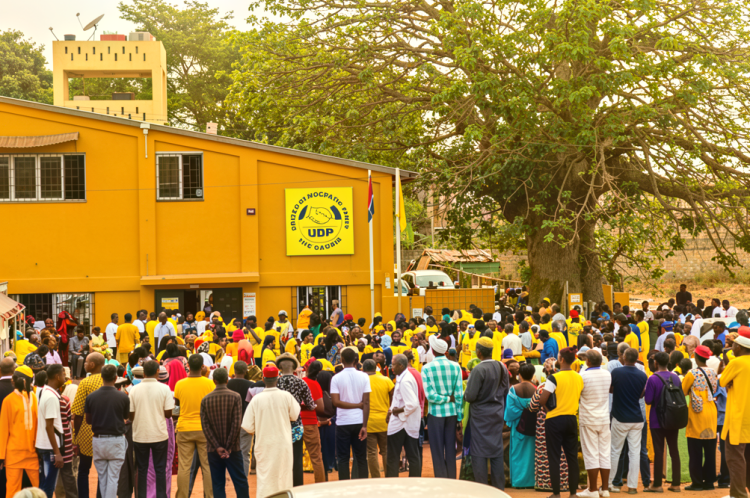
The governance question is particularly significant given disagreements that reportedly emerged during the negotiations, including the United Democratic Party’s position that its status as the country’s largest single political party gave it a strong claim to lead the coalition.
Martin, however, argued that political strength alone could not determine the outcome of coalition negotiations.
“If your numbers were enough for you to win, you would not have been in that room,” he said.
He said coalition partners had to negotiate because no single party could assume that its electoral strength was sufficient to secure victory on its own.
“You may have quantity in politics, but politics also goes with quality,” Martin said.
Some political actors eventually withdrew from the negotiations, but Martin said their departure should not be seen as a reason to abandon the coalition project.
He said those who remained committed to Coalition 2026 were determined to complete the process, encouraged by areas of common ground including good governance and institutional reform.






Leave a Reply