


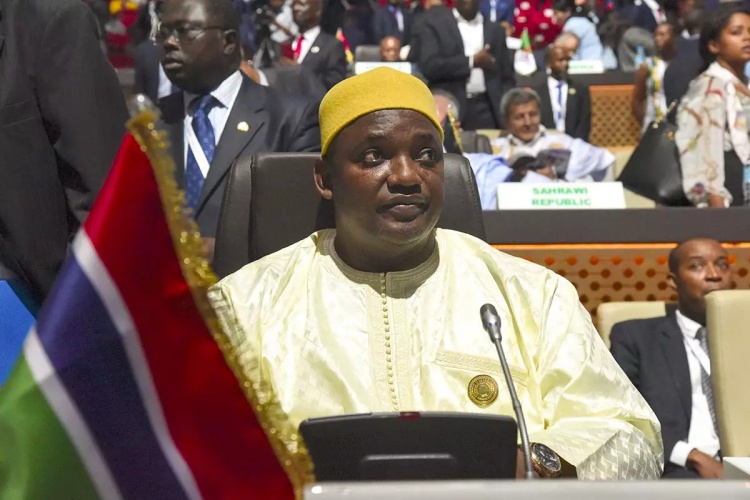
Gambiaj.com – (BANJUL, GAMBIA) – The Gambia has been ranked 21st out of 54 African countries in the 2026 Ibrahim Index of African Governance (IIAG), recording one of the continent’s largest improvements in overall governance over the past decade.
The report, published by the Mo Ibrahim Foundation, gives The Gambia an Overall Governance score of 54.8 out of 100 in 2025, representing a 6.9-point improvement from 2016. The country is listed among Africa’s ten most improved countries over the decade, although the report classifies its trajectory as “Slowing Improvement.”
The report’s findings place The Gambia ahead of Togo, Sierra Leone and Burkina Faso in the overall governance ranking. Senegal, ranked seventh, remains the highest-ranked country in the immediate sub-region.
Strong Gains In Rights And Freedoms
One of the strongest areas of improvement for The Gambia is Rights, where the country gained 15.9 points between 2016 and 2025, rising to 13th place on the continent.
The report highlights improvements across five of the six Rights indicators. Personal Liberties increased by 20.1 points, Freedom of Expression and Belief by 18.6, Media Freedom by 16.4, Digital Freedom by 43.3, and Public Perception of Freedom of Speech by 8.3 points.
Protection against Discrimination was the only Rights indicator to deteriorate, falling by 11.1 points.
The report directly contrasts The Gambia’s trajectory with Burkina Faso, describing the two countries as moving toward opposite ends of the Rights spectrum.
It says The Gambia moved from 47th place to 18th in the continental ranking for Freedom of Expression between 2016 and 2025. The report links the beginning of the improvement to the departure of former President Yahya Jammeh into exile in January 2017, which ended his 22-year rule.
Civil Society Space Sees Major Improvement
The Gambia also recorded one of its most dramatic improvements in Civil Society Space.
Its score for the absence of civil society repression increased by 58.4 points, moving the country from 39th place in 2016 to second place in Africa in 2025.
The report says the improvement largely followed the 2017 political transition and the opening of greater space for civil society organizations after the end of the Jammeh era.
The Gambia was also the continent’s most improved country in the Participation sub-category, gaining 29.1 points over the decade and reaching a score of 58.0, placing it 15th in Africa in 2025.
Judicial And Accountability Gains
The report records particularly significant progress in Rule of Law and Justice, where The Gambia improved by 11.7 points over the decade.
It also identifies a striking internal divergence. Public Perception of the Rule of Law declined by 17.9 points, while Impartiality of the Judicial System improved by 59.7 points – the widest gap between the country’s best and worst-performing indicators in this area.
The Gambia also recorded the continent’s second-largest improvement in Accountability and Transparency, gaining 14.9 points since 2016, behind only Seychelles.
Women’s Equality Improves, But Leadership Gap Remains
The report also identifies The Gambia as the most improved country over the decade in the Women’s Equality sub-category, with a gain of 33.8 points.
Despite the improvement, the report notes that women’s representation in leadership remains comparatively low. The Gambia nevertheless moved from 50th place in 2016 to 27th in 2025.
Overall, the 2026 IIAG presents The Gambia as a country that has made substantial governance gains since 2016, particularly in civil liberties, media freedom, civil society space, participation, judicial indicators and accountability.
But the report’s classification of the country’s trajectory as “Slowing Improvement” suggests that the progress recorded over the decade is no longer accelerating at the same pace.
The findings are based on the IIAG’s assessment of 54 African countries using 319 variables grouped into 96 indicators across security and rule of law, participation and rights, economic opportunity, and human development.












Leave a Reply