


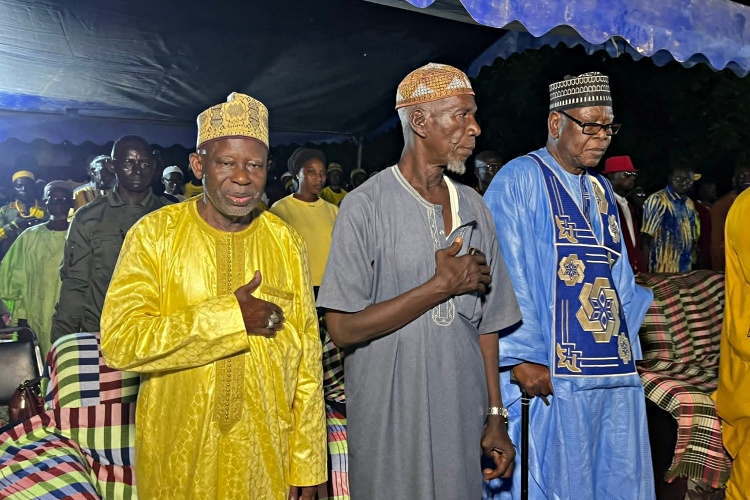
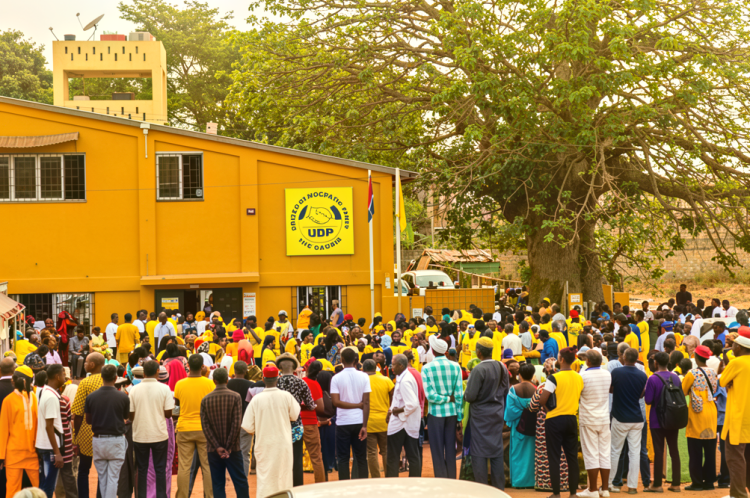
Gambiaj.com – (JIFARONG, The Gambia) – As thousands of United Democratic Party (UDP) supporters gathered at Jifarong on Saturday evening, the mood was far from celebratory.
Instead, the rally was marked by concern over farmers who say they planted their fields this rainy season only to be removed from the land.
UDP leader and flag bearer Ousainou A.N.M. Darboe told the gathering that communities along the Gambia-Senegal border have lived for years with uncertainty over where the boundary between the two countries lies.
That uncertainty, he said, has now translated into real losses for farmers.
“When I heard people talking about farming, I felt so sad, mostly for the communities not far from the border with Senegal,” Darboe said.
He said farmers in the affected communities have for many years cultivated land they believed to be within Gambian territory.
“Many years during the rainy season, you go to your farms and do the farming, thinking it is your farmland and it is part of The Gambia. This has been happening for many years,” he said.
Farmers removed after planting
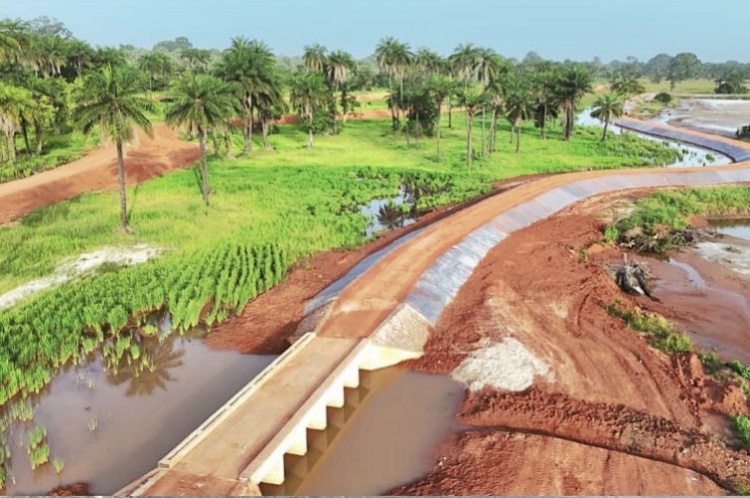
Darboe said the latest dispute has affected farmers from Kabada through Jimara to Gambisara.
He claimed that Gambian farmers had cleared their fields, planted their crops and tended to their seedlings before being ordered off the land on the grounds that the farms were located in Senegalese territory.
“Recently I heard that from Kabada here up to Jimara and Gambisara, Gambians started farming;farming; the seedlings are grown and they are working hard on them. All they did was to take them off those farms on the basis that those farms are not in The Gambia,” he said.
Darboe stopped short of taking a definitive position on the exact location of the disputed lands.
“I am not saying it is in The Gambia or not, but what I am saying is that the Senegalese government and the people of Senegal need to think about the relationship between the two countries,” he said.
He argued that the dispute should be handled in a way that protects the long-standing social and cultural ties between communities on both sides of the border.
“You know our religions abolished such acts. Someone is farming and you go and take that person from his land. That’s not a good relationship,” Darboe said.
Appeal to President Diomaye Faye
With the border dispute yet to be resolved, Darboe made a direct appeal to Senegalese President Bassirou Diomaye Faye to allow the affected farmers to continue cultivating their fields while the two governments work towards a settlement.
“I’m appealing to President Jomaye Faye to allow farmers to proceed with their farming until we settle the border dispute issue,” he said.
Darboe also invoked the deep religious and cultural connections between The Gambia and Senegal, pointing to the movement of Gambians across the border for religious events.
“As we speak today, how many Gambians are in Touba for the Magal? That shows we both share Serigne Touba. The same for Njasane, Thiénaba, and Maka Coulibantang. That shows The Gambia and Senegal share the same [heritage],” he said.
Farmers fear losing their crops
The rally brought together supporters and farmers from communities in the Lower River Region, where concerns over access to farmland have intensified following recent border tensions.
Farmers fear that investing labour, seeds, and money in their fields could leave them with nothing if they are removed from the land after planting.
Darboe also criticized the government of President Adama Barrow, accusing the administration of failing to pay sufficient attention to the concerns of communities living along the border.
The remarks come amid continuing tensions over the Gambia-Senegal border, with the two countries engaged in efforts to address disagreements over the precise location of the boundary.
For farmers in the affected communities, however, the immediate concern is the current farming season.
Their message is straightforward: allow them to cultivate and harvest their crops while the two governments work to resolve the border dispute.
In communities where families on both sides of the border share religious leaders, markets, marriages, and longstanding social ties, the dispute has become more than a question of maps and boundary markers. It has become a question of livelihoods and the future of communities that have lived together for generations.





Leave a Reply