



Gambiaj.com – (BANJUL, The Gambia) – The ruling National People’s Party (NPP) led coalition has dismissed the United Democratic Party’s (UDP) reported rise in support ahead of the 2026 presidential election, describing the opposition party’s increase to around 25 percent in a recent opinion poll as a return to its “default position.”
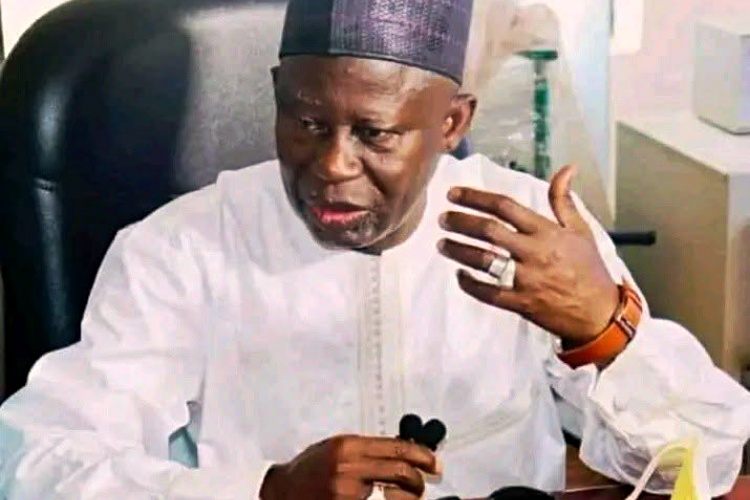
The Citizens Alliance’s leader and Information Minister Dr. Ismaila Ceesay made the remarks on Coffee Time while discussing the latest opinion poll and the intensifying political competition ahead of the December 5 presidential election.
According to figures discussed during the program, the UDP was placed at around 12 percent in an earlier round of the survey before rising to approximately 25 percent in the latest round. The movement represents one of the largest changes among the political actors covered by the poll.
Ceesay Questions UDP’s 12 Percent Starting Point
Dr. Ceesay, however, rejected the suggestion that the figures demonstrate an extraordinary surge in support for the UDP.
“The UDP is not growing at this astronomical rate. UDP is just in their default position,” he said.
Instead, the minister questioned why the party had recorded only 12 percent in the first round of the survey.
“What the question should be now is: why were they at 12 percent in round one?” he asked.
Dr. Ceesay argued that the figures should be assessed alongside the movement in the number of undecided voters between the two rounds.
According to the figures he cited, undecided voters fell from about 29 percent in the first round to 16.9 percent in the second round, while the UDP’s support increased from 12 percent to around 25 percent.
He suggested that the movement could indicate that the UDP had attracted a substantial portion of voters who had previously remained undecided.
“If NPP and the allied parties moved only 0.6 percentage points, and Talib only 1.3 percentage points, and UDP 12.8 percentage points, it means the UDP, based on the survey, took from the undecided voters,” he said.
Polls Not Election Verdicts
The minister was careful, however, not to present the opinion poll as a prediction of the election outcome.
“Opinion polls are an indication of public opinion and public sentiment. They are not the electoral verdict,” he stressed.
Dr. Ceesay also compared the reported movement in the UDP’s figures with the numbers attributed to President Adama Barrow.
According to the figures discussed on the program, Barrow’s support increased from approximately 31 percent in the first round to 31.6 percent in the second round, representing a movement of 0.6 percentage points.
Talib Ahmed Bensouda was reported to have moved from 18 percent to 19.3 percent, while UDP leader Ousainou Darboe recorded the largest movement, rising from approximately 12 percent to 24 percent before reaching around 25 percent in the latest figures discussed.
Dr. Ceesay said the movements should prompt questions about where the additional support came from rather than simply being interpreted as a political breakthrough for the opposition.
NPP Confident Ahead of December Vote
Despite dismissing the UDP’s reported rise, Dr. Ceesay said the NPP and its allies were taking the election seriously.
“We are taking these elections very seriously,” he said.
The minister nevertheless maintained that President Barrow remains on course for victory on December 5.
“There is no impediment to my confidence that His Excellency President Barrow and the Alliance will win the next elections,” he said.
However, when pressed on whether he still expected Barrow to secure at least 75 percent of the vote, as he had previously predicted, Dr. Ceesay appeared to qualify his earlier position.
He indicated that such a result would depend heavily on whether voters based their decisions primarily on the government’s record of delivery.
‘UDP Is Not a Threat’
Dr. Ceesay also rejected the suggestion that the UDP’s reported rise represents a serious threat to the NPP.
“UDP is not a threat to the mighty NPP and allied parties,” he said.
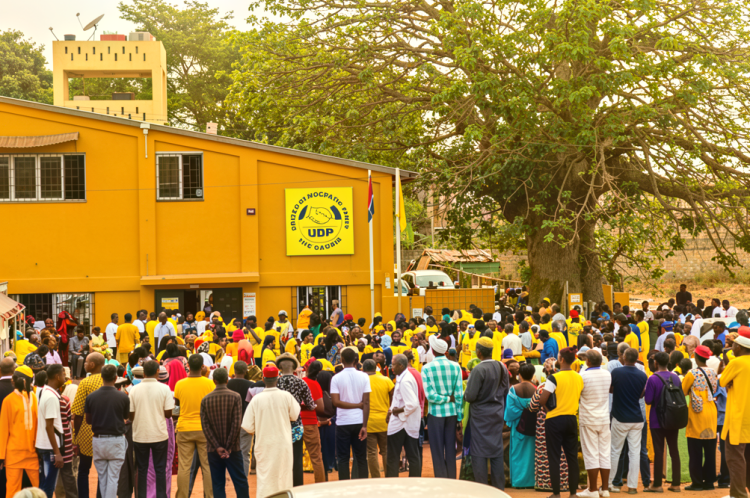
He also dismissed the significance of the large turnout at the UDP’s recent 30th anniversary celebration in Brikama, arguing that the size of political gatherings does not necessarily determine electoral outcomes.
The minister said the UDP has historically demonstrated an ability to attract large crowds, but that such gatherings have not automatically translated into electoral victories.
He further argued that the opposition party has yet to present what he considers a sufficiently convincing alternative to the Barrow administration.
Poll Figures Set to Fuel Election Debate
The latest figures are likely to fuel further debate as the December election approaches.
For the opposition, a movement from 12 percent to around 25 percent represents a significant improvement and could be interpreted as evidence of growing support.
For the NPP, however, the figures tell a different story.
Dr. Ceesay’s argument is that the UDP has not necessarily created a new wave of support but has instead returned to what he describes as its traditional level of political strength.
Whether the 25 percent figure represents a genuine surge, a recovery of previously lost support or a temporary movement in voter sentiment will ultimately be tested at the ballot box.
For now, the NPP is dismissing the figures as evidence of a political breakthrough and insisting that the December 5 election remains wide open.










Leave a Reply