


Gambiaj.com – (BANJUL, The Gambia) – For the past couple of weeks, I have been working on a piece under the title, “Political Opportunism or Political Realignment? History Has a Longer Memory.” Then I came across a recent post by Mr. Sal Taal in which he argued that “transactional politics, cross-carpeting, and political opportunism” are not new features of Gambian politics. That observation prompted me to look more closely at our political history.
This is not an attempt to defend or condemn any politician, political party, or contemporary coalition. It is an attempt to place today’s political realignments within a longer historical context. Before describing contemporary political movements as unprecedented, it is worth asking a simple question: how new is political realignment in The Gambia?
The historical record suggests that it is not new at all.
When the Protectorate Entered Mass Electoral Politics
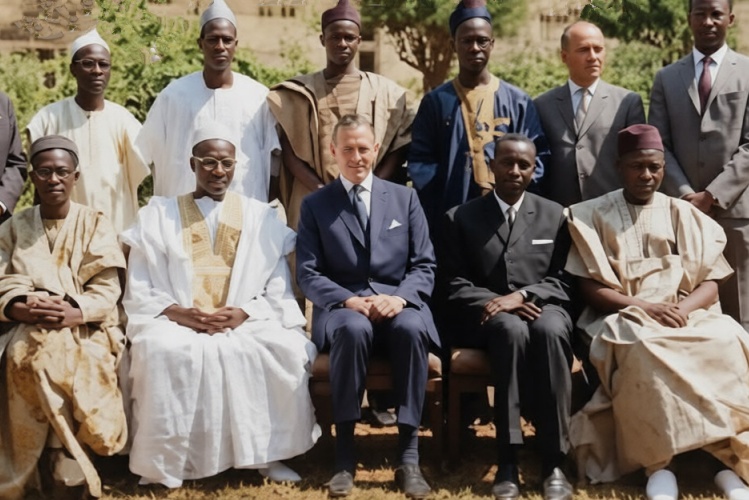
One of the most important developments in Gambian political history came with the constitutional changes of 1959 and the elections of 1960. Until the end of the 1950s, national politics was largely an urban phenomenon, with much of the Protectorate population excluded from direct participation in national electoral politics. The new arrangements allocated 12 of the 19 directly elected seats to the Protectorate, while the chiefs had eight representatives in the House.
The chiefs themselves were far from politically united. Some, including Jewru Krubally, Sillah Ba Dibba, and Omar Mbacké, were associated with the United Party, while younger chiefs such as Abu Khan, Ture Sanyang, and Omar Ceesay supported the PPP. Their influence therefore became part of the emerging political contest between the two parties.
This is important because it reminds us that political alliances in The Gambia have never been as fixed as later generations sometimes imagine.
The Chiefs and the Decline of the United Party
This brings us to the often-repeated suggestion that the chiefs helped “kill” the United Party.
There is a historical basis for arguing that the weakening of chiefly political influence contributed to the UP’s decline, but the expression should not be taken literally. After the PPP’s electoral victory in 1962, several chiefs were dismissed or forced into retirement, including figures associated with the UP. The weakening of chiefly influence formed part of the PPP’s broader consolidation of political control in the Protectorate.
Yet it would be too simplistic to say that the chiefs alone destroyed the UP. Electoral changes, defections, shifting alliances, and the growing strength of the PPP also mattered. The decline of chiefly influence was therefore one part of a wider political transformation.
Alliances, Defections, and Political Movement
The early post-colonial period provides several examples of politicians moving across political boundaries.
E. D. Njie, the younger brother of P. S. Njie and a senior United Party figure, accepted Jawara’s invitation to join the government as Minister of Health after independence. P. S. Njie opposed the appointment, and E. D. Njie eventually resigned.
Assan Musa Camara provides an even more striking example. He entered the 1960 election as an independent, joined the UP, and successfully defended his Kantora seat as a UP candidate in 1962.
In 1963, he crossed from the UP to the PPP and subsequently became a senior minister and Vice President. In 1986, after leaving the PPP, he established the Gambia People’s Party.
The pattern was also visible within the PPP itself. In 1968, four former PPP ministers, led by Sheriff S. Sisay, broke away and formed the People’s Progressive Alliance. The subsequent opposition landscape produced further changes.
Sheriff Mustapha Dibba left the PPP in 1975 and founded the National Convention Party, while Pap Cheyassin Ousman Secka established the National Liberation Party in the same year.
The names and circumstances changed. The phenomenon did not.
From NADD to 2016
The pattern continued into the modern era.
In 2005, several opposition parties came together under the National Alliance for Democracy and Development, or NADD. The alliance subsequently changed as its constituent parties reassessed their positions.
In 2016, seven opposition parties united behind Adama Barrow’s presidential candidacy, temporarily putting aside significant political differences in pursuit of a common electoral objective. Their political paths subsequently diverged.
The lesson is not that every alliance or political movement is identical. It is that cooperation, separation, defections, and realignment have long been features of Gambian politics.
The 2026 Political Landscape
The 2026 election cycle has brought political realignment into particularly sharp focus.
The governing National People’s Party has become the center of a broad electoral alliance. One of the most significant developments was the formal alliance between the NPP and Essa Mbye Faal’s APP-Sobeyaa, concluded in September.
The agreement was signed at State House, while APP-Sobeyaa subsequently experienced disagreement over the arrangement, with Dr Gumbo Touray publicly opposing it. Those competing positions are themselves now part of the political record.
On the opposition side, the UDP-led Gambia First Coalition has continued to consolidate, while Coalition 2026 has brought together several parties and movements, including the UNITE Party. Within that grouping, the NUP/UNITE Alliance was formally launched in September.
A separate and equally significant process has been led by PDOIS through Team Gambia. Halifa Sallah and Sidia Jatta spearheaded consultations involving political parties, movements, civil society organizations, and individuals.
The process culminated in the formation of Team Gambia Grand Coalition 2026 in September, with PDOIS among its political-party signatories.
The striking feature, therefore, is not simply the number of coalitions. It is the fluidity of political relationships. Parties that previously stood apart may cooperate, former allies may separate, and politicians who once criticized one another may subsequently find common ground.
But that is not necessarily evidence of opportunism.
Opportunism or Realignment?
This brings us to the central question.
When a politician changes party, joins a coalition, leaves an old alliance or enters into cooperation with a former political opponent, what should we call it?
Political realignment is a description of what happened. Political opportunism is a judgment about why it happened.
History can establish that someone moved from one political formation to another. It can establish when the move occurred, who was involved, and what circumstances surrounded it. What history cannot automatically establish is the private motive behind the decision.
A politician may explain a move as being motivated by principle, national interest, policy differences or changing circumstances. Critics may interpret the same move as opportunism. Both explanations may form part of political debate, but neither should automatically be elevated into historical fact without evidence of motive.
It is legitimate for citizens to question political decisions and to ask whether an alliance represents policy convergence, electoral calculation, personal ambition, or some combination of factors. But historical analysis should distinguish between what can be demonstrated and what is inferred.
History Has a Longer Memory
Gambian political history provides several useful lessons. Political parties have rarely been permanent political homes for every politician who entered them.
Alliances have often been created around particular electoral or national objectives without erasing underlying differences. Political cooperation does not necessarily mean ideological agreement, just as political separation does not necessarily mean permanent hostility.
From the UP and PPP struggles and the changing role of the chiefs, through political movements involving Assan Musa Camara, Sheriff Sisay, and the PPA, Sheriff Dibba, and Pap Cheyassin Secka, through NADD in 2005 and the seven-party coalition of 2016, political realignment has deep roots in Gambian political history. The multiple coalition processes of 2026 are another chapter in that longer story.
That does not mean every political move should be excused, nor that every alliance should automatically be regarded as principled. It means historical comparisons should be made carefully.
A useful historical analogy requires two questions: Did something similar happen before? And, more importantly, did it happen for the same reason?
The first question is about history. The second is about interpretation.
History does not provide an excuse. It provides context.
Political labels may change. Alliances may shift. Individuals may cross political boundaries. Parties may rise, decline, split, merge, or disappear.
But the record remains.
History, after all, has a longer memory than politics.






Leave a Reply