


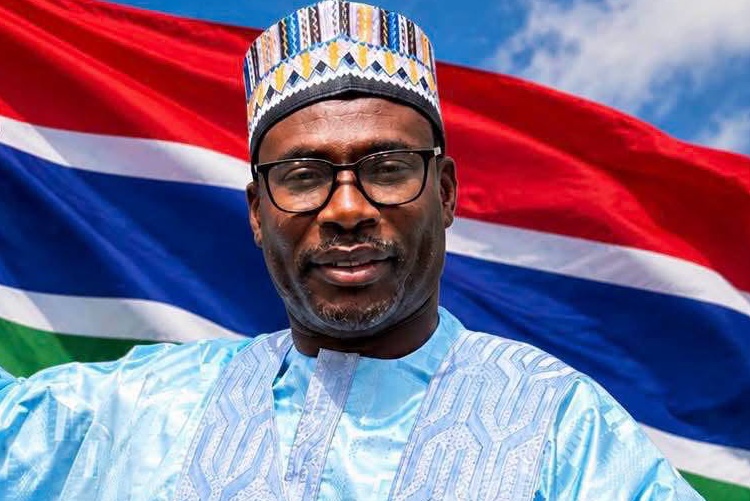
Gambiaj.com – (BANJUL, The Gambia) – APP Sobeyaa leader Essa M. Faal has alleged that Coalition 2026’s flag-bearer selection was never a genuinely open contest, claiming that Talib Ahmed Bensouda’s camp had already decided that he was the only acceptable outcome.
Faal made the allegation during an interview on West Coast radio’s Coffee Time after withdrawing from the coalition negotiations shortly before Bensouda was selected as the opposition alliance’s flag bearer.
According to Faal, he was told directly that United, the political movement led by Bensouda, had invested heavily over several years in building his presidential ambitions and could not accept another candidate emerging from the coalition process.
‘I Was Willing to Offer Talib More’
“I told Aziz that I was even willing to offer Talib something beyond vice presidency,” Faal said, referring to lawyer Aziz Bensouda, Talib’s elder brother and a key negotiator for United.
Faal said he proposed a possible prime ministerial arrangement as an alternative to the vice presidency, arguing that such an arrangement could form part of a broader power-sharing agreement.
But, according to Faal, Aziz maintained that the family had spent more than three years working to make Talib president and could not abandon that objective.
The allegation raises a fundamental question about the purpose of the coalition’s flag-bearer selection process: if one candidate was already regarded as the only acceptable outcome, was the process ever genuinely competitive?
Faal said the issue was later put directly to Aziz ahead of the final selection, with his team asking him to clarify his earlier position. He claimed that the response was reaffirmed, including through text messages.
Faal Rejects Vice-Presidency Motive
Faal has rejected suggestions that his withdrawal was primarily motivated by a desire to become vice president.
He said the vice presidency was one of several procedural concerns raised by APP Sobeyaa, alongside concerns about the participation of groups that had previously withdrawn from the process and later returned.
His more serious concerns, however, centered on what he described as substantive issues affecting the credibility of the selection process.
Faal alleged that he had repeatedly received information suggesting that some participants would not accept any candidate other than Bensouda.
He also alleged that some delegates may have been brought into the process specifically to influence the outcome. Those claims, however, have not been independently established.
Questioning the Credibility of the Process
For Faal, the issue was not simply that Bensouda eventually emerged as the winner. Rather, he questioned whether all candidates entered the process with a genuine chance of becoming the coalition’s flag bearer.
He argued that entering a coalition requires all participating parties and groups to accept the possibility that a candidate other than their preferred choice could emerge.
“If you have a deep-down policy, a decision that it must be you, then it is dishonesty in coalition,” Faal said.
Faal’s allegations do not, on their own, establish that the outcome was predetermined. However, they raise questions about the credibility of the selection process and the extent to which Coalition 2026 was prepared to accept an outcome other than Bensouda’s selection.
The allegations also come at a critical time for the opposition alliance, which is seeking to present itself as a united political alternative ahead of The Gambia’s December 5 presidential election.
Coalition 2026 has yet to publicly respond to Faal’s specific allegation that Bensouda’s camp had already decided that no other candidate would be acceptable.




Leave a Reply