


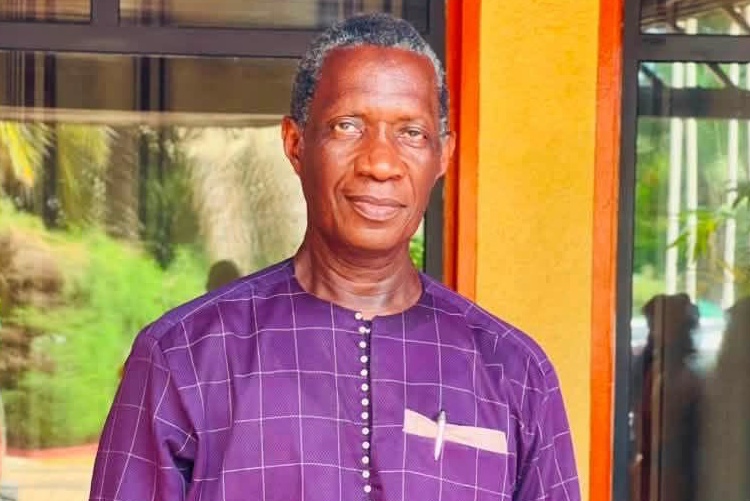
Gambiaj.com – (BANJUL, The Gambia) – The United Democratic Party (UDP) plans to announce its own results from the December 2026 presidential election before the Independent Electoral Commission (IEC) makes its official declaration, setting the stage for a potentially significant debate over the difference between publishing polling-station figures and legally declaring the final election outcome.
UDP executive member Dr. Lamin Manneh told Foroyaa that the party intends to collect results from its polling agents, process them through its own system, and make the figures public ahead of the IEC.
“You see this 2026 presidential election coming; we [UDP] will do the same. We will provide the people with the results before 9 pm, or possibly before 8 am,” Manneh said, according to Foroyaa.
The position marks a departure from the traditional practice in The Gambia, where political parties collect their own results from polling stations but leave the formal announcement of the final election outcome to the electoral commission.
UDP relies on “counting on the spot.”
Manneh argued that the introduction of the country’s “counting-on-the-spot” system gives political parties and others the right to publish the results they obtain from polling stations.
“The day we agreed to use the ‘Spot Counting’ law as a country was the day everyone had the right to announce election results,” he said.
“What IEC does is to proclaim, but everyone has the right to announce the results,” he added.
Manneh said the UDP would establish its own results-gathering system, using figures recorded by its agents at polling centers.
“We collect it and put it in our system; then announce it for everyone to know,” he said.
He pointed to the party’s experience in recent by-elections as evidence that its independent results-gathering process can accurately reproduce the figures later announced by the IEC.
“When we gave our results, it was exactly the same as the one IEC gave. There was no difference of one vote,” Manneh said, referring to the Masembeh by-election in Kiang Central.
He also cited the Kiang Kaiaf by-election, where the UDP lost to the National People’s Party (NPP).
“We lost and we acknowledge that. The results we gave were exactly the same as the ones the IEC announced,” he said.
The Elections Act gives the IEC the final declaration.
While the UDP argues that parties have the right to publish figures they collect, the Elections Act establishes a specific process for the official compilation and declaration of election results.
Section 80 requires the Presiding Officer, after counting at a polling station, to prepare a report containing details including the total votes cast, valid and invalid votes, and the votes obtained by each candidate. A signed copy of the results must also be displayed at the polling centre for public attention.
The results are then transmitted to the Commission.
Section 81(2) states that the Commission “shall, as soon as practicable on receipt of election results from the polling centers, compile the results and declare the: (a) final result; and (b) candidate elected.”
The law therefore distinguishes between the counting and publication of results at polling stations and the formal declaration of the final result and elected candidate.
Section 82 subsequently provides for the Commission to publish the election results after the declaration.
The Constitution also assigns the IEC responsibility for the conduct and supervision of public elections and referendums under Section 43(1).
2021 petition shapes UDP’s preparations
The UDP’s decision to maintain its own results system also comes against the background of its unsuccessful legal challenge following the 2021 presidential election.
The party rejected President Adama Barrow’s victory and filed an election petition at the Supreme Court on 14 December 2021.
However, the court did not determine the substance of the UDP’s allegations. Instead, it dismissed the petition after finding that the party had failed to comply with Rule 11 of the Elections Petition Rules, which required the necessary notice and documents to be served within the prescribed five-day period.
Then-UDP leader Ousainou Darboe maintained that the party had not lost on the merits.
“We have not lost anything because the petition was not dismissed based on merit but a mere technicality,” Darboe said at the time, according to Foroyaa.
Guinea example highlights risks.
The question of political parties announcing election results before electoral authorities is not without precedent in West Africa.
In Guinea’s 2020 presidential election, opposition leader Cellou Dalein Diallo declared himself the winner based on results gathered by his party before the official results were announced.
The electoral authorities subsequently declared President Alpha Condé the winner. Diallo rejected the result and pursued a legal challenge, which was unsuccessful.
The Guinean experience illustrates the potential tension between independently collected election figures and the legally recognized declaration by an electoral authority.
Publication versus proclamation
The debate in The Gambia is, therefore, increasingly centered on whether announcing independently collected figures amounts to declaring an election result.
Manneh maintains that the UDP will simply publish figures obtained from polling stations through its agents.
The legal framework, however, reserves the compilation and declaration of the final result and the candidate elected to the IEC.
That distinction could become particularly important if competing figures emerge on election night.
Kerr Fatou Media Platform CEO Fatou Touray also supported the view that results could be published before the IEC. However, according to Foroyaa, she said her media organization would still advise its audience to wait for the IEC’s official announcement after publishing its own figures.
With the December 5, 2026 presidential election approaching, the UDP is now preparing to run an independent results-gathering and reporting operation alongside the IEC’s official process.
Manneh has already indicated that the party intends to release its figures before the electoral commission.
“We will provide the people with the results before 9 pm, or possibly before 8 am,” he said.





Leave a Reply