


Gambiaj.com – (BANJUL, The Gambia) – For families of people subjected to enforced disappearance, time has done little to end the uncertainty. Years after their loved ones were taken away, many still do not know what happened to them, where they may be buried, or whether they will ever have the chance to say goodbye.
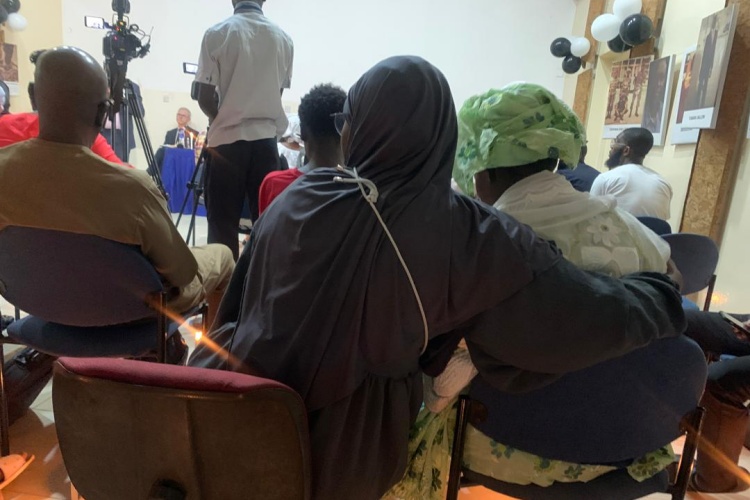
That unresolved grief was at the center of a commemoration in The Gambia marking the International Day of the Victims of Enforced Disappearances, bringing together victims’ families, government representatives, civil society organizations, and the Office of the Special Prosecutor.
The gathering was both a moment of remembrance and a renewed call for truth, accountability, and continued efforts to locate those who remain missing.
WAVE Gambia (Women’s Association for Victims’ Empowerment) organised the commemoration, creating a dedicated space for victims and families of the disappeared to remember their loved ones, share their experiences and reflect collectively on the long search for truth and accountability.
It was described as a first-of-its-kind initiative in The Gambia, bringing affected families, state institutions, the Office of the Special Prosecutor, civil society and victim-led organisations together around the experiences and rights of those affected by enforced disappearance.
‘You’re Just That Child Who Lost a Dad’
For Fatoumatta Sandeng of the Solo Sandeng Foundation, the commemoration was deeply personal.
As the daughter of a victim of enforced disappearance, she said being surrounded by people who had suffered similar losses created a rare space where victims could put aside their public identities as activists and advocates and simply confront their grief.
“You’re not an activist anymore. You’re just that victim, that child who’s lost a dad,” she said.
Sandeng said this distinction was important because families involved in transitional justice are often publicly identified as activists, witnesses, or advocates. Behind those roles, however, are individuals whose lives were permanently altered by the disappearance of a father, mother, husband, wife, child or sibling.
Her own family eventually recovered what remained of her father and, after seven years, was able to bury him, an opportunity that remains unavailable to many families still searching for their loved ones.
She recalled the painful moment she first saw her father’s remains.
“I stood and looked at him. I said, ‘Is that my father?’ No, that’s not my father.”
The remains, she said, represented only a small part of the man she remembered. But despite the pain, being able to bury him gave her family a measure of closure.
“No matter how little you get of your loved ones, it means the world,” she said.
Addressing families whose relatives remain missing, Sandeng said their participation in events and transitional justice processes was rooted first and foremost in their personal experiences.
“When we call you for events, we are not activists. We are just victims.”
‘The Process Is Nothing Without You’
The continuing uncertainty faced by victims’ families was also acknowledged by The Gambia’s Special Prosecutor, Martin Hackett.
“For a family, disappearance means years of asking the same questions. Where is my loved one? What happened to them? Who is responsible? And will we ever know the truth?” Hackett said.
He said the International Day of the Victims of Enforced Disappearances offered an opportunity to remember those taken from their families and communities who never returned, as well as those whose fate and whereabouts remain unknown.
But he stressed that remembrance must go hand in hand with accountability.
Hackett said victims should not be viewed simply as witnesses whose involvement is required when their evidence is needed.
“Victims are not simply witnesses to be called when their evidence is required. They are individuals and families whose lives have been profoundly and forever affected by the crimes we are mandated to address,” he said.
He said the Office of the Special Prosecutor must engage victims with dignity, sensitivity, and care, including by respecting the principle of “do no harm.”
The prosecution of serious violations, he acknowledged, can require survivors and families to revisit deeply traumatic experiences. Victims must therefore be respected in deciding whether and how they participate in the process.
Hackett, who recently travelled across the country with the Reparations Commission during a seven-day engagement with victims, said he was struck by their dignity and patience.
“The process that we are trying to build is nothing without you,” he told victims and their families.
While acknowledging that institutions could sometimes make mistakes, Hackett pledged honesty and continued efforts on behalf of victims.
“What I do commit to is always being honest with you as victims and trying my best on your behalf,” he said.
The Search for the Missing
Alieu Gibba, a state prosecutor at the Attorney General’s Chambers and Ministry of Justice, delivered a solidarity message on behalf of the Task Force on Enforced Disappearances.
He described the commemoration as a solemn occasion and said families should never have had to experience the circumstances that brought them together.
The day, he said, was a moment to remember those who disappeared, those whose whereabouts remain unknown, those whose lives were taken and those whose remains have still not been returned to their families.
But the focus must remain firmly on the people left behind.
“For a family, the disappearance of a loved one does not end with the disappearance itself,” Gibba said.
The uncertainty can continue for years, depriving families of the opportunity to mourn properly and leaving unanswered the fundamental question of what happened to their loved ones.
The Task Force on Enforced Disappearances was established as part of the government’s response to recommendations made by the Truth, Reconciliation, and Reparations Commission. Its work includes efforts to establish the fate and whereabouts of people who remain missing through investigations, information gathering, institutional cooperation, evidence preservation and, where necessary, the search for and identification of human remains.
But Gibba said the work was not merely an institutional or investigative exercise.
“Every missing person has a family waiting for answers,” he said.
Families, he stressed, must not be treated simply as sources of information.
“They are rights-holders, and they are partners in the search for the truth.”
Their knowledge and experiences are essential to the process, while their dignity, privacy, and wellbeing must be protected throughout, he added.
Still Waiting to Bring Them Home
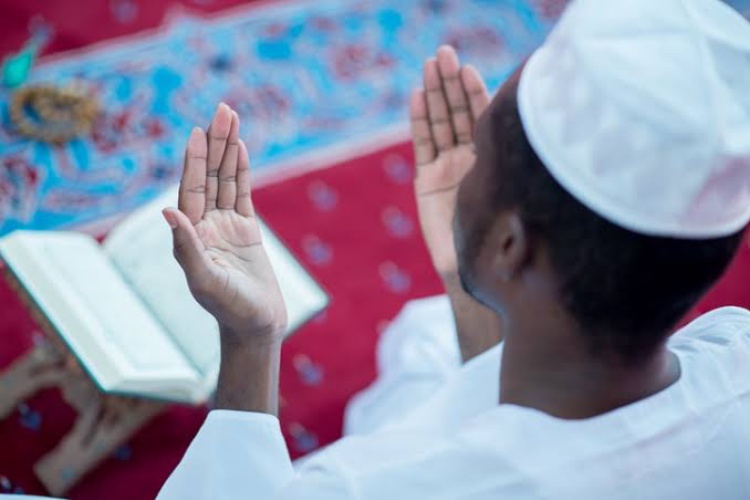
The commemoration included prayers, the reading of names, and the lighting of candles in memory of those who disappeared.
For many families, however, remembrance remains inseparable from the continuing search for answers.
The ability to recover and bury a loved one’s remains does not erase the pain of disappearance or the circumstances surrounding a person’s death. But, as Sandeng’s experience illustrates, it can provide families with the opportunity to say goodbye.
Many families in The Gambia are still waiting for that moment.
As the country continues its transitional justice process and pursues accountability for violations committed under the former regime, victims and their families remain central to whether those efforts can fulfil their promise.
For those still searching, the questions remain painfully simple: What happened? Where are they? And when will they finally be brought home?










Leave a Reply