


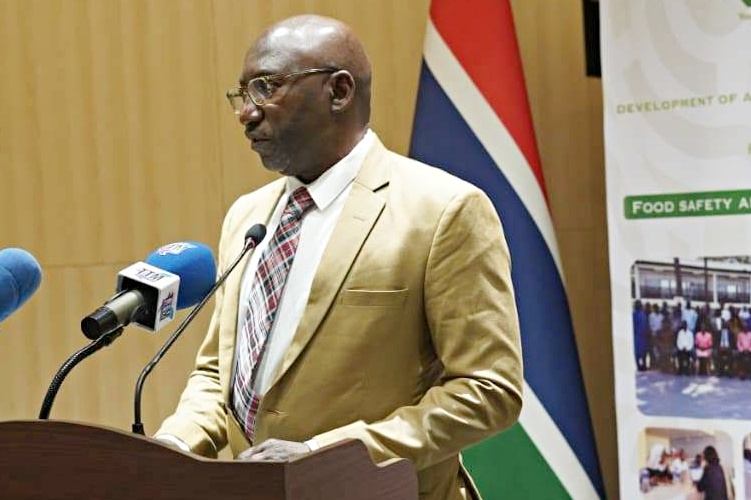
Gambiaj.com – (BANJUL, The Gambia) – The Director General of The Gambia’s Food Safety and Quality Authority (FSQA), Mamodou Bah, has disclosed that the authority has prosecuted only three food-safety cases in the six years he has been at the helm.
Bah made the disclosure during an interview in which he was questioned about FSQA’s enforcement record, the prosecution of food businesses, and broader concerns over food safety in The Gambia.
According to the FSQA director general, the three cases involved the alleged repackaging of rice infested with weevils, the use of tires in the processing of cowhide in and around Abuko, and a case involving confiscated mayonnaise.
However, Bah said none of the three cases has resulted in a completed judgment.
Cases Referred for Prosecution
Bah explained that once FSQA determines that a violation warrants prosecution, the authority refers the matter to the relevant prosecuting agency, which he identified as the police.
“We are not prosecutors,” Bah said, explaining that FSQA’s role is to identify violations, gather the necessary evidence, and refer cases for prosecution.
He said the rice case involved attempts to repackage rice that had been infested with weevils. In the cowhide-processing case, individuals involved reportedly pleaded guilty, but Bah said the matter remains unresolved.
Asked who should be held responsible for the prolonged delays, Bah declined to point fingers, saying the delays could be linked to the legal system.
The revelation raises questions about the effectiveness of food safety enforcement, particularly in cases where serious violations are identified but do not result in timely judicial outcomes.
Inspector Shortage
Bah also acknowledged that FSQA does not have enough inspectors to adequately cover the country.
He said the number of inspectors has increased from about 20 to 25 when he became director general to nearly 40 currently. Despite the increase, he said the authority continues to face capacity constraints.
As a result, FSQA relies on a risk-based inspection system that prioritizes food businesses, products, and areas considered to pose higher risks to consumers.
Capacity and Enforcement Challenges
Bah maintained that FSQA has made progress in strengthening food-safety regulation but acknowledged persistent challenges, including a shortage of specialized expertise, limited laboratory capacity, and incomplete digitalization of inspection processes.
The small number of prosecutions during his tenure is likely to intensify debate over the effectiveness of food-safety enforcement in The Gambia and whether businesses found violating food-safety regulations are being held sufficiently accountable.
For consumers, the issue goes beyond the number of cases prosecuted. The absence of completed judgments in the cases cited by the FSQA chief also raises questions about the wider enforcement chain, from the detection of violations and evidence gathering to prosecution and final judicial determination.











Leave a Reply