


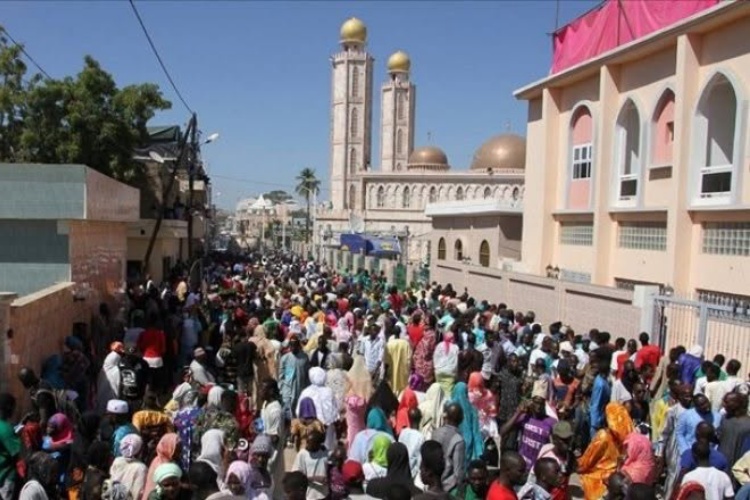
Gambiaj.com – (BANJUL, The Gambia) – On Tuesday, 25 August, Muslims across The Gambia will gather for Gamo (Mawlid) to commemorate the birth of the Holy Prophet Muhammad (Peace Be Upon Him), with Wednesday, 26 August, declared a public holiday.
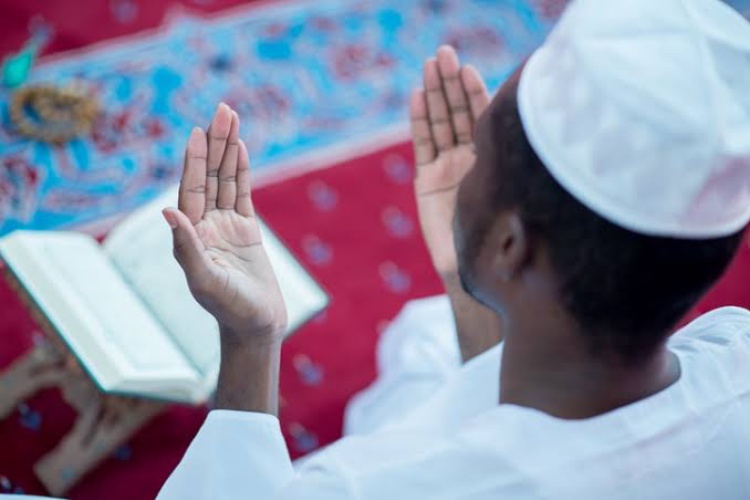
Homes, mosques, and communities will come alive with recitations of the Holy Qur’an, salawaat, sermons, and khassaïdes in praise of the Messenger of Allah.
Across the border, Tivaouane, Touba, and Medina Baye will similarly become centers of prayer, remembrance, and reflection. Different traditions and expressions, but one shared love for the Holy Prophet Muhammad (Peace Be Upon Him).
Yet beyond the gatherings, the recitations, and the emotion of the occasion lies a more important question: What does it really mean to celebrate his birth?
A Mercy to the Worlds
The Holy Qur’an points us towards the answer. In Surah Al-Anbiya (The Prophets), verse 107, Allah describes the Holy Prophet Muhammad (Peace Be Upon Him) as “a mercy to the worlds.”
In Surah Al-Ahzab (The Confederates), verse 21, He presents him as “an excellent example” for believers. And in Surah Al-Qalam (The Pen), verse 4, Allah declares: “And indeed, you are of a great moral character.”
These verses remind us that our relationship with the Holy Prophet Muhammad (Peace Be Upon Him) cannot be limited to admiration. We remember him because of the message he brought and the example he gave humanity.
His mission called people to the worship of the One God, but it also transformed how people treated one another.
He taught faith and honesty, prayer and compassion, justice and forgiveness. He was gentle without weakness, firm without cruelty, humble without diminishing his dignity, and forgiving without abandoning justice. He cared for the poor, the orphan, the stranger, and the vulnerable and treated people with dignity.
That is why Gamo should also be a time for self-examination.
It is easy to speak about the mercy of the Holy Prophet Muhammad (Peace Be Upon Him); it is harder to show mercy when we have been wronged. It is easy to praise his patience; it is harder to remain patient when provoked. It is easy to speak about brotherhood at a religious gathering; it is harder to preserve brotherhood when ethnic, political, family, or personal differences test us.
A Lesson for The Gambia
This lesson is particularly relevant to The Gambia today.
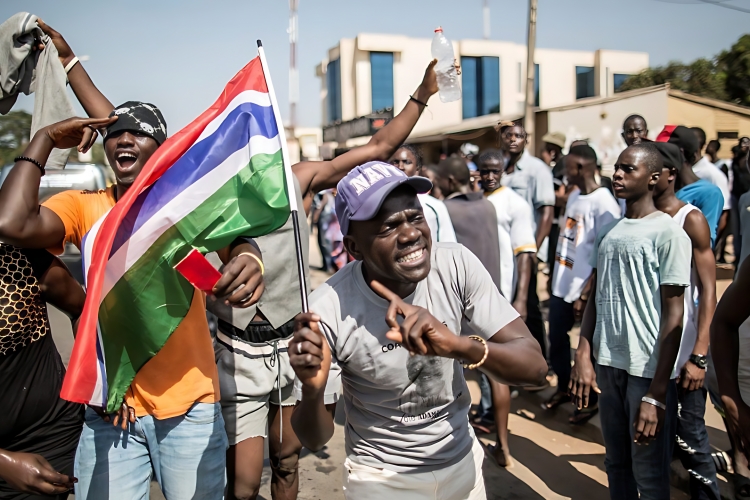
As the country approaches another presidential election, political competition is becoming more intense and public debate increasingly active. Concerns about divisive political and ethnic rhetoric remind us that preserving our national cohesion is a shared responsibility.
We should be able to disagree without becoming enemies. We should be able to support different political parties without questioning another person’s patriotism. We should be able to celebrate our ethnic identities without turning them into instruments of exclusion.
Our tribes are part of our history and identity, but none should become a measure of another person’s worth.
This is consistent with the message of the Holy Prophet Muhammad (Peace Be Upon Him), whose teachings challenged arrogance, tribal superiority, and injustice and placed righteousness and character at the center of human worth. Our differences may be real, but they need not destroy the bonds that hold us together.
The same principle applies to social media.
A rumor can travel across the country in minutes. An angry comment can be shared thousands of times before anyone asks whether it is true or fair. An insult can be amplified far beyond the circumstances in which it began.
In such an environment, the example of the Holy Prophet Muhammad (Peace Be Upon Him) calls for restraint.
Before we forward a message, repeat an accusation, or insult someone with whom we disagree, perhaps we should ask whether our words reflect the character of the man whose birth we are celebrating.
If our love for the Holy Prophet Muhammad (Peace Be Upon Him) is genuine, his character should become visible in our own lives.
His humility should temper our pride. His forgiveness should soften our grudges. His compassion should make us more attentive to those who suffer. His commitment to justice should make us uncomfortable with injustice, even when it benefits people close to us.
A Living Tradition in Senegambia
This way of expressing love for the Holy Prophet has deep roots in the religious tradition of Senegambia. For generations, our scholars have expressed their love for the Holy Prophet Muhammad (Peace Be Upon Him) through the Holy Qur’an, scholarship, madih, khassaïdes, and the transmission of the Sunnah.
Tivaouane offers one enduring example. The Gamou tradition associated with El Hadji Malick Sy has, for generations, brought people together around the Holy Qur’an, prayer, praise of the Prophet, and the transmission of Islamic knowledge and values.
The writings and teachings associated with Maodo, including Khilâçu Zahab, form part of a rich intellectual heritage connecting devotion to the Holy Prophet Muhammad (Peace Be Upon Him) with knowledge and moral education.
Touba offers another expression through the khassaïdes of Cheikh Ahmadou Bamba. His poetry turns praise into an expression of love, gratitude, and humility before the Messenger of Allah. His identification with the title Khadimu’r-Rasul, Servant of the Prophet, reflects a devotion expressed through service rather than self-glorification.
Medina Baye, through the legacy of Cheikh Ibrahima Niass, has likewise developed a rich Mawlid tradition centered on love of the Holy Prophet, the Holy Qur’an, and spiritual renewal.
Although these traditions differ in form, they point to the same lesson. The purpose of remembrance is not simply to remember a historical event. It is to deepen faith, increase knowledge, renew our love for the Holy Prophet Muhammad (Peace Be Upon Him) and encourage us to live by the qualities he embodied.
Beyond Politics, Into Everyday Life
But this message belongs far beyond politics. It belongs in our everyday lives.
Families face pressures, young people worry about their future, and communities experience the frustrations of daily life. When hardship becomes part of everyday experience, anger can easily turn into intolerance.
But hardship does not excuse cruelty, just as political disagreement does not excuse hatred.
The example of the Holy Prophet Muhammad (Peace Be Upon Him) teaches us that strength of character is revealed especially when circumstances are difficult.
This is where Gamo becomes personal.
How do we speak to our spouses and children?
How do we treat our neighbors?
How do we respond when someone disagrees with us?
How do we behave towards people who cannot benefit us?
How do we treat the poor, the elderly, the orphan, and the vulnerable?
Can we forgive when we have been hurt? Can we be fair when fairness does not serve our interests? Can we resist the temptation to insult those with whom we disagree?
These are not separate from our love for the Holy Prophet Muhammad (Peace Be Upon Him). They are among the ways in which that love becomes visible.
When the Gatherings End
The gatherings will end. Gamo will end. The Gamou in Tivaouane and Medina Baye will end. The khassaïdes will eventually fall silent, and the crowds will return home.
But the example of the Holy Prophet Muhammad (Peace Be Upon Him) should remain with us.
It should remain in our homes, our workplaces, our communities, and our public life. It should be reflected in greater honesty, patience, humility, compassion, and justice.
The Holy Prophet Muhammad (Peace Be Upon Him) was not given to us merely to be admired; he was given to us as an example to follow.
The Holy Qur’an tells us that in him there is an excellent example. That places a responsibility upon every believer.
Love must produce imitation. Remembrance must produce change.
Perhaps this is the greatest opportunity Gamo gives each of us. It allows us to pause, remember the man Allah chose as His Messenger, and ask a simple but difficult question:
Are our lives reflecting what we are celebrating?
As The Gambia enters another period of political competition and public debate, we should remember that our differences need not destroy our unity.
We can disagree and remain brothers. We can compete without hatred. We can defend our beliefs without humiliating others. We can love our communities without diminishing others.
So, as we gather for Gamo on 25 August, let us praise the Holy Prophet with our tongues, remember him with our hearts, and follow him with our lives.
Let our Gamo produce greater kindness, our salawaat greater humility, our khassaïdes greater love, and our remembrance greater unity.
For perhaps the most beautiful way to celebrate the birth of the Holy Prophet Muhammad (Peace Be Upon Him) is not simply to speak about how much we love him, but to allow that love to make us better human beings.














Leave a Reply