


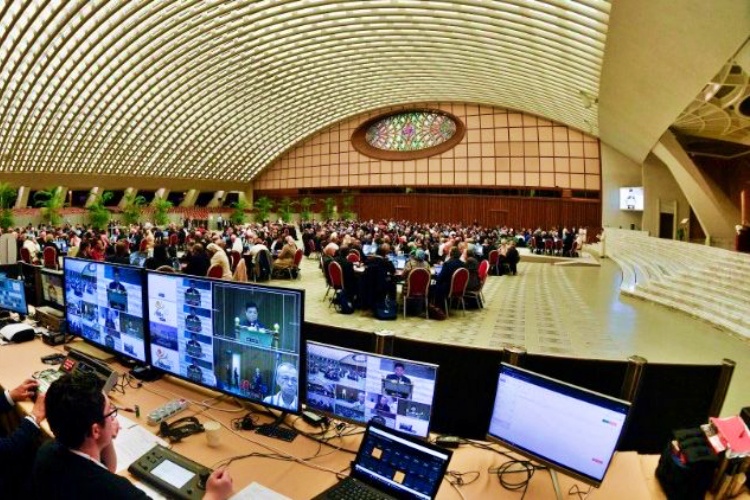
Gambiaj.com – (BANJUL, The Gambia) – A major reform of governance is taking shape in the Catholic Church, with proposals that would give priests and lay faithful a much greater role in decisions traditionally left largely to bishops and parish priests.
The proposals are contained in a final report submitted to Pope Leo XIV on September 22 by the Synod’s Canon Law Commission. The commission proposes changes to around 30 canons covering governance at parish, diocesan, provincial, and Vatican levels.
At the parish level, the proposed changes would make pastoral councils mandatory and give parishioners a more meaningful role in shaping the direction of their communities.
The councils would participate in developing the pastoral priorities that parish priests would then implement as part of their responsibilities.
The proposal represents a significant shift from the current system, under which several Church councils have only a “consultative” role. While priests and bishops are expected to seek their advice, they can ultimately disregard it.
The commission proposes removing the word “only” from the relevant provisions, meaning that Church leaders would retain final authority but would be expected to take seriously the collective views of those they consult.
Greater oversight of Church finances
Financial accountability would also become a central part of the proposed reform.
Parish finance teams would be required to publish an annual report on how parish resources are managed, with the accounts subject, where possible, to independent auditing. At the diocesan level, economic councils would approve annual accounts and present certified reports to priests and lay representatives serving on diocesan councils.
The proposals would therefore give ordinary Catholics greater visibility into how money and other Church resources are administered, bringing financial transparency closer to the communities that provide those resources.
The reform would also strengthen the position of priests in relation to their bishops. The presbyteral council would have to approve five major categories of episcopal decisions, including creating or abolishing parishes, building or decommissioning churches, establishing or closing seminaries, permanently receiving priests into a diocese, and selling valuable cultural property.
Lay Catholics to take on greater responsibilities
The proposed changes go beyond consultation and financial oversight by opening additional areas of Church governance to lay Catholics, both men and women.
Lay people could serve as judges in ecclesiastical tribunals alongside priests and could be appointed to certain diocesan leadership responsibilities. In areas where there are too few priests and deacons, qualified lay Catholics could also be authorized, under specified conditions, to receive marriage consent.
The reform would also make diocesan pastoral councils mandatory, requiring them to meet at least three times a year. Diocesan synods would be held at least every ten years and would have a majority of lay members.
For African Catholic communities, where parish life in many areas depends heavily on lay faithful because of shortages of priests, the proposals could have particular significance. The report specifically recognizes the role of laypeople in communities where priests and deacons are scarce and proposes a stronger place in canon law for catechists.
The proposed reform does not remove the authority of bishops or the Pope. Rather, it seeks to change how that authority is exercised, from a model in which leaders can consult their communities before making decisions to one in which priests and lay faithful have a more structured role in discernment, oversight, and accountability.
The proposals are not yet Church law. They remain a working document that will undergo further examination by Vatican bodies before any amendments to the Code of Canon Law are adopted.







Leave a Reply