


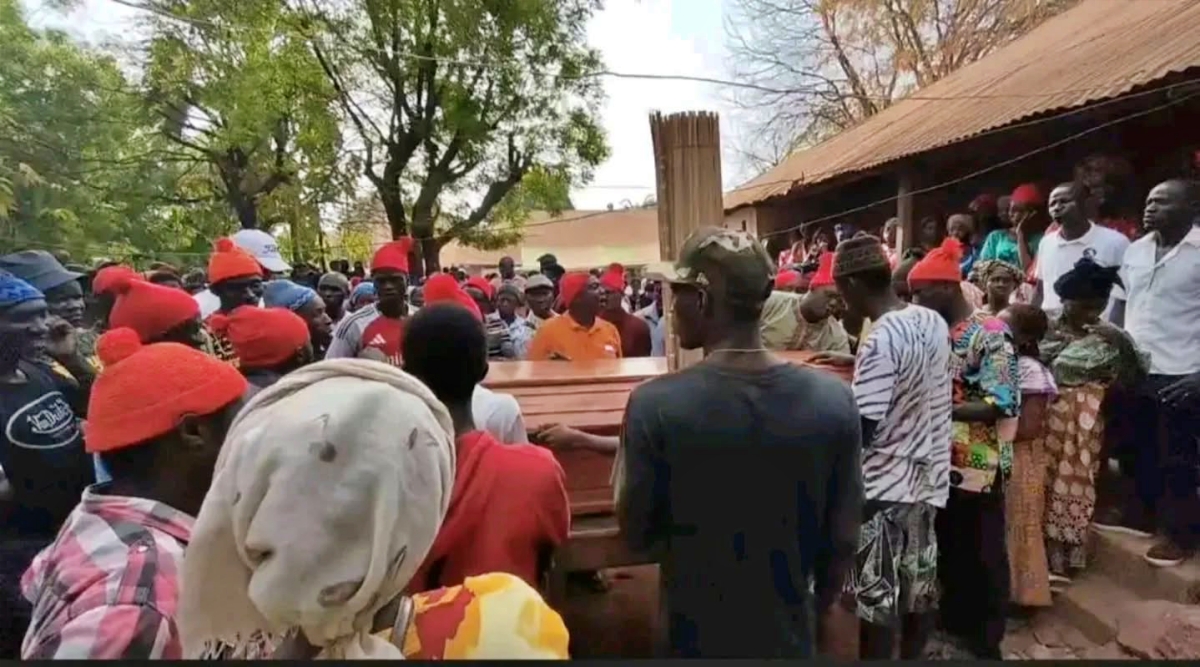
Gambiaj.com – (BISSAU, Guinea-Bissau) – The funeral of slain activist Vigário Luís Balanta in Bissau on Thursday was overshadowed by clashes after police fired tear gas at mourners who took to the streets demanding justice for his killing.
Balanta, a prominent youth activist and leader of the Movimento Revolucionário Pó di Terra, was buried days after his body was discovered in the outskirts of Nhacra, roughly 30 kilometers from the capital. His corpse reportedly bore signs of severe torture and violence, including gunshot wounds allegedly fired from a military-grade Kalashnikov rifle.
According to activists, Balanta’s body had been abandoned near the rice fields of N’Dam Lero on March 31, triggering outrage among civil society groups and opposition figures who view his death as a grave attack on freedom of expression and human rights in Guinea-Bissau.
Funeral Turns Into Protest
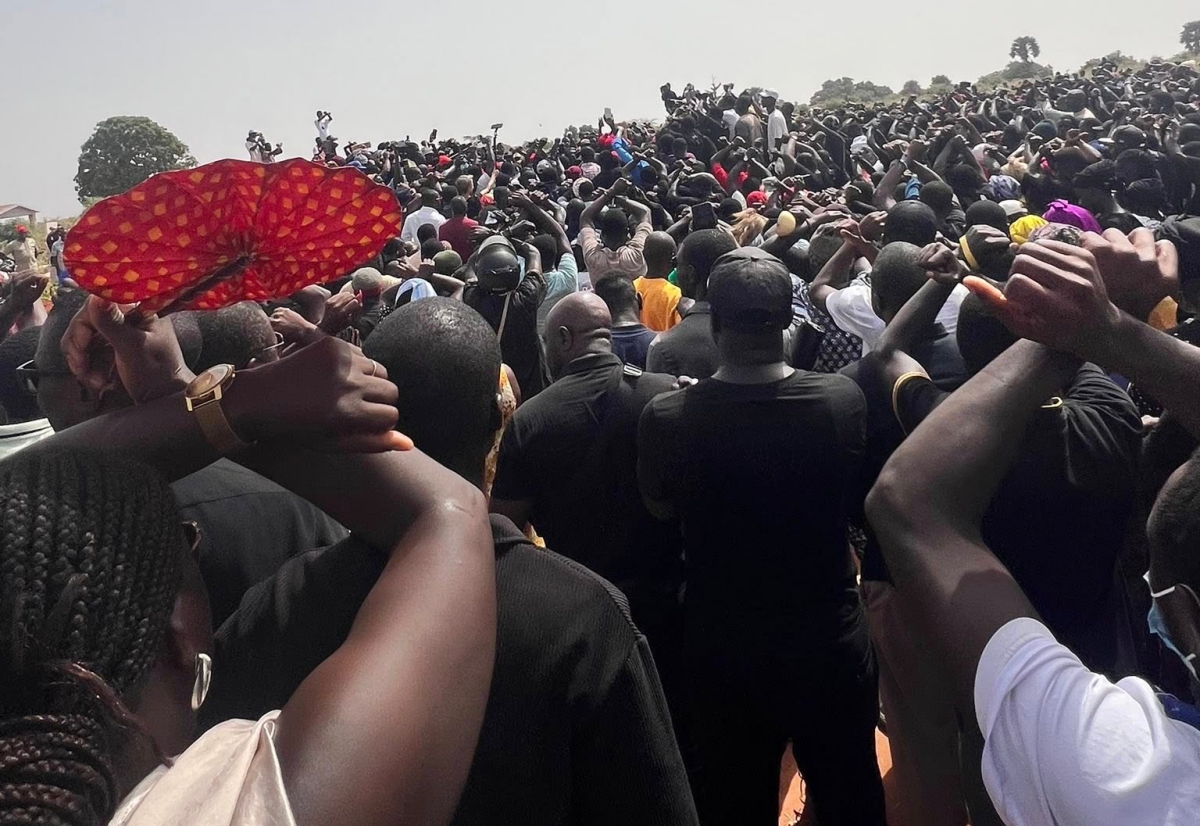
Thousands attended the funeral on Thursday morning
Following the burial ceremony, hundreds of mourners, including relatives, fellow activists, and supporters, organized a march toward the Palácio da Justiça to demand accountability for Balanta’s killing.
However, as the procession reached the São Paulo rice fields area, security forces intervened and fired tear gas to disperse the crowd.
Witnesses said the demonstrators continued chanting slogans calling for justice despite the crackdown. Dozens of people were reportedly affected by the tear gas, including residents inside nearby homes.
There were no immediate official reports of serious injuries or arrests.
Activist Voice Against Military Rule
Balanta had been a leading figure in the Pó di Terra revolutionary movement, a youth-driven civil society group opposed to the political crisis that followed the disputed November 2025 presidential election.
Activists say the movement had been demanding the publication of the election results and a return to constitutional order after the military seized power following the defeat of former president Umaro Sissoco Embaló.
According to opposition accounts, the military takeover led to the establishment of a transitional regime headed by allies of Embaló, including Ilídio Vieira Té and Horta N’ta, while several opposition figures were detained.
Among those reportedly arrested were Domingos Simões Pereira, leader of the African Party for the Independence of Guinea and Cape Verde (PAIGC), along with other political figures.
Meanwhile, presidential candidate Fernando Dias da Costa reportedly sought refuge at the Embassy of Nigeria in Guinea-Bissau during the crisis.
Mounting International Criticism
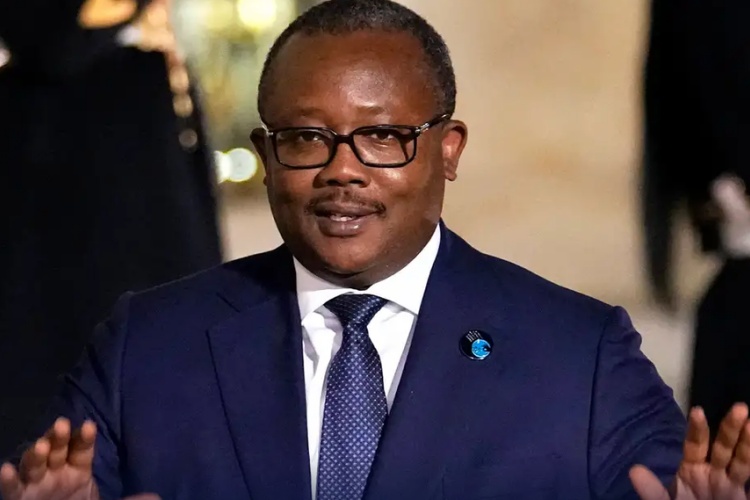
International election observers, including former Nigerian president Goodluck Jonathan, have previously accused Embaló of orchestrating what they described as a “ceremonial coup” to transfer power to military allies.
Embaló later sought refuge abroad after the crisis, reportedly attempting unsuccessfully to stay in Senegal, where Prime Minister Ousmane Sonko reportedly rejected the request. He eventually settled in Morocco, where he remains in exile.
Opposition activists say the transitional authorities continue to rule with repression, citing arbitrary arrests and restrictions on freedom of expression and assembly.
Balanta’s killing and the heavy police response to mourners demanding justice have intensified concerns among rights groups about the deteriorating political and human rights situation in Guinea-Bissau.


Leave a Reply