


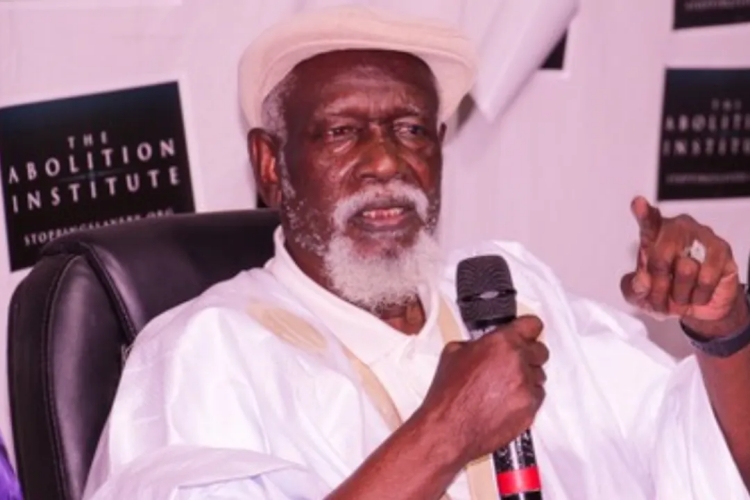
Gambiaj.com – (NOUAKCHOTT, Mauritania) – Authorities in Mauritania have refused entry to a foreign delegation that planned to pay tribute to late anti-slavery campaigner Boubacar Messaoud, sparking concern among human rights defenders over what they describe as a growing crackdown on dissent and civic freedoms.
The delegation, linked to the American-based Abolition Institute, had intended to travel to the capital, Nouakchott, to honor Messaoud, a historic figure in the struggle against slavery in Mauritania, who recently passed away.
According to activists, Mauritanian authorities denied the group entry without providing any official explanation, a move civil society organizations say reflects increasing hostility toward international scrutiny of the country’s human rights record.
Bakary Tandia, co-founder of the Abolition Institute and president of IRA-America, described the rejection as a troubling signal reminiscent of earlier diplomatic tensions between Mauritania and the United States.
“The rejection of their visa application is reminiscent of the 2017 pushback, which caused the exclusion of Mauritania from AGOA,” Tandia said, referring to the African Growth and Opportunity Act, a US trade arrangement granting preferential access to African exports.
He warned that a tougher stance against activists and international observers could damage Mauritania’s international standing.
“If the motive is to prevent the delegation from obtaining information on the detention of IRA members and MPs, it is ineffective because in the age of social media no country can control the flow of information,” he added.
Beyond the blocked visit, observers say the incident reflects wider concerns about the political climate in Mauritania, particularly following the sentencing of opposition lawmakers Mariem Cheikh Dieng and Ghamou Achour to four years in prison.
Human rights advocates argue that the recent developments point to an increasingly restrictive environment for dissenting voices.
Feminist and human rights activist Hawa Ciré Ba said the government’s actions were fueling fears of political closure.
“We can’t help but feel a certain worry,” she said. “When authorities limit visibility on sensitive issues such as human rights or slavery, this feeds fears that the country is becoming more closed off.”
She added that the government appeared to be prioritizing immediate political stability at the expense of dialogue and democratic openness.
Analysts say Mauritania risks further international isolation if it continues to harden its response to both domestic criticism and external human rights scrutiny.



Leave a Reply