


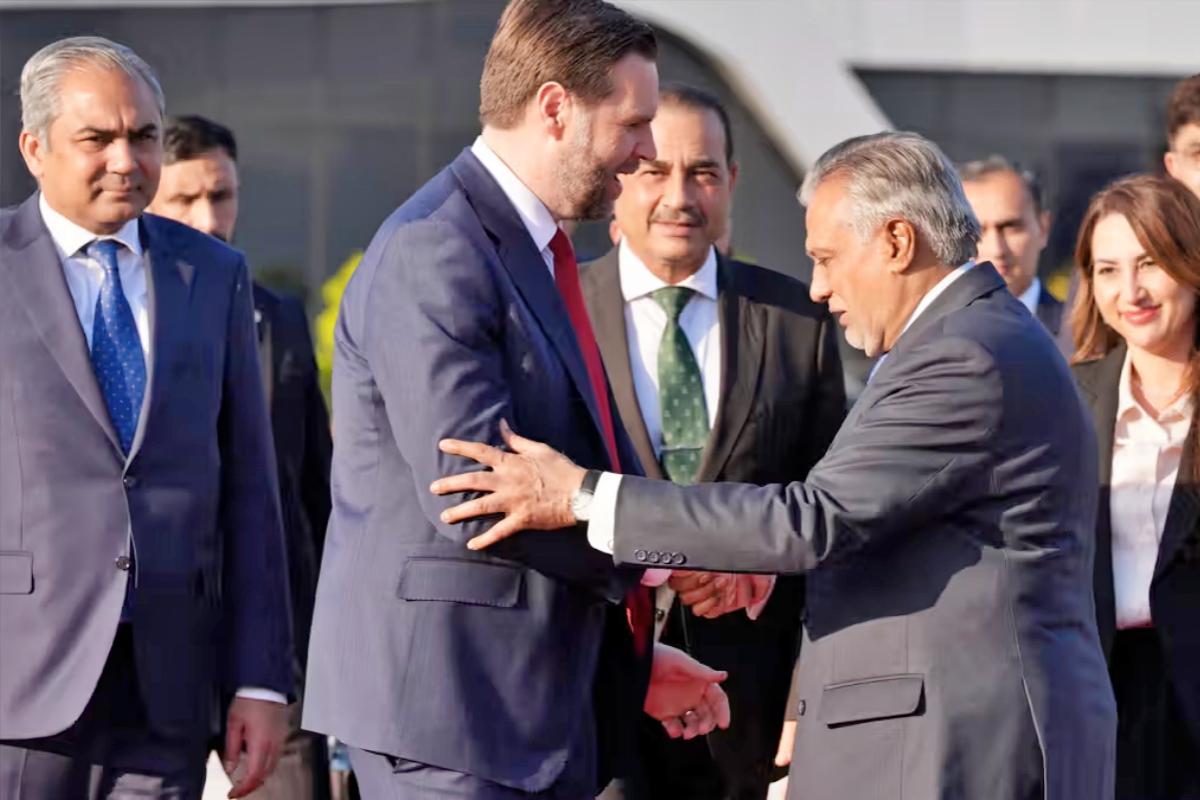
Gambiaj.com – (WASHINGTON, United States) – Hopes for a long-term peace agreement between the United States and Iran have collapsed after marathon negotiations failed to resolve key disputes over Tehran’s nuclear program and control of the Strait of Hormuz, officials said.
The breakdown follows 21 hours of intensive talks mediated in Islamabad, with both delegations departing the Pakistani capital without a deal. The impasse leaves in place a fragile ceasefire reached last Tuesday, with roughly 10 days remaining amid rising uncertainty.
President Donald Trump confirmed the collapse of negotiations in a social media post, stating that while progress had been made on several issues, the central dispute over Iran’s nuclear activities remained unresolved.
“So, there you have it; the meeting went well, and most points were agreed to, but the only one point that really mattered, nuclear, was not,” Trump said.
In a significant escalation, Trump announced that the US Navy would immediately begin blockading vessels in the strategic Strait of Hormuz, a critical global transit route. He said US forces would interdict any ship that has paid tolls to Iran and begin clearing mines allegedly laid in the waterway.
“Any and all ships trying to enter or leave the Strait of Hormuz” would be subject to the blockade, Trump warned, describing Iran’s actions as “world extortion.”
The US has made reopening the strait a key condition for any agreement, citing the severe disruption caused by its closure to global energy markets. Iran, however, has reportedly refused to restore free passage until a comprehensive deal is reached.
Vice President JD Vance said the negotiations ultimately failed due to Tehran’s unwillingness to abandon its nuclear program, a demand Washington considers non-negotiable.
“We leave here with a very simple proposal… our final and best offer,” Vance said, adding that it remains to be seen whether Iran will accept it.
Iranian officials, meanwhile, blamed the collapse on what they described as “US overreach and ambitions,” according to state-affiliated media.
The talks also stalled over Tehran’s demand for sanctions relief and access to billions of dollars in frozen assets, conditions the US refused to meet without concessions on nuclear enrichment and maritime access.
Analysts say the deadlock reflects deeper structural differences in negotiation approaches.
While Iran has historically engaged in prolonged diplomatic processes, such as the two-year effort that led to the 2015 nuclear deal, Trump has signaled little appetite for extended talks.
The Strait of Hormuz has emerged as a major pressure point in the negotiations. Iran, leveraging its control over the chokepoint, has used the disruption of tanker traffic as a bargaining tool following recent US and Israeli strikes.
With both sides entrenched and no immediate plans to resume dialogue, the collapse of the Islamabad talks raises concerns of further escalation in an already volatile region, with potential global economic repercussions.







Leave a Reply