


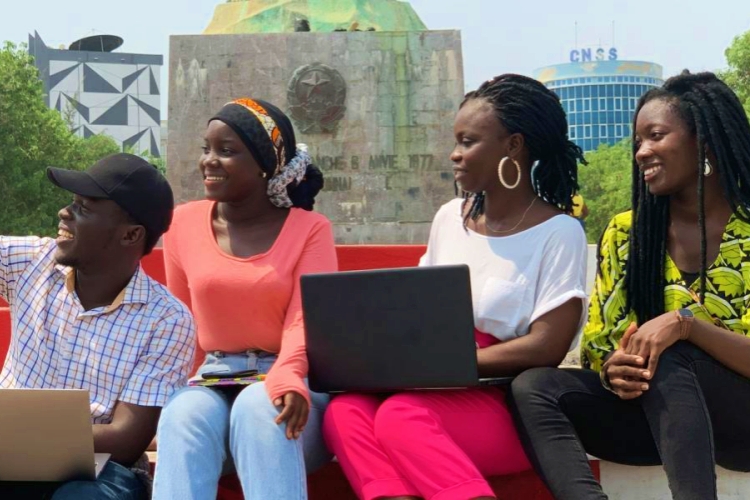
Gambiaj.com – (BANJUL, The Gambia) – Across Africa, conversations about the future often revolve around leaders. We debate presidents, opposition figures, reformers, and political movements. We celebrate some, criticize others, and invest considerable hope in those who promise change.
Yet perhaps the most important question facing Africa today is not who will lead us.
It is how we think.
More than six decades after independence, many African countries have experienced recurring cycles of hope and disappointment. New leaders emerge promising transformation, and citizens rally behind them with optimism and expectation. Some achieve meaningful progress; others fall short.
Yet when the excitement fades, many of the same challenges remain: poverty, unemployment, corruption, weak institutions, governance deficits, and economic dependence.
This pattern should prompt an important reflection. Have we focused too much on personalities and too little on the foundations upon which successful societies are built?
Leadership matters, of course. Visionary leaders can inspire nations, mobilize citizens, and initiate reform. But no country has achieved lasting prosperity through leadership alone.
Sustainable progress depends on strong institutions, structures that provide continuity, promote accountability, uphold the rule of law, and ensure that national development does not rise or fall on the presence of a single individual.
Countries that achieve enduring progress are, more often than not, those that succeed in building institutions stronger than the personalities who lead them.
This reality also underscores the importance of democratic culture. A healthy democracy does not require uniformity of opinion. On the contrary, progress often emerges from debate and disagreement. The freedom to question, to criticize, and to offer alternative viewpoints is not a threat to national unity; it is one of the principal ways societies learn, adapt, and improve.
When criticism is treated as disloyalty and dissent as a threat, public discourse suffers. Societies become less capable of identifying mistakes, correcting course, and responding to new challenges.
Africa’s future requires citizens who can engage in robust debate while respecting differing views and leaders who understand that criticism is not an assault on authority but an essential feature of democratic governance.
Beneath the questions of leadership and democracy, however, lies an even deeper issue: education.
Too often, discussions about education focus exclusively on schools, examinations, qualifications, and employment. Important as these are, education serves a far broader purpose. It shapes how a society understands itself and prepares citizens to participate meaningfully in national life.
Many African countries inherited educational systems designed for colonial administrations rather than independent nations. While those systems produced skilled professionals, they frequently paid insufficient attention to African history, African experiences, and African perspectives.
As a result, many Africans continue to interpret their societies through frameworks that are not always rooted in local realities.
The challenge is not to reject global knowledge. Africa must remain fully engaged with science, technology, innovation, trade, and international cooperation. The challenge is to engage the world from a position of confidence, grounded in a clear understanding of our own history, culture, and aspirations.
An Africa-centered education should therefore cultivate critical thinking, creativity, civic responsibility, and a deeper appreciation of the continent’s opportunities and challenges. It should teach not simply what to think, but how to think.
While political and economic reforms remain essential, the deeper struggle for Africa’s future is intellectual. Nations are ultimately shaped by the ideas they embrace, the values they transmit, and the quality of thought they cultivate across successive generations.
Africa’s abundant natural resources and youthful population represent enormous opportunity. Yet resources alone do not guarantee development.
History offers many examples of nations with limited natural wealth that prospered precisely because they invested in people, knowledge, institutions, and good governance. The lesson is clear.
Africa’s greatest resource is its people.
The debate about the continent’s future must therefore extend beyond elections, political parties, and individual leaders. It must encompass education, citizenship, democratic culture, institution-building, and, perhaps most urgently, the decolonization of the African mind.
For in the final analysis, Africa’s destiny will not be decided solely in presidential palaces, cabinet rooms, or parliamentary chambers.
It will be decided in classrooms, in communities, in institutions, and in the minds of Africans themselves.





Leave a Reply