


Gambiaj.com – (BANJUL, The Gambia) – That day, without speeches or instruction, she taught us lessons that remained with us for life: that faith travels across borders, that true character needs no announcement, and that identity is something carried quietly within.
Perhaps that is also why, as Tobaski approaches once again, writing these reflections feels especially appropriate. Certain seasons of life return not only with celebration but also with remembrance.
As the years pass, I find myself returning more often to memories like these. The older we grow, the more we realize that life is shaped not only by achievement or ambition, but also by unseen sacrifices, whispered prayers, and the steady presence of those who carried us before we could stand on our own.
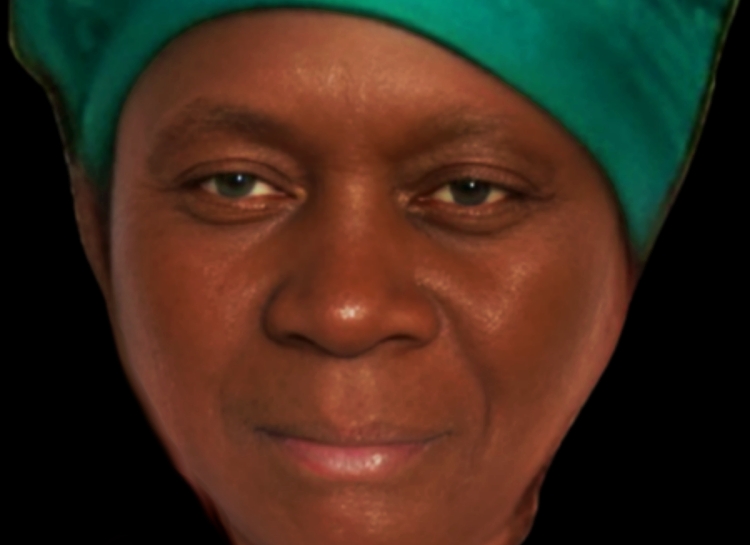
For me, that presence was my mother, Yass.
Throughout my life, across ministries, national assignments, and difficult seasons, one figure remained constant. She never sought recognition for herself. Yet through wisdom, faith, and remarkable composure, she shaped the person I became. She was the first institution I ever knew, the shelter that protected me long before the world began testing me.
Like many mothers of her generation, she did not speak often about hardship. She simply endured it. Her strength revealed itself not through noise or public display, but through patience, restraint, prayer, and an unwavering readiness to give more than she ever kept for herself.
Even during the uncertain political climate that followed the 1994 military takeover, her advice was never driven by anger or fear. She believed deeply in service to country, but she also believed that service without integrity had no meaning.
She would often remind us that if one chose to remain in public service, one must serve honestly and honorably. But if one could no longer do so truthfully, then it was better to step aside than to compromise one’s conscience.
In December 1999, I was involved in a serious car accident while driving alone. The vehicle somersaulted three times before finally coming to rest. Villagers rushed toward the wreck expecting tragedy. By the mercy of Allah, I had already climbed out alive, bruised and shaken, but alive.
An elderly villager looked at me carefully and asked a question I have never forgotten:
“Who is your mother?”
At the time, I understood the question only partially. Today, I understand it completely.
While I was recovering in the hospital, another moment stayed with me quietly over the years. A senior official appeared more concerned about the condition of the vehicle than the well-being of the person who had survived the accident.
Yet others responded differently. President Yahya Jammeh, Vice President Isatou Njie Saidy, the late Famara Jatta, a childhood friend and brother, and Edward Singhateh all conveyed concern first for my health and recovery.
Experiences like these teach one an enduring lesson about leadership: in moments of crisis, people often reveal not their authority, but their humanity.
The following morning, while I lay recovering in the hospital, my mother spoke gently but firmly. She reminded me that even a newly repaired vehicle must be driven carefully. Then she said words that have remained with me ever since:
“You may hold the steering wheel, but it is Allah who guides the journey.”
When I wondered aloud whether foul play might have been involved, she immediately stopped me. Her instinct was never bitterness, suspicion, or revenge. Instead, she urged me first to thank Allah for survival rather than burden my heart with matters beyond my control.
She taught caution without fear, strength without harshness, and faith without arrogance.
Years later, after the Paul Commission, when I was dismissed and sent home, I went to inform her in the presence of my sisters, Kumba and the late Bintou.
She listened quietly and reminded me that this was the second time I had been removed under the same leadership. Then, with calm clarity and gentle humor, she observed that while I seemed eager to continue serving, service itself did not appear eager to keep me.
Then her expression changed.
She told me firmly that she would not allow it to happen a third time. If I were ever approached again to return, I should respectfully decline and simply say that my mother had advised me not to go back.
Behind her softness stood a strength no intimidation could weaken.
Years before her passing, my elder sister Codou bought her a tablet with the Holy Qur’an loaded onto it. Over time, I noticed that she repeatedly listened to Surah Ar-Rahman. One day, I asked her why. She simply smiled and said she loved the Surah.
Looking back now, I realize that what drew her repeatedly to the Surah was not only its beauty but also its reminder of mercy, gratitude, and the countless favors of Allah that human beings too often overlook. Faith, for her, was never performance. It was reassurance. It was inner peace.
During Ramadan, my wife Ellen and I made it our duty each evening to prepare and deliver her iftar before the call to prayer. Before we left, she would raise her hands and pray for us. Over time, I came to understand that some prayers become part of your protection long before you recognize the dangers you have escaped.
On Tobaski Day in 2019, shortly after the Eid prayers, Allah called her home peacefully at the residence of our sister, Aji Louise Njie, in Latrikunda.
For years, it had been a cherished family tradition for children, grandchildren, and great-grandchildren to stop by immediately after Eid prayers to greet her, seek her blessings, and receive her prayers before continuing the day’s celebrations. Yet on that particular morning, without discussion or intention, each of us returned directly to our own homes.
Then the calls came informing us that our mother had peacefully passed away.
To this day, the silence of that morning remains with me.
Her final wish was simple yet profound: that her children and grandchildren remain united, guided always by faith, humility, patience, and love.
Some people leave behind property, titles, or wealth. Mothers like her leave behind something greater: moral shelter.
No tribute to my mother would be complete without acknowledging the support she gave to our father, Ousman E. Njie, known to many as Njie Sarro or Njie Bu Serr. Together, they built a home grounded in faith, compassion, discipline, humility, and respect for others.
As I grow older, I increasingly realize that the deepest forms of inheritance are often invisible. They reveal themselves years later in how one responds to hardship and how one treats others during difficult seasons of life.
Today, when I reflect on my mother’s life, I do not think first of material possessions or worldly accomplishments. I think instead of prayers whispered before dawn, quiet sacrifices unnoticed by others, counsel given without judgment, and a generation of women who carried families, communities, and values with extraordinary grace while asking almost nothing in return.
Many of them never appeared in history books. Few occupied public office. Yet their influence shaped lives far beyond the walls of their homes. They taught resilience without bitterness, discipline without cruelty, and faith without display.
Perhaps that is the true inheritance of a good mother: not wealth or status, but prayers that continue protecting her children long after she has gone.
And as time continues its steady march forward, I carry her words with me still, mindful that while years pass and seasons change, the prayers of those who raised us continue to shelter us long after they have returned to Allah.










Leave a Reply