


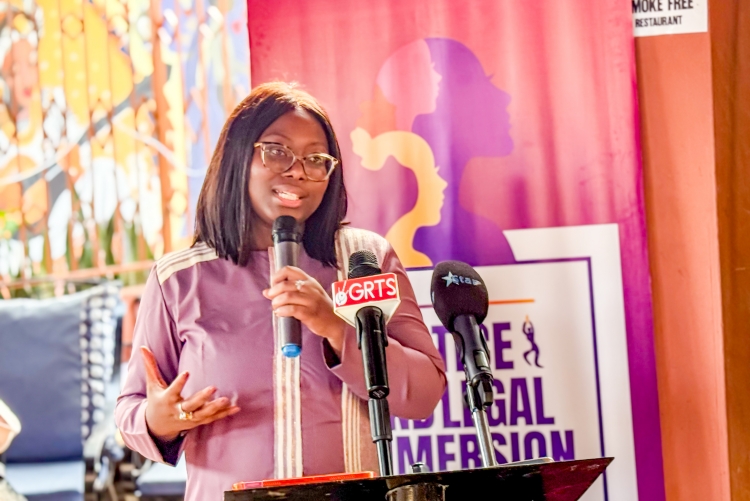
Gambiaj.com – (BANJUL, The Gambia) – Young women from across The Gambia have pledged to lead community initiatives against child marriage, teenage pregnancy, and gender inequality after completing the Jali–Young Women’s Justice and Legal Immersion Programme, an initiative aimed at nurturing the country’s next generation of legal and justice advocates.
Empowering Future Justice Leaders
Speaking at the program’s closing Justice Forward “Bantaba Chat,” founder Dr. Satang Nabaneh said the week-long fellowship was designed to equip young women not only with legal knowledge but also with the confidence to use their voices to advance justice in their communities.
“We’re not just looking at institutions to solve the problem,” she said. “We have been creating a space where the young fellows are able to say, ‘We can do this’ as young people in our communities.”
Dr. Nabaneh explained that each fellow would return to her community to implement a project addressing issues affecting girls and young women, including teenage pregnancy, child marriage, and gender inequality, while continuing to receive mentorship from legal professionals and partner institutions.
She said the fellowship brought together senior secondary school students, university students, and students from The Gambia Law School in an intergenerational learning model that combined mentorship with practical exposure to the justice sector.
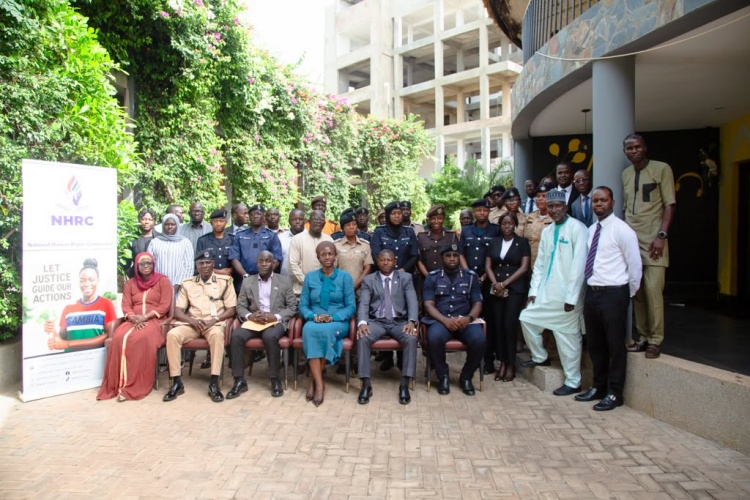
Throughout the week, participants visited key institutions, including the Office of the Chief Justice, the Ministry of Justice, the National Assembly, the National Human Rights Commission, the Institute for Human Rights and Development in Africa (IHRDA), the Gambia Bar Association, and the Female Lawyers Association of The Gambia, where they engaged with judges, lawyers, and policymakers.
Participants Reflect on Impact
Highlighting the program’s impact, Dr. Nabaneh recounted the story of a senior secondary school student from Soma who had never traveled beyond Brikama before joining the fellowship. During her first television interview, the student spoke about teenage pregnancy and linked it to poverty, child marriage, and patriarchal social norms that limit girls’ opportunities.
“For us, that demonstrates that the fellows are beginning to understand that these issues are interconnected,” Dr. Nabaneh said.
Reflecting on the experience, Grade 11 student Awa Jallow said the fellowship had transformed her understanding of justice.
“Before this week, I thought justice only had to do with courtrooms,” she said. “Now I know justice exists in our communities, our schools, and our homes. It begins with standing up for what is right.”
She said interacting with lawyers and other legal professionals helped her realize they were ordinary people who had overcome challenges to serve society, inspiring her to consider a career in law.
University of The Gambia law student Zainab Drammeh said the fellowship demonstrated that access to justice begins with legal awareness and empowering young people to recognize that they belong in decision-making spaces.
“Legislation alone is not enough for justice,” she said. “Access to justice begins with knowing your rights, having representation and ensuring that young people understand they have a place in these spaces.”
Drammeh described the fellowship as one of the most transformative experiences of her life, saying participants had been entrusted with the responsibility of using their knowledge to improve their communities.
Building a Pipeline of Justice Advocates
Dr. Nabaneh said the program also seeks to build a pipeline of future lawyers, judges, academics, and human rights advocates, stressing that justice is not confined to courtrooms but should be reflected in everyday life.
She urged the fellows to embody the meaning of “Jali“—the Mandinka word for oral historians and truth tellers—by speaking truth to power and becoming advocates for positive change in their communities.












Leave a Reply