


Gambiaj.com – (DAKAR, Senegal) – A major investigation by France 24 and an international consortium of journalists has alleged that a Russian influence operation orchestrated hundreds of propaganda articles for publication in African media, with Senegal emerging as one of the countries targeted in an effort to expand Moscow’s political influence in West Africa.
The investigation, based on about 1,400 leaked internal documents obtained by the pan-African newspaper The Continent and analyzed by the Forbidden Stories consortium, claims that a Russian organization known as Africa Politology coordinated a sophisticated campaign to place pro-Russian and anti-Western content in African news outlets.
According to the report, Africa Politology, described as operating under the direction of Russian intelligence services and already under U.S. sanctions, producedd ready-made articles and paid intermediaries to have them published across the continent.
Senegal Among Key Targets
France 24’s investigation suggests that after Russia strengthened its influence in Mali, Burkina Faso, and Niger, it turned its attention to Senegal, particularly following the election of the sovereignist PASTEF government in 2024.
The leaked documents indicate that one of the campaign’s objectives was to fuel anti-French sentiment and promote narratives favorable to Russian geopolitical interests in Senegal.
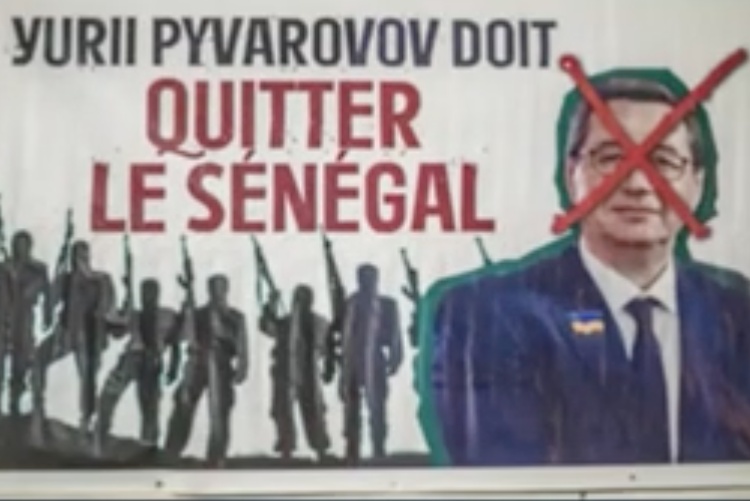
Among the operations cited was a coordinated campaign calling for the expulsion of Ukraine’s ambassador to Senegal.
Posters bearing that message appeared in Dakar in June 2024 and were amplified through social media posts and online articles. Investigators say the campaign was orchestrated as part of the wider Russian propaganda effort rather than a grassroots Senegalese initiative.
Hundreds of Sponsored Articles
The investigation says that between June and November 2024, Russian operatives prepared at least 644 articles for publication across African media outlets.
According to the leaked documents, intermediaries allegedly offered African journalists and publishers between $250 and $650 for each published article, with total spending estimated at around $300,000 during the six-month period.
The content reportedly included attacks on Ukraine, criticism of Western governments, pro-Russian opinion pieces, and articles attributed to fictitious authors.
Senegalese Media Implicated
Among the media organizations mentioned in the investigation is PressAfrik, a Senegalese online publication recognized under the Journalism Trust Initiative established by Reporters Without Borders.
France 24 reported that investigators identified 13 articles allegedly supplied through the Russian network that appeared on the publication’s website.
PressAfrik Director Ibrahima Lissa Faye denied knowingly participating in the operation, saying the articles were published without the editorial team’s awareness.
After being alerted by the investigative journalists, the publication removed the articles.
Afaye said the articles had bypassed editorial scrutiny and insisted that no payments linked to the alleged operation appeared in the company’s financial records.
Pressure on Journalists
The report also highlights the economic difficulties facing many African newsrooms, arguing that financial pressures make some media organizations vulnerable to external influence campaigns.
One Senegalese journalist interviewed anonymously admitted that the demand for constant online content sometimes led journalists to publish material supplied by colleagues without thoroughly verifying its origin.
He said he had published an article critical of European actions in Africa after receiving it from another journalist, maintaining that he was not paid for doing so.
Regional Network of Intermediaries
The investigation identifies Cameroon-based Afrique Media TV as one of the largest distributors of the alleged Russian propaganda, saying it published 125 of the articles found in the leaked documents.
Journalists in several West African countries allegedly acted as intermediaries, forwarding articles to news organizations in exchange for payments.
France 24 also cites previous investigations linking some intermediaries to the Wagner Group and other Russian influence networks operating across Africa.
Afrique Media denied receiving any of the payments mentioned in the investigation and stated that a former executive named in the report had been dismissed in October 2025 for disciplinary reasons.
Russian Influence Continues
The investigation concludes that Russia’s influence campaign in Africa has evolved beyond military partnerships to include sustained information operations aimed at shaping public opinion.
It notes that Russia Today has since opened an office in Dakar, organized cultural events promoting Russia-Africa relations, and begun training Senegalese journalists, officially to combat disinformation.
Despite these activities, France 24 says it remains difficult to measure the overall impact of the propaganda campaign on public opinion in Senegal and elsewhere in Africa.
However, investigators argue that the leaked documents provide rare evidence of an organized effort to influence African media and political discourse through coordinated disinformation operations.






Leave a Reply