


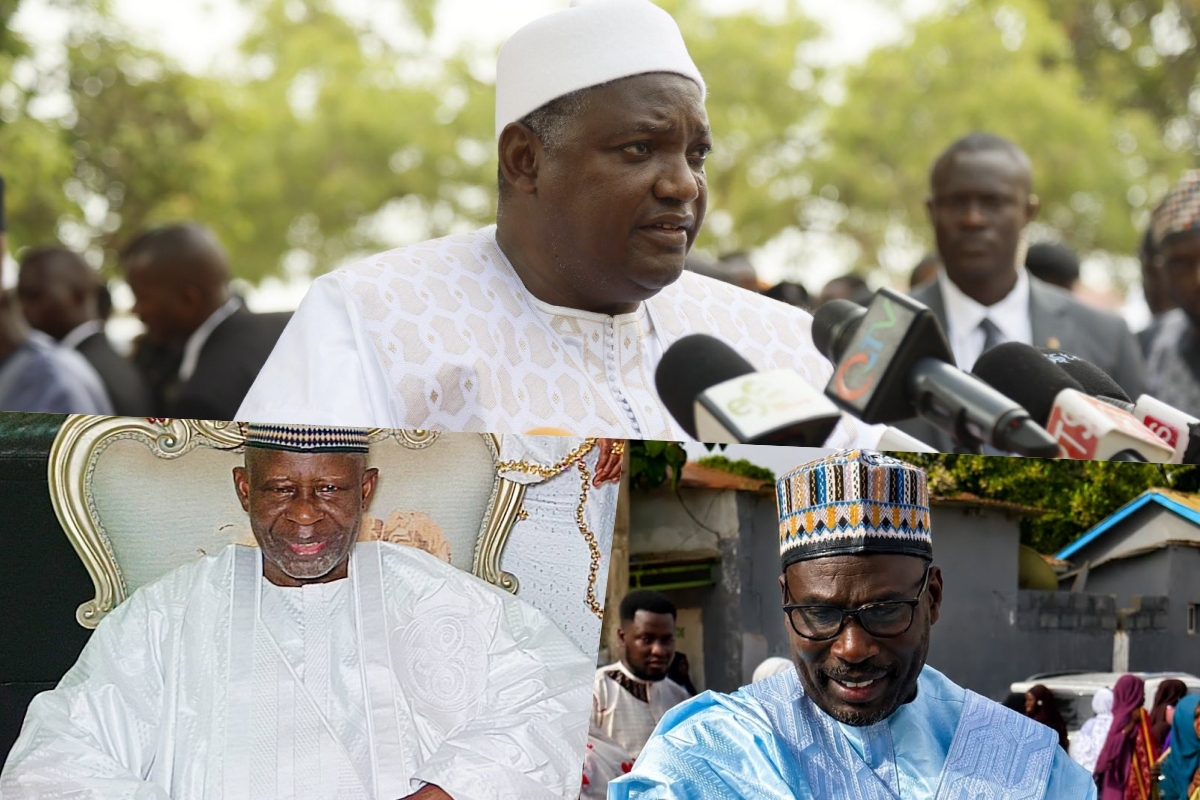
Gambiaj.com – As Gambians across the country and in the diaspora joined the global Muslim community in observing Eid-ul-Adha, locally and affectionately known as Tobaski, political leaders seized the sacred occasion to deliver messages that went beyond religious felicitation, weaving together themes of national unity, economic hardship, ethnic tolerance, and the looming test of the December presidential election.
The holiday, rooted in the Quranic story of Prophet Ibrahim’s willingness to sacrifice his son in obedience to Almighty Allah, has long been one of The Gambia’s most cherished annual celebrations, a day when the aroma of grilled meat fills neighborhoods, families gather in their finest attire, and communities transcend their differences in shared prayer.
But this year, with the country standing at a significant political crossroads, the messages from its leaders carried an unmistakably heavier resonance.
Barrow Calls for Peaceful Election, Speaks from OIC Chair
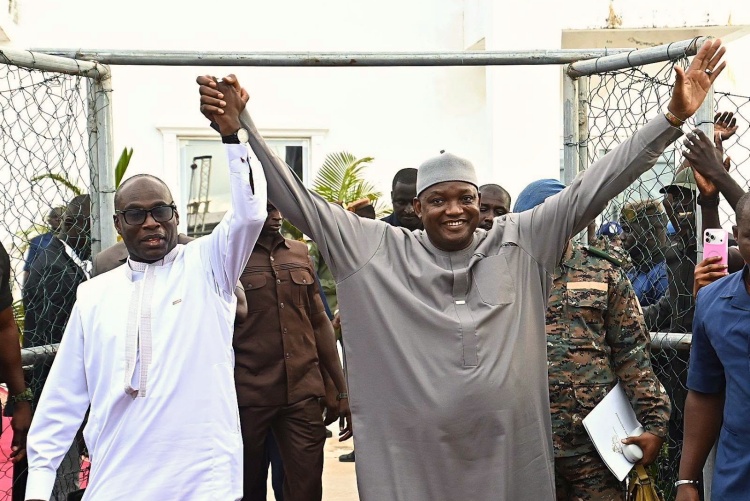
President Adama Barrow, the incumbent and leader of the ruling National People’s Party (NPP), used his Tobaski message to remind Gambians of the critical juncture the nation occupies.
“This year is very important in our calendar,” the President said, calling on citizens to “maintain peace and stability in this country so that we can organize a very successful election, a peaceful and transparent election that will be recognized by the international community.”
Framing the election as a collective national responsibility rather than a partisan contest, President Barrow urged Gambians to “campaign peacefully towards fair, democratic, and credible elections,” and extended an olive branch of sorts, calling on all citizens to “reconcile in the interest of our country.”
Wearing his hat as current Chairperson of the Organisation of Islamic Cooperation (OIC), President Barrow also extended his message beyond The Gambia’s borders, appealing to parties embroiled in the ongoing conflicts in the Middle East to “embrace a peaceful resolution for the common good,” a reminder that Tobaski, as a universal Muslim feast, draws attention to the condition of the broader global Ummah.
Darboe Delivers a Stirring Warning Against Tribalism
Perhaps the most passionate and wide-ranging message came from veteran opposition leader Ousainou Darboe, Secretary General and leader of the United Democratic Party (UDP), who used the occasion to deliver a pointed rebuke of what he described as a dangerous drift toward ethnic politics in the country.
“We must eschew this terrible thing of ethnic differentiation that is being created in this country by people from whom much is expected,” Darboe said, his words reflecting a growing concern among political observers that identity-based politicking is increasingly poisoning public discourse ahead of the elections.
In language that was both pastoral and political, Darboe called on leaders to rise above tribal loyalties and stop “pigeonholing one another into positions to which we do not belong.” He did not name any individual or party, but his message was unmistakably directed at those he believes are deliberately stoking division for electoral gain.
“We do not expect leaders in this country to fund tribalism and to want to live on tribalism in order to achieve their own objectives,” he said. “That will be a disservice to this country.”
Darboe reserved some of his most emphatic words for the country’s youth, urging them to take ownership of their national destiny. “This is your country,” he said. “Your future cannot be left in the hands of your leaders. You must take the future of this country into your hands and do so responsibly, with vision, with focus on the things that are good for this country.”
He also called on Gambians to move from complaint to action, “stop the talking and do the walking,” in what read as both a political rallying call and a moral imperative for civic engagement.
Faal Speaks to the Economic Pain Behind the Celebrations
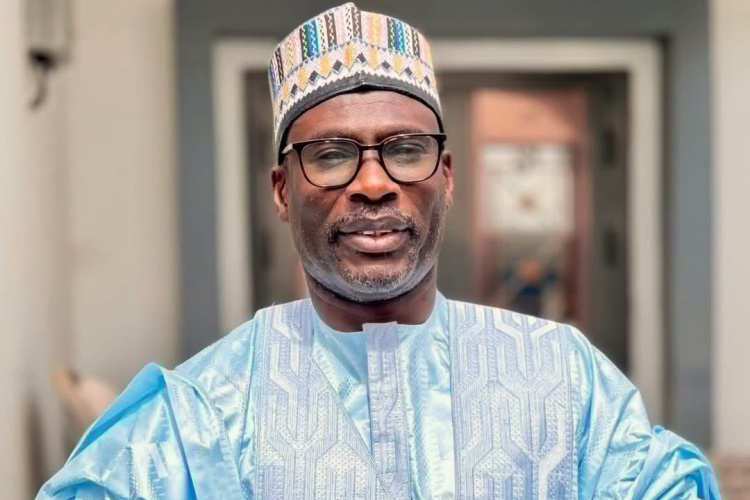
Essa Mbaye Faal, the party leader of APP-Sobeyaa, offered what many struggling Gambian families may have found to be the most grounded message of the day, one that acknowledged the invisible weight behind the festivities.
While extending warm Tobaski greetings to all Gambians, Faal was candid about the hardships that shadow the celebrations for many households. “The rising cost of rams, the increasing cost of living, and the unstable electricity supply continue to place heavy pressure on homes, businesses, and livelihoods across our country,” he said.
His message struck a chord likely felt by many Gambians who have watched the price of Tobaski rams spiral in recent years, putting the cherished tradition of sacrifice out of reach for a growing number of families.
“We empathize deeply with every family making sacrifices to keep the spirit of Tobaski alive despite these hardships,” Faal said, before making a broader political statement: “Gambians deserve a country where hard work is rewarded with dignity, reliable public services, and economic opportunity.”
APC’s Sima Urges Generosity Amid Rising Inflation
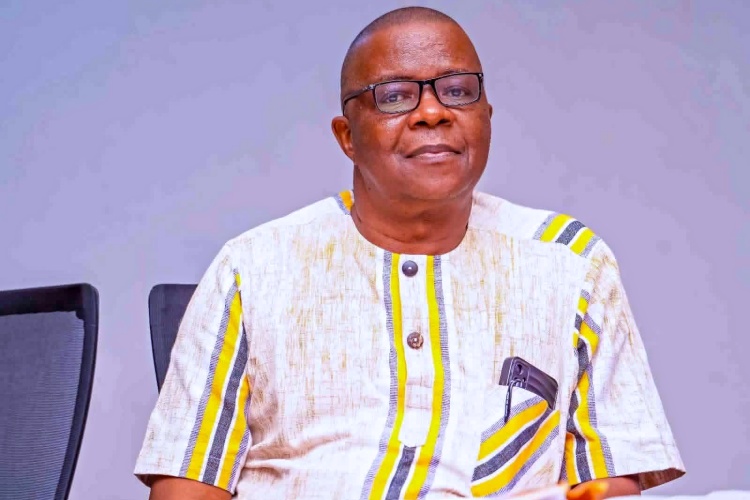
Modou Lamin Sima, Secretary General and Party Leader of the Alliance of Progressive Citizens Party (APC), also anchored his Tobaski message in the economic realities of ordinary Gambians, citing recent indicators suggesting inflation has exceeded six percent.
“Rising inflation has significantly increased the cost of living and placed immense pressure on ordinary citizens,” Sima said, encouraging Gambians to “exercise prudence, moderation, and financial discipline during this festive season.”
But Sima was equally emphatic about the spirit of generosity that defines Eid-ul-Adha, making a heartfelt appeal to the more fortunate members of society. He specifically called on the wealthy to extend charity to “the poor, widows, single mothers, orphans, charity organizations, boarding schools, and vulnerable families struggling through these difficult times.”
“No Gambian should feel abandoned or forgotten during these sacred days of celebration,” he said. “The true essence of Tobaski lies not only in sacrifice but also in sharing, caring, and uplifting humanity.”
A Nation Celebrating and Contemplating
Taken together, the messages of Gambia’s political leaders on this Tobaski paint a picture of a nation that is simultaneously joyful and introspective, a people who know how to celebrate, but who are increasingly aware of the weight of the choices ahead of them.
With the December presidential election drawing closer, the calls for peace, unity, and civic responsibility are not merely seasonal pleasantries.
They are, in many ways, a measure of the health of The Gambia’s young democracy, and a test of whether its leaders and citizens can hold together the fragile but precious gains made since the end of more than two decades of authoritarian rule.
As the prayers were said and the rams were slaughtered across the length and breadth of this small but resilient nation, one thing was clear: this Tobaski was more than a feast. It was, for many, a moment to reflect on the kind of Gambia they want to build, and the kind of election year they are prepared to have.
Eid Mubarak.





Leave a Reply