


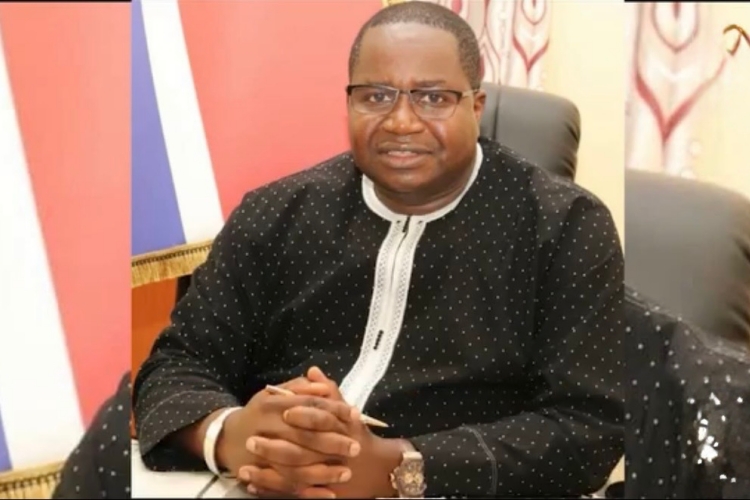
Gambiaj.com – (BANJUL, The Gambia) – The Government of The Gambia’s spokesperson, Ebrima G. Sankareh, has acknowledged growing public frustration over persistent electricity outages while arguing that The Gambia should strengthen its domestic power generation capacity to reduce its vulnerability to regional disruptions.
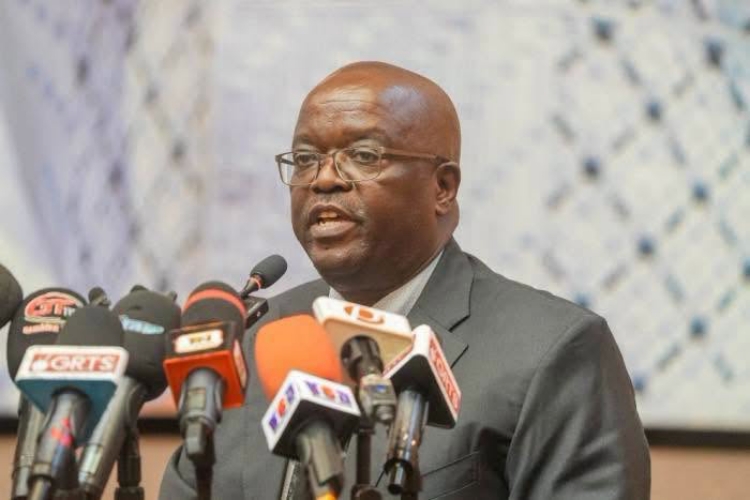
Speaking on West Coast Radio’s Coffee Time program, Sankare said the country’s current electricity challenges are largely influenced by factors beyond the government’s direct control, including technical problems in neighboring countries and broader geopolitical developments affecting energy supplies.
“NAWEC has no policy to deliberately frustrate Gambians,” Sankare said. “This is a situation that neither President Adama Barrow nor NAWEC has control over. What happens in the geopolitical theater and in the region affects us.”
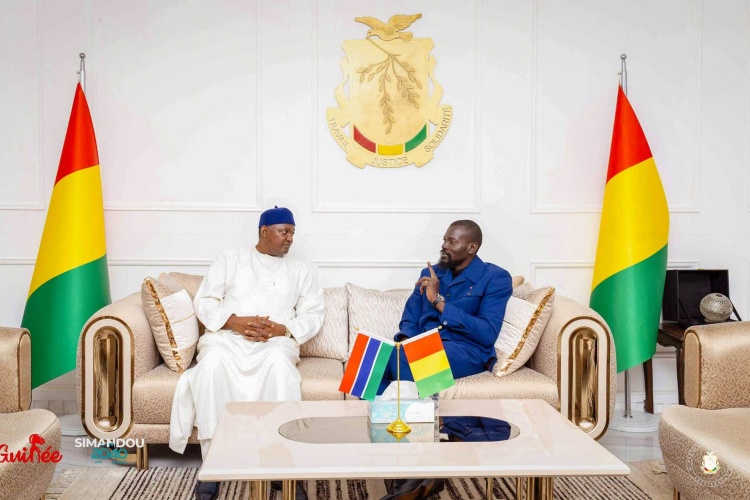
According to Sankare, power supply difficulties in Guinea and Senegal have had knock-on effects on The Gambia because of the interconnected nature of regional electricity networks.
Call for Greater Domestic Capacity
While defending the government’s handling of the crisis, Sankare argued that the country should revisit efforts to strengthen local electricity generation to lessen its dependence on external sources.
“If Kotu had been neglected to the point that it had fallen into a state of disrepair, we should seriously consider getting Kotu to do what it used to do,” he said, referring to the country’s local power generation facilities. “We should be able to have some local capacity so that whenever there is a problem in Guinea, whenever there is a problem in Senegal, we are not subjected to what we are all experiencing now.”
His remarks come as businesses and households across the country continue to grapple with prolonged and frequent power cuts, forcing many to rely on costly generators to sustain operations.
Acknowledging Public Hardship
Sankare said he understood the frustrations of ordinary citizens, noting that he personally experiences the same power interruptions.
“I go through the same thing,” he said. “It is not a deliberate policy by the government to frustrate Gambian people.”
He also argued that the impact of outages is felt more acutely because modern societies have become heavily dependent on electricity for daily life and economic activity.
“Because we are exposed to electricity, we will feel the pinch when there is no electricity,” he said.
Regional Interdependence
During the interview, Sankare rejected suggestions that The Gambia has become entirely dependent on imported electricity. Instead, he described the country’s relationship with regional power suppliers as one of interdependence through shared infrastructure initiatives such as the Organisation for the Development of the Gambia River Basin (OMVG).
Nevertheless, he maintained that expanding domestic generation capacity would help the country better withstand disruptions elsewhere in the region.
“I would hope and aspire to a day when you and I will wake up every day without any sporadic electricity problems,” he said. “That is the hope of the President and every genuine Gambian.”
The comments come amid mounting public concern over electricity reliability, with residents and business owners warning that recurring outages are disrupting livelihoods, public services, and economic activity across the country.








Leave a Reply