


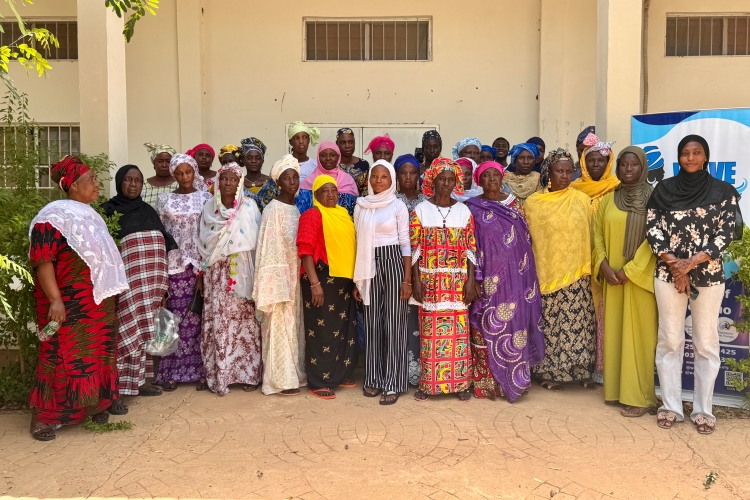
Gambiaj.com – (BANJUL, The Gambia) – Women survivors of past human rights violations in The Gambia have renewed calls for justice and accountability, saying they continue to live with the consequences of abuses years after testifying before the Truth, Reconciliation and Reparations Commission (TRRC).
Their concerns were voiced at the start of a three-day capacity-building training organized by WAVE-Gambia for executive members of Women Support Groups (WSGs) from seven communities across the country.
The training, held in Soma, brought together about 30 women leaders engaged in healing, advocacy, and economic empowerment initiatives for survivors.
The program, supported by the African Transitional Justice Legacy Fund (ATJLF), the National Endowment for Democracy (NED), and the International Rehabilitation Council for Torture Victims (IRCT), seeks to strengthen leadership, governance, psychosocial support, and advocacy skills among women survivors.
Speaking at the opening ceremony, WAVE-Gambia Programmes Development Officer Essa Sanneh said the initiative was designed to ensure survivors are equipped to sustain their advocacy efforts beyond the lifespan of donor-funded projects.
“We realized that after identifying executive members, they needed training to effectively carry out their responsibilities,” Sanneh said. “Projects may end, but the people remain, and survivors must be empowered to speak for themselves.”
He noted that transitional justice is a long-term process that requires sustained engagement with affected communities.
“The process cannot simply be confined to timelines. Survivors must remain engaged, informed, and involved throughout,” he added.
Despite the training’s focus on capacity building, participants used the forum to express frustration over what they described as the slow pace of justice and reparations.
Ajaratou Mariama Trawally of Mansajang Kunda in Basse said many survivors continue to struggle with the emotional and social consequences of past abuses.
“We cannot carry this burden in silence forever,” she said. “The suffering is written on the faces of those who went through it. Every person here has a story of loss.”
Trawally said many victims believe justice remains incomplete despite the conclusion of the TRRC process.
“The truth is not enough without justice,” she said, urging the government to strengthen accountability measures and ensure that victims’ rights are fully respected.
She also called for greater transparency within state institutions and stronger support mechanisms for survivors and their families, noting that many victims continue to rely on community-based groups for emotional and financial assistance.
Participants highlighted the important role played by Women Support Groups in bringing survivors together to share experiences, provide mutual support, and advocate collectively for justice and reparations.
Sanneh said strengthening these groups is essential to ensuring survivors remain active participants in The Gambia’s transitional justice process.
While the training focused on building leadership and advocacy capacity, the overriding message from participants was clear: survivors want their voices heard, their suffering acknowledged, and their longstanding demands for justice addressed.







Leave a Reply