


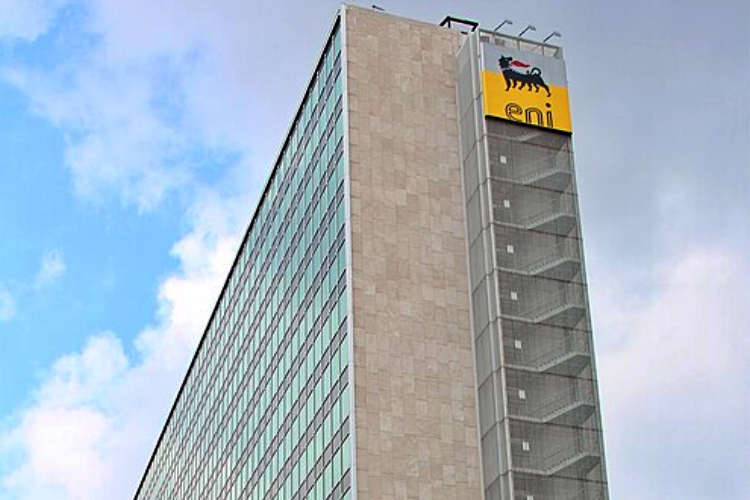
Gambiaj.com – (BANJUL, The Gambia) – The Government of The Gambia has awarded offshore petroleum exploration rights for Block A1 to Eni S.p.A., placing one of the world’s most experienced deepwater oil and gas operators at the center of the country’s latest attempt to unlock commercial hydrocarbon discoveries.
The Petroleum Exploration, Development and Production Licence Agreement (PEPLA), signed on Thursday between the Ministry of Petroleum, Energy and Mines and Eni Gambia Ltd., grants the Italian energy giant rights to explore the 1,300-square-kilometer offshore block located in the deep waters of the Atlantic Margin.
The agreement represents one of the most significant petroleum licensing decisions taken by The Gambia in recent years, largely because it brings into the country a company whose technical credentials differ markedly from many junior exploration firms that often dominate frontier basins.
A Different Class of Operator
In the global offshore petroleum industry, deepwater exploration is widely regarded as one of the most technically demanding and capital-intensive segments of the energy business. This is particularly important as ENI will operate a prospective block, previously operated by BP, where water depths can hit 3300 metres.
Success requires sophisticated seismic interpretation capabilities, advanced drilling technologies, access to specialized rigs, and the financial strength to absorb exploration risks that can run into hundreds of millions of dollars.
Industry experts generally regard companies such as Eni S.p.A., ExxonMobil, Shell, TotalEnergies, and Chevron as the benchmark operators in deepwater exploration because of their track records in discovering and developing offshore resources across multiple continents.
By securing Eni, Gambian authorities appear to have prioritized technical capability and operational experience over smaller speculative operators that often acquire frontier acreage but struggle to advance projects beyond the exploration stage.
Headquartered in Rome, Eni operates in more than 60 countries and has built a reputation as one of Africa’s most successful offshore explorers.
Over the past two decades, the company has been associated with major hydrocarbon discoveries and developments in countries including Mozambique, Côte d’Ivoire, Angola, Nigeria, Ghana, the Republic of the Congo, and Namibia.
The company’s reputation has been particularly strengthened by a series of large offshore discoveries in Africa that transformed previously underexplored basins into major petroleum provinces.
Why Deepwater Experience Matters
Block A1 lies in waters reaching depths of up to 3,300 meters, placing it firmly within the category of ultra-deepwater exploration.
Such depths require specialized expertise that relatively few operators possess.
The Ministry of Petroleum, Energy, and Mines said geological and geophysical studies indicate that the block contains promising structural and stratigraphic features and is located within an Atlantic margin region where hydrocarbon discoveries have already been made in neighboring and comparable geological settings.

Eni chief executive Claudio Descalzi. Photo: AFP/SCANPIX
For The Gambia, the choice of operator may prove as important as the geology itself.
The country’s offshore acreage has long attracted interest because of its proximity to discoveries made elsewhere along the West African Atlantic Margin. However, translating geological promise into commercial discoveries depends heavily on the technical competence of the company carrying out exploration.
Petroleum analysts often note that frontier basins require operators capable not only of identifying prospects but also of committing substantial financial resources to drilling, which remains the definitive test of whether oil or gas exists in commercially recoverable quantities.
Eni’s balance sheet and operational history place it among the relatively small group of companies capable of undertaking such high-risk exploration campaigns without relying heavily on external financing or farm-out arrangements.
Is Eni What The Gambia Needs?
The answer depends on what the country hopes to achieve.
If the objective is to maximize the probability of a technically rigorous exploration program, Eni’s credentials place it among the strongest operators The Gambia could realistically attract.
Its experience in frontier offshore basins, combined with expertise in deepwater operations, aligns closely with the technical challenges presented by Block A1.
The company also brings established environmental, safety, and operational systems that are now considered essential in offshore petroleum development.
However, petroleum experts caution that the arrival of a major international operator does not guarantee an oil discovery.
The Gambia remains an exploration frontier, and no commercial petroleum reserves have yet been confirmed in Block A1.
Indeed, Petroleum Minister Nani Juwara acknowledged this reality, stating that the country was entering the new phase “not as a nation that has already found oil but as a nation that has created the right conditions to responsibly find it.”
State Retains Stake
Under the agreement, the Gambian state will maintain a 10 percent carried interest during the exploration phase through the Gambia National Petroleum Corporation.
The government said the license was the culmination of a multi-year process led by the Petroleum Commission of The Gambia, involving pre-qualification assessments, data room reviews, and technical and commercial negotiations.
Officials believe the deal strengthens The Gambia’s position as an emerging petroleum frontier while providing an opportunity to test one of its most promising offshore blocks with a globally recognized deepwater explorer.
For now, however, Block A1 remains what it has always been: a promising geological prospect. Whether Eni’s arrival ultimately leads to a commercial discovery will only become clear once exploration activities move from seismic interpretation to the far more decisive stage of drilling.
















Leave a Reply