



Gambiaj.com – (BANJUL, The Gambia) – The current power crisis has understandably generated frustration across The Gambia. Households are adjusting their daily routines, businesses are facing rising costs, and essential public services are operating under increasing strain. The hardship being experienced is real and demands urgent attention.
Yet while the immediate challenge calls for action, it also invites reflection. Electricity supply difficulties in The Gambia did not begin with the current crisis, nor are they unique to any single administration. They form part of a much longer national development journey stretching back more than four decades.
Understanding that journey matters. Without historical context, public debate risks becoming focused on symptoms rather than causes. The present difficulties are best understood not as an isolated event, but as the latest chapter in a continuing effort to provide reliable, affordable, and sustainable electricity to a growing nation.
A Long History of Reform
The roots of today’s challenges can be traced back to the era of the Gambia Utilities Corporation (GUC), when electricity supply was already constrained by limited generation capacity, aging infrastructure, and persistent financial pressures. Demand was far lower than it is today, yet power interruptions were a familiar feature of daily life rather than an exception.
During the 1980s, The Gambia embarked on the Economic Recovery Programme and later the Programme for Sustained Development.
While these reforms were primarily aimed at restoring economic stability and growth, they reinforced a lesson that remains relevant today: sustainable development depends on reliable infrastructure. Energy, water, transport, and communications were recognized as essential foundations of economic progress.
As demand for electricity grew through the late 1980s and early 1990s, attention turned to institutional reform. The creation of the Utilities Holding Corporation and subsequent management arrangements, including those involving Management Services Gambia, reflected efforts to improve operational efficiency and strengthen utility performance through alternative management models.
Those reforms revealed an important reality that continues to shape the sector today: electricity challenges are rarely technical alone. They are also financial, managerial, and institutional. Organizational restructuring can contribute to improvement, but it cannot substitute for adequate investment, effective maintenance, sustainable financing, and long-term planning.
The establishment of NAWEC in 1996 represented another significant milestone. Expectations were high that a unified utility would improve efficiency, expand services, and strengthen reliability across the country.
Over the years, successive governments invested in generation capacity, network expansion, and rural electrification. Access to electricity grew significantly, bringing power to communities that had previously remained beyond the reach of the national grid, achievements that deserve recognition as genuine national development gains.
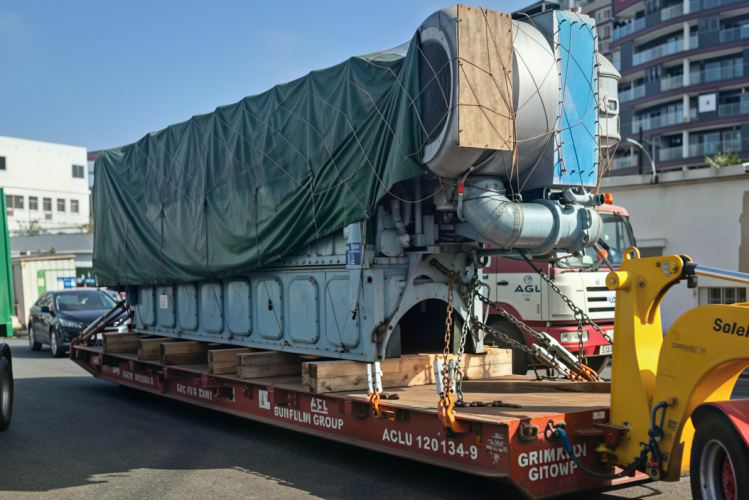
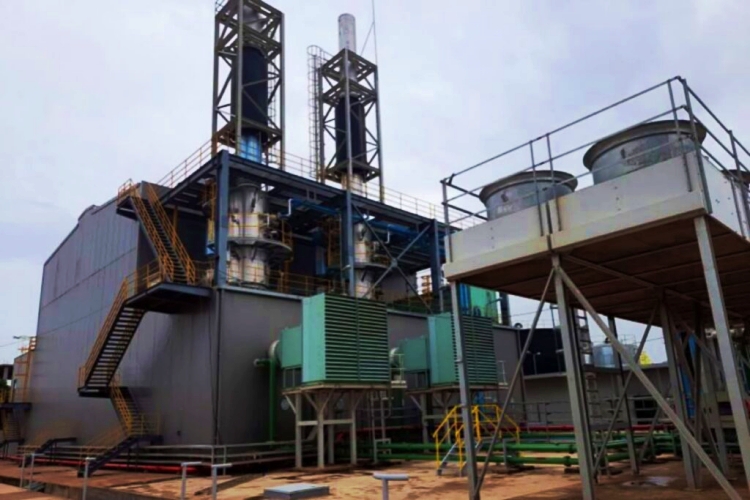
In more recent years, substantial investments have been made through generation expansion projects, network rehabilitation, rural electrification programs, and renewable energy initiatives. The Gambia’s participation in regional energy cooperation culminated in the OMVG interconnection project, creating opportunities to supplement domestic supply through a broader regional electricity network.
These investments have helped to improve access and strengthen infrastructure. Yet they have also reinforced an enduring lesson: infrastructure expansion alone does not guarantee energy security. Reliability ultimately depends on the combined strength of generation, transmission, maintenance, financing, governance, and operational performance working in concert.
The Human Cost of Electricity Disruptions
Beyond the technical and institutional dimensions lies the lived reality of electricity instability, and it is a reality felt most acutely by ordinary Gambians.
Electricity is not simply another public utility. It is the foundation upon which many other services depend. When power becomes unstable, the consequences extend far beyond darkness.
Water supply systems rely heavily on electrically powered pumping infrastructure, meaning that prolonged outages also affect access to clean water, compounding hardship for already stretched households.
Small businesses are among the hardest hit. Many depend on generators to remain operational, driving up fuel costs and eroding profitability. Perishable goods are lost, production schedules are disrupted, and investment decisions become increasingly difficult in an environment of unreliable supply.
Telecommunications and digital services are equally vulnerable. Reliable electricity is essential for internet connectivity, mobile communications, financial transactions, and educational activities. Prolonged disruptions ripple across multiple sectors simultaneously, quietly undermining productivity and progress.
The tourism sector, one of the country’s most important economic pillars, is also highly sensitive to service reliability. Visitor experiences are shaped not only by attractions and hospitality but also by the dependability of essential services. Unreliable power puts that reputation at risk.
At the household level, repeated outages create stress, uncertainty, and additional financial burdens. These effects may be difficult to quantify, but they are felt daily by citizens in every part of the country.
These realities remind us that electricity is not merely an infrastructure issue. It is a development issue that directly affects economic opportunity, public welfare, and quality of life.
Investment, Performance, and Accountability
Over the years, significant resources have been invested in the energy sector through government funding, development partner support, and various external financing arrangements. These investments have supported infrastructure expansion, rural electrification, institutional reforms, and regional interconnection projects. Much progress has, without question, been achieved.
Yet citizens ultimately judge the sector not by the volume of investment announced but by the reliability of the service they actually receive.
This raises a question that must be asked honestly: to what extent have the substantial investments made in recent years translated into measurable improvements in reliability, resilience, maintenance performance, and service quality?
This is not a question of assigning blame. It is a question of accountability and performance, and it is one that institutions owe the public an honest answer to.
Public confidence grows when institutions communicate openly about challenges, explain the causes of disruptions, demonstrate how resources are being used, and provide credible plans for improvement. Across the world, successful utilities are distinguished not by the scale of their investments alone but by their ability to convert those investments into reliable, consistent service delivery.
The current crisis, therefore, invites reflection not only on generation capacity and network performance but also on maintenance culture, financial sustainability, risk management, and the quality of institutional governance.
Lessons from Four Decades of Energy Reform
The most important lesson drawn from four decades of experience is a humbling one: no single reform has ever solved the energy challenge on its own.
Different periods emphasized different solutions. Some focused on institutional restructuring. Others prioritized management reforms, generation expansion, rural electrification, or regional integration. Each contributed valuable progress. None proved sufficient in isolation.
The experience of the sector suggests that energy security depends on the simultaneous strengthening of four interconnected pillars.
The first is infrastructure, reliable generation, transmission, and distribution systems that are properly maintained and fit for purpose.
The second is financial sustainability, ensuring that utilities can recover costs, maintain assets, manage debt obligations, and invest in future capacity without being perpetually dependent on emergency interventions.
The third is governance, strong oversight, transparency, accountability, and effective management that are essential for long-term performance and public trust.
The fourth is operational discipline, the maintenance systems, technical planning, emergency preparedness, and risk management that determine whether infrastructure actually performs as intended once built.
Weakness in any one of these areas can undermine progress achieved across the others.
Viewed through this lens, the history of energy reform in The Gambia is neither a story of failure nor one of uninterrupted success. It is a story of continuous adaptation to rising demand, changing technologies, evolving institutions, and growing public expectations.
Every generation has contributed important reforms and investments. Every generation has also inherited unresolved challenges from those who came before.
Looking Forward
The lesson of the current situation is clear: energy security must be treated as a central pillar of national development, not a periodic priority to be addressed when crises force attention.
No modern economy can function effectively without reliable electricity.
Economic growth, healthcare, education, tourism, industrial development, investment promotion, and digital transformation all depend on it. To treat electricity as secondary is to constrain every ambition that builds upon it.
Diversification of energy sources, expansion of domestic generation capacity, increased investment in renewable energy, strengthened maintenance systems, and continued upgrading of transmission and distribution infrastructure will remain important priorities. But technology and hardware alone are not enough.
Equally critical is strengthening the institutional and financial foundations of the sector. Reliable electricity systems depend on utilities that can maintain infrastructure, manage resources responsibly, anticipate future demand, and plan with discipline over the long term.
Strong regulation, transparency, performance accountability, and sustained commitment to reform will help build public confidence while supporting the long-term sustainability of the sector.
Conclusion
The immediate priority is clear: restore stability to the electricity system and reduce the hardship currently being experienced by households, businesses, and public institutions across The Gambia.
But beyond the immediate response lies a larger national responsibility. The current crisis should prompt a careful, honest assessment of the sector’s strengths, vulnerabilities, investment outcomes, governance arrangements, and long-term preparedness.
Four decades of experience demonstrate that sustainable energy security cannot be achieved through infrastructure investment alone. Power stations, transmission lines, and interconnection projects are essential, but they must be supported by strong institutions, sound financial management, effective maintenance systems, and a culture of accountability that does not retreat when the pressure eases.
The question before the country is, therefore, not whether reform is necessary, but whether the lessons of previous reforms are being fully and honestly applied.
If there is one enduring truth that emerges from four decades of effort, it is this: reliable electricity is not merely a technical objective. It is a foundation for economic growth, social well-being, investor confidence, public service delivery, and national development.
The current crisis should therefore be viewed not only as a disruption but as an opportunity, an opportunity to strengthen institutions, improve accountability, deepen resilience, and build an energy system capable of meeting the needs of future generations.
Meeting that challenge successfully will help determine the pace, competitiveness, and sustainability of The Gambia’s development in the decades ahead.










Leave a Reply