


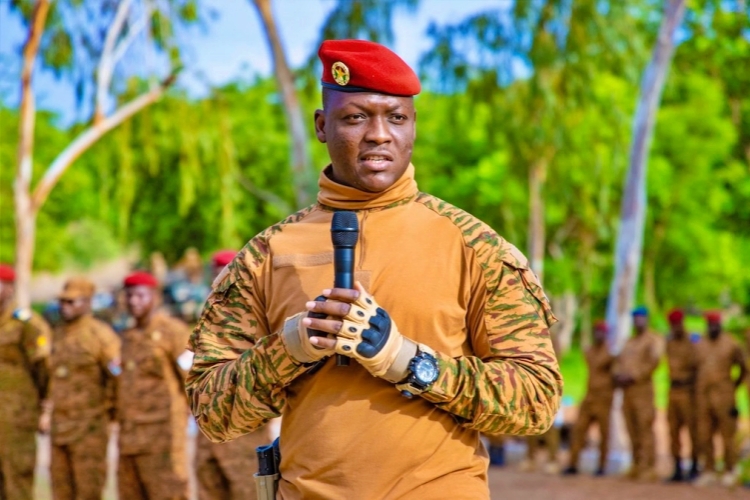
Gambiaj.com – (OUAGADOUGOU, Burkina Faso) – Burkina Faso’s transitional President, Captain Ibrahim Traoré, has issued one of his strongest warnings yet against religious extremism, declaring that radical Islam has no place in the country and announcing plans to crack down on extremist preachers while recalling Burkinabè students studying Sharia abroad.
Speaking during a meeting with representatives of the Yaadga region on Thursday, July 16, Traoré said his government would not tolerate religious rhetoric that fuels division or undermines national cohesion.
He argued that religion should attract followers through good conduct rather than intimidation or violence, questioning why some Muslims opposed Burkina Faso’s new law regulating religious freedoms.
“If you want to bring someone into your religion, it should be through your behavior first,” Traoré told the gathering, adding that no religion should be used as a justification for violence.
Warning to radical imams
Without naming individuals, Traoré referred to the recent arrest of Imam Kindo and the protests that followed, saying only a small minority of extremists was creating problems in the country.
He warned that the authorities would suspend imams who use their sermons to spread extremist messages.
“If this is your version of Islam, we will fight it,” he said. “The extremists must change. If they do not, the fight has begun.”
Traoré linked radical preaching directly to the rise of terrorism in Burkina Faso, arguing that extremist religious narratives have contributed to the country’s prolonged security crisis.
He also repeated previous claims that Burkinabè soldiers frequently recover copies of the Quran from terrorist hideouts during military operations, which he said demonstrated attempts by armed groups to exploit religion for violent ends.
Criticism of extremist ideology
The transitional leader also criticized those who frequently label others as kafir (unbelievers), saying such attitudes contradict both reason and modern life.
In a speech that drew laughter from the audience, Traoré noted that many of the technologies used daily, including microphones, vehicles, aircraft, electricity, and water systems, were invented by people whom extremists often dismiss as “unbelievers.”
He argued that anyone wishing to reject every aspect of the modern world because it was developed by non-Muslims should isolate themselves rather than impose such beliefs on society.
Traoré also cited Saudi Arabia, regarded as the birthplace of Islam, saying people there do not kill one another because of religious differences. He lamented that some Africans were willing to hate or even kill fellow citizens after branding them unbelievers.
Students studying Sharia to be recalled
Among the most significant announcements was Traoré’s plan to bring home Burkinabè students studying Sharia in Arab countries.
He claimed that more than 800,000 Burkinabè students were pursuing Islamic studies abroad without acquiring practical professional skills and warned that those who refuse to return risk losing their Burkinabè nationality.
The announcement follows a government directive introduced at the end of June requiring students seeking to study abroad to obtain prior authorization from the Ministry of Higher Education to ensure their programs align with government priorities.
Traoré also pledged state financial support for imams who promote what he described as peaceful and responsible religious teachings.
Growing tensions with Sunni groups
The remarks come amid increasingly strained relations between Burkina Faso’s military-led government and parts of the country’s Sunni Muslim community.
Several Sunni leaders had publicly supported Traoré after he seized power in the 2022 coup. However, tensions have grown following the introduction of a National Day of Customs and Traditions in May and new regulations governing public prayers.
Rights groups and local observers have also expressed concern over reports that several imams and Muslim worshippers have disappeared in recent months, with families saying they have received no information about their whereabouts.
Political analysts say Traoré’s latest comments suggest his government is preparing for a more confrontational approach toward religious figures it considers to be promoting extremism, even as authorities insist the measures are aimed at preventing terrorism and preserving national unity.





Leave a Reply