


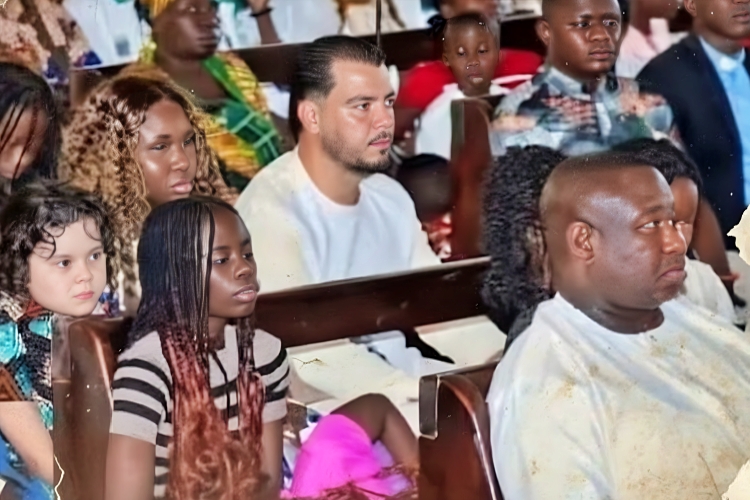
Gambiaj.com – (BRUSSELS, Belgium) – The European Union is preparing to wield its development aid budget as a diplomatic weapon against Sierra Leone, threatening to cut funding unless Freetown extradites one of Europe’s most wanted fugitives, a convicted cocaine kingpin who investigators say is romantically involved with a daughter of President Julius Maada Bio.
Dutch Prime Minister Rob Jetten made the announcement on Friday following an EU summit, signalling a significant escalation in a diplomatic standoff that has been simmering for months and is now drawing the collective weight of all 27 EU member states.
At the center of the crisis is Jos Leijdekkers, 34, widely known by his alias “Bolle Jos,” who has been sentenced in absentia by both Dutch and Belgian courts to a combined 80 years in prison. His crimes span cocaine smuggling on an industrial scale, assault, armed robbery, and ordering an assassination attempt, a criminal record that has placed him among the most dangerous and sought-after fugitives in Europe.
Investigative reports indicate that Leijdekkers has been living in Sierra Leone for at least two years, reportedly under the alias “Umar Sheriff.”
Sierra Leone’s police chief has acknowledged that the individual described in media reports is known to local authorities by that name but insists that despite conducting raids, officers have been unable to locate him, a claim that has strained the credibility of Freetown’s cooperation with The Hague.
A Presidential Connection Complicating the Case
What makes this case particularly sensitive and politically explosive, is the reported personal connection between Leijdekkers and the family of Sierra Leone’s head of state.
Investigative reports have revealed that the Dutch fugitive is in a relationship with a daughter of President Bio, a development that observers and diplomats say may be casting a long shadow over Freetown’s willingness to act decisively.
The Netherlands submitted a formal extradition request to Sierra Leone in February 2025, which was duly received by the country’s Attorney General.
Sierra Leone’s Information Minister Chernor Bah confirmed receipt of the request at the time, stressing that any extradition would require a court ruling. However, more than four months later, Dutch Justice Minister David van Weel says he keeps receiving the same non-committal response from Sierra Leonean officials.
“We are working on it; procedures are in progress, and the police report is almost complete,” Van Weel recounted in a television interview, barely concealing his exasperation. “It is, of course, bizarre that we facilitate or support a country that at the same time offers a safe haven to one of the biggest drug criminals we know worldwide.”
Van Weel, who has made Leijdekkers’ arrest one of his top ministerial priorities, engaged in direct diplomatic talks with Sierra Leone’s Attorney General Alpha Sesay, in early May but returned from those discussions with little to show for his efforts. He has since acknowledged that he holds no illusion that the matter can be resolved through political channels alone.
Europe Unites Behind the Pressure Campaign
With bilateral diplomacy stalling, the Netherlands has successfully pushed for a unified European response, a strategic move designed to amplify both the diplomatic and financial consequences for Sierra Leone.
“We specifically requested this unified European approach to increase the diplomatic and financial pressure on uncooperative states,” Prime Minister Jetten said after Friday’s summit, confirming that Sierra Leone is the primary focus of the EU’s sharpened stance against countries harboring international drug criminals.
When pressed on whether the threat of financial repercussions would be enough to force Sierra Leone’s hand, Jetten was unequivocal.
“Absolutely, because Sierra Leone is also very largely dependent on support, not only from the Netherlands but also from other European countries,” he said. “And then it is also good if we, with 27 member states, say we also expect you to cooperate in complying with judicial orders.”
The financial stakes are considerable. The European Commission has allocated €352 million in grants to Sierra Leone for the 2021–2027 period, with the country also benefiting from numerous regional and international EU programs.
While the Netherlands itself provides almost no direct bilateral aid to Sierra Leone, any meaningful funding suspension would require the backing of the European Commission and fellow member states, backing that Jetten now appears to have secured.
For Sierra Leone, a small West African nation navigating fragile economic recovery, the stakes could hardly be higher. Losing even a fraction of EU development support would have real consequences for ordinary citizens, consequences that may ultimately determine how much longer the government in Freetown can afford to delay what Europe is demanding.


Leave a Reply