


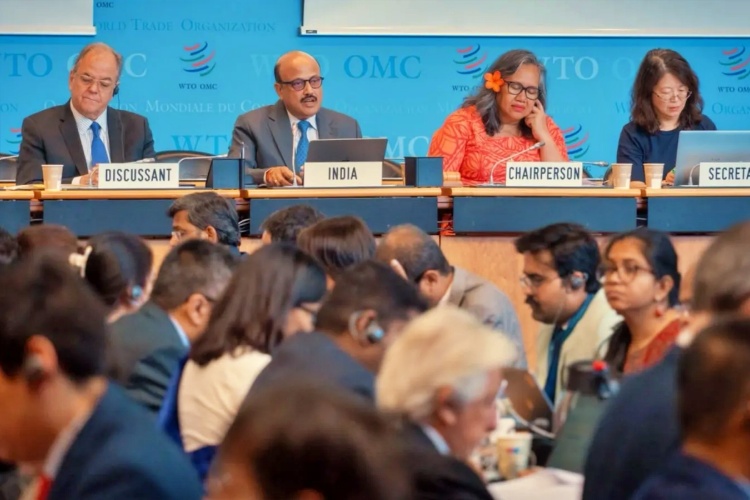
Gambiaj.com – (GENEVA, Switzerland) – The Gambia has joined a growing group of World Trade Organization (WTO) members calling on India to withdraw its opposition to a key global investment agreement, arguing that the move would help modernize the global trading system and make it easier for developing countries to attract investment.
The call was made during India’s Trade Policy Review at the WTO on Tuesday, where member states assessed New Delhi’s trade policies and its role in ongoing efforts to reform the multilateral trading system.
According to reports from the meeting, The Gambia and Costa Rica specifically urged India to abandon its resistance to the Investment Facilitation for Development (IFD) Agreement, a plurilateral accord that seeks to simplify and improve investment procedures for participating countries.
Why The Gambia is backing the agreement
For The Gambia, which relies heavily on foreign direct investment to stimulate economic growth, improve infrastructure, and create jobs, the IFD agreement is seen as a practical tool to make investment processes more transparent, predictable, and efficient.
Unlike traditional investment treaties, the agreement does not compel countries to open new sectors to foreign investors. Instead, it focuses on reducing administrative barriers, improving transparency, streamlining approval procedures, and strengthening cooperation among investment authorities.
More than 129 WTO members have already backed the agreement, including many developing countries that see it as a way of making their economies more attractive to international investors.
By urging India to lift its objections, The Gambia is aligning itself with countries seeking to advance WTO reforms through flexible agreements among willing members.
India stands firm
India, however, remains one of the strongest opponents of the IFD agreement and other plurilateral initiatives, insisting that they undermine the WTO’s long-standing principle of consensus-based decision-making.
New Delhi argues that investment issues fall outside the WTO’s traditional trade mandate and that allowing agreements negotiated by only a subset of members to become part of the WTO framework could weaken the organization’s institutional foundations.
Indian Commerce Minister Piyush Goyal has previously defended the country’s position, saying India chose to “stand alone” rather than support an agreement it believes conflicts with the WTO’s founding principles.
India has also challenged attempts by supporters of a separate WTO Agreement on Electronic Commerce to move ahead through interim arrangements after consensus among all members failed to materialize.
In a letter sent to the WTO on July 9, India questioned the legal basis for allowing the WTO Director-General to act as the depositary of the electronic commerce agreement without unanimous approval from the organization’s members.
Wider pressure on New Delhi
During Tuesday’s review, several WTO members, including the European Union, Canada, and the United Kingdom, criticized India’s continued resistance to plurilateral agreements.
The European Union argued that India has benefited significantly from global trade integration over the past decade and encouraged New Delhi to view plurilateral agreements as opportunities to modernize the WTO rather than threats to multilateralism.
Canada was among the most vocal critics of India’s position, while several countries also encouraged India to participate in negotiations on environmental initiatives, including fossil fuel subsidy reforms and plastics pollution.
India’s stubbornness has potentiall implications for The Gambia
Although the disagreement is taking place within the WTO rather than through bilateral negotiations, India’s continued opposition could slow reforms that many developing countries, including The Gambia, believe would improve the global investment climate.
For The Gambia, which is pursuing greater foreign investment in sectors such as tourism, agriculture, renewable energy, fisheries, and digital services, delays in implementing investment facilitation measures could reduce opportunities to attract new investors seeking clearer and more predictable regulatory environments.
The dispute may also have implications for digital trade. India has opposed aspects of the WTO’s electronic commerce agreement, which aims to facilitate cross-border digital transactions by prohibiting customs duties on electronic transmissions among participating members.
As The Gambia expands its digital economy and seeks greater participation in international e-commerce, prolonged disagreements over these rules could delay the development of a more predictable global framework for digital trade.
However, analysts note that the WTO dispute is unlikely to have an immediate impact on bilateral trade between The Gambia and India, which continues through existing trade arrangements. Instead, the disagreement reflects broader divisions over how the WTO should evolve to address investment, digital commerce, and other emerging areas of global trade.













Leave a Reply