



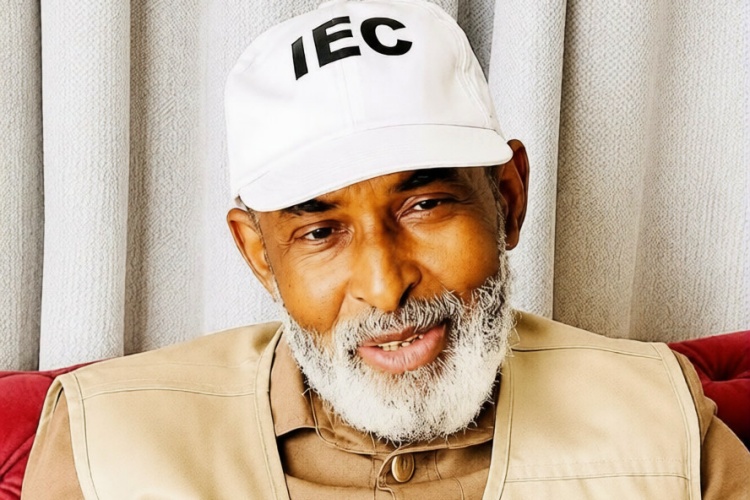
Gambiaj.com – (BANJUL, The Gambia) – Former Gambia Bar Association president Salieu Taal has sought to broaden the debate over Essa Mbye Faal’s decision to align with President Adama Barrow, arguing that political cross-carpeting and transactional politics are not new phenomena in The Gambia.
Taal’s comments came amid a public backlash following Faal’s political shift towards the governing camp, with critics questioning the former presidential candidate’s decision after his previous opposition to the Barrow administration.
In a social media post, Taal said many Gambians were understandably disappointed with the record of the country’s educated political class but cautioned against portraying political opportunism as a phenomenon unique to the current generation.
“Let us not pretend that transactional politics, cross-carpeting, and political opportunism started with this generation,” Taal wrote.
He suggested that the country’s political history, including the emergence of the Progressive People’s Party (PPP) and the decline of the United Party (UP) as a major political force, offered important lessons about the evolution of political culture in The Gambia.
“Perhaps we need to take a trip down memory lane,” he said, arguing that understanding how earlier political changes unfolded could help explain some of the patterns being witnessed today.
A Debate Over People and the Political System
Civil society activist Madi Jobarteh responded by arguing that political opportunism should not be normalized simply because it has existed for a long time.
Jobarteh said politics should be understood primarily as public service and that those seeking public office should place the public interest ahead of personal gain.
He also rejected the idea that political interests should be treated as permanent justification for changing political positions when those interests do not align with the public good.
Taal agreed with the broader concern but shifted the focus towards the structure of the political system itself.
He said the problem could not be addressed simply by relying on individuals with integrity to behave differently when the political system rewards patronage, transactional relationships, and loyalty to individuals or groups rather than political ideas and principles.
“We cannot simply rely on good people to do the right thing when the system itself rewards transactional politics, patronage, and loyalty to individuals or groups rather than ideas, values, and principles,” Taal wrote.
He argued that political reform therefore required attention both to the conduct of individuals and to the system within which political actors operate.
“Until we address both the people AND the system, we may just keep changing the players while playing the same game,” he said.
Faal’s Shift Triggers Wider Argument
The exchange followed criticism of Faal’s move towards President Barrow, which has generated debate about political consistency, principle, and the legitimacy of changing political alliances.
Ahmed Khalid Bana Barry argued that changing political allegiance was not unconstitutional and that the morality of such a move remained open to debate.
He questioned whether the reaction would have been similar had Faal joined another opposition grouping, such as the United Democratic Party (UDP) or the UNITE alliance.
UDP supporter Pata Saidykhan, however, challenged Taal’s framing, arguing that the current criticism was not simply about changing political parties but about what he described as perceived greed, opportunism, and a lack of political conviction among highly educated younger political actors.
Taal responded by acknowledging that there was legitimate disappointment over the conduct of political actors.
He also disclosed his close relationship with Faal, while stressing that his intervention was not intended to justify or legitimize the decisions of educated professionals who enter political alliances.
Taal said his interest was primarily analytical, describing himself as a student of history and political science who seeks to examine recurring political developments from a systems perspective.
The debate has consequently moved beyond Faal’s individual decision to a broader discussion about political loyalty, personal ambition, public service, and whether The Gambia’s political system itself encourages the behavior that many citizens now criticize.
Perhaps the most telling opinion came from elderly political commentator Basiru Jobe who pointed to the fluid nature of politics, saying political alignments can change rapidly. He invoked former British Prime Minister Harold Wilson’s well-known observation that “a week is a long time in politics” to underscore the changing nature of political alliances.
The exchange comes as political parties and alliances reposition themselves ahead of The Gambia’s December 5 presidential election, with several previously competing political actors exploring new partnerships and realignments.















Leave a Reply