


Gambiaj.com – (BAMAKO, Mali) – A series of releases announced by Malian authorities on Thursday has raised questions about whether the transitional government in Bamako has been engaged in discreet negotiations involving France and armed groups in northern Mali, despite its repeated public rejection of dialogue with its opponents.
On August 13, the Malian government announced a presidential pardon for French national Yann Christian Bernard Vézilier, who had been sentenced to 20 years in prison for what authorities described as an offense against the external security of the state.
The government said Vézilier would be immediately expelled from Mali and thanked what it described as a “brother country” whose “goodwill offices,” exercised discreetly and with respect for Mali’s sovereignty, had contributed to securing the pardon.
The statement did not identify the country that had acted as an intermediary.
The wording has prompted speculation that a third country may have facilitated contacts between Bamako and Paris.
Algeria has emerged as one possible intermediary because of its longstanding ties with actors in northern Mali and its recent efforts to restore relations with Bamako.
82 Malian Soldiers Released
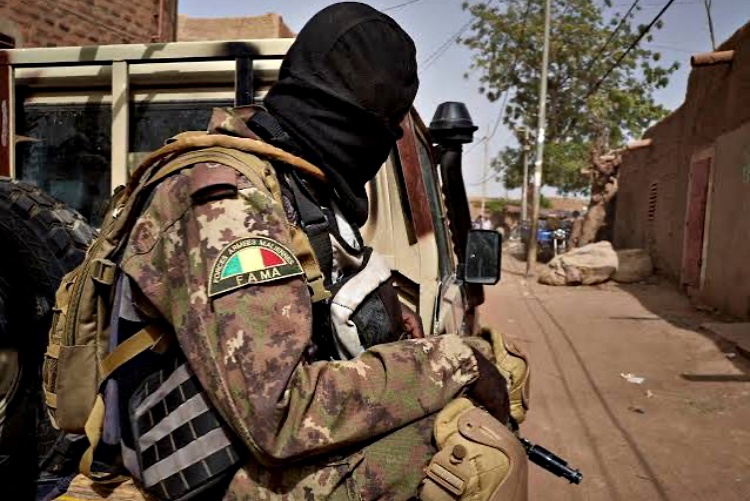
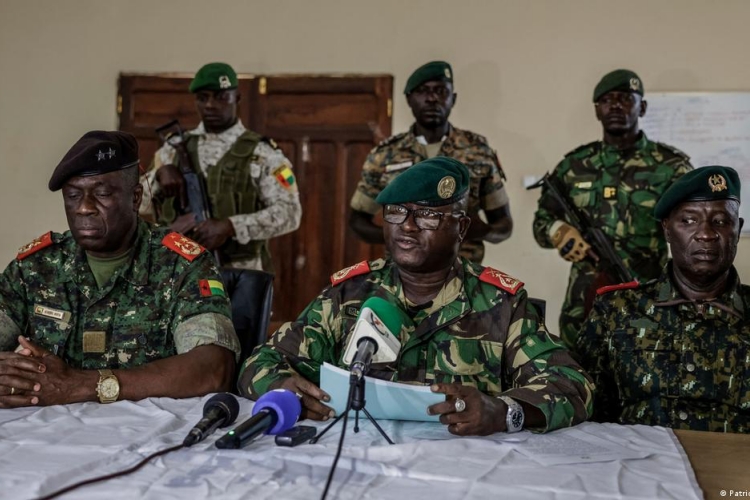
Hours later, the Malian military announced that 82 soldiers from the Armed Forces of Mali (FAMa), who had been held since April 25, had been released.
The General Staff said the soldiers had been held by what it described as the “JNIM/FLA coalition” and that their release was the result of a process that began immediately after their capture and had been subject to “rigorous planning.”
The military statement provided no details about the circumstances of the release, whether negotiations had taken place or whether any concessions had been made.
However, reports indicate that an FLA commander, Inkinane Ag Attaher, was also released around the same time.
The FLA has sought to distance itself from any suggestion that the release represents the beginning of political negotiations. Its spokesperson said the development should not be interpreted as a prelude to political discussions or an opening of dialogue.
A Pattern of Discreet Contacts?
The simultaneous release of the French national, the 82 Malian soldiers, and an FLA commander has nevertheless fueled speculation about a possible coordinated arrangement negotiated away from public view.
There is no official confirmation that the three developments formed part of a single agreement, nor has Bamako acknowledged direct negotiations with France or the FLA.
But the sequence has raised questions because of the Malian junta’s longstanding rhetoric against France and its insistence that it will not compromise its sovereignty or negotiate from a position of weakness.
Since taking power, Mali’s military authorities have sharply reduced military and diplomatic cooperation with France, accusing Paris of interference and questioning its role in the country’s security crisis.
The junta has instead promoted a policy centered on national sovereignty and closer cooperation with Russia and its Sahelian partners Burkina Faso and Niger.
Algeria’s Possible Role
The reference to a “brother country” acting discreetly has also attracted particular attention.
Algeria has historically maintained contacts with several actors involved in the northern Mali conflict and has previously played a mediating role in efforts to resolve the crisis.
Its relationship with Bamako, however, has deteriorated significantly in recent years, particularly over the collapse of the 2015 Algiers peace agreement and disagreements over the treatment of armed groups in northern Mali.
Any Algerian involvement in facilitating the latest releases would therefore represent a significant diplomatic development.
For now, neither Bamako nor Algiers has publicly confirmed such a role.
Questions Over Bamako’s Public Position
The developments have also revived criticism from observers who argue that the Malian authorities may be distinguishing between public rhetoric and private diplomacy.
The release of Vézilier is particularly significant because his case had been presented by Bamako as a matter of national security and judicial sovereignty. His pardon, followed by immediate expulsion, suggests that diplomatic considerations may have played a role in the decision.
Likewise, the release of 82 soldiers held by armed groups would ordinarily require some form of contact, mediation, or arrangement, even if the parties involved avoid describing it as a negotiation.
The authorities have provided few details, leaving the precise nature of the process unclear.
What is certain is that August 13 produced three significant releases involving three different actors in Mali’s conflict: a French citizen, dozens of Malian soldiers, and an FLA commander.
Whether these were separate humanitarian or security arrangements or elements of a broader agreement facilitated through discreet diplomacy remains unconfirmed.
But the developments have opened a new question for Bamako: whether the government’s commitment to sovereignty and refusal to negotiate with its adversaries is being accompanied, behind closed doors, by precisely the kind of diplomacy it publicly rejects.



Leave a Reply