


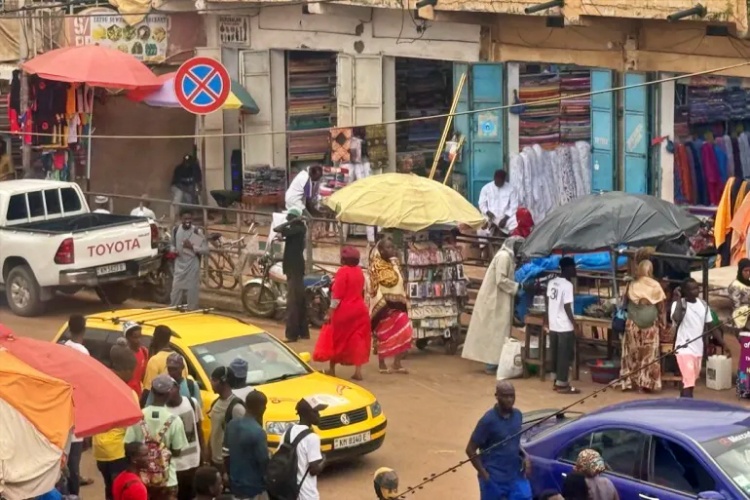
Gambiaj.com – (BANJUL, The Gambia) – If the price of rice, onions, fuel, or other everyday goods goes up, most Gambians will not be thinking about Senegal’s debt. If electricity becomes more expensive or less reliable, few will immediately connect it to what is happening in Dakar. Yet there is a connection.
Senegal is not simply the country next door. It is our largest individual source of merchandise imports and a major trading partner. In 2024, Senegal supplied 21.2 percent of The Gambia’s merchandise imports, worth about US$209.5 million [WTO/UN Comtrade]. Our economies are deeply connected, and what happens in Senegal can eventually be felt here.
That is why Senegal’s current debt difficulties deserve our attention. The seriousness of the problem became clear after audits revealed that public debt and fiscal deficits had been significantly understated under the previous administration.
More than US$11 billion in previously misreported debt came to light, pushing Senegal’s public-sector debt to about 132 percent of GDP at the end of 2024. The revelation damaged confidence and made borrowing more difficult and expensive.
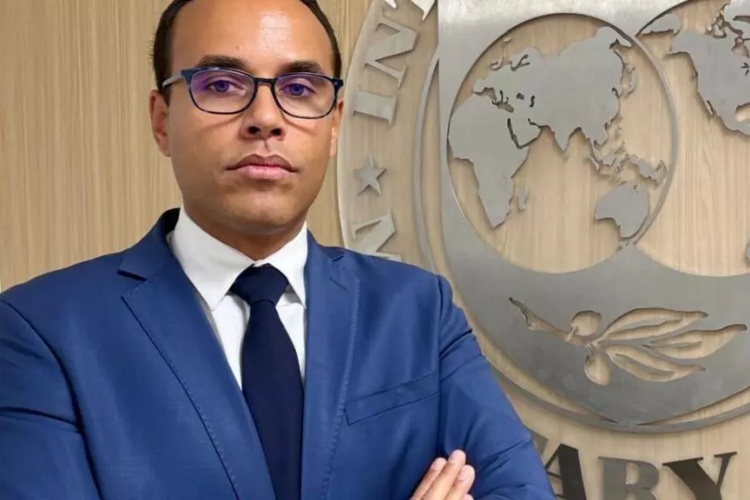
On 1 September, Senegal and the International Monetary Fund reached a staff-level agreement on a proposed 36-month program worth about US$2.2 billion, intended to restore debt sustainability and strengthen fiscal and debt-management reforms. The agreement remains subject to approval by the IMF’s Executive Board.
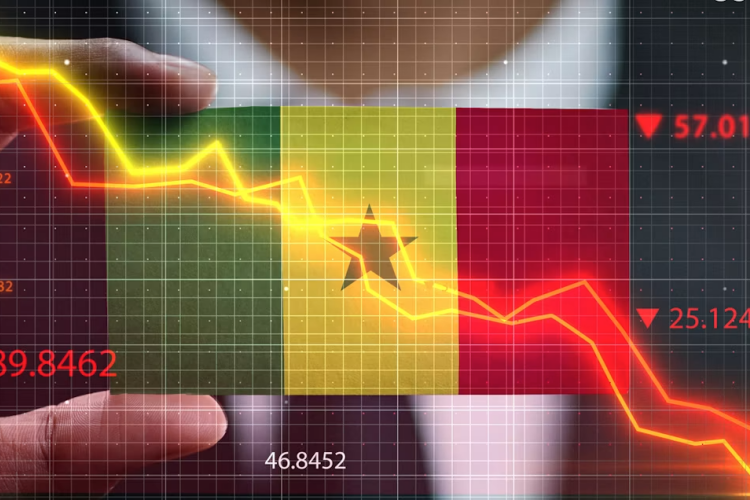
Three days later, S&P Global Ratings downgraded Senegal’s long-term foreign-currency rating from CCC+ to CC, saying a distressed restructuring or default on foreign-currency commercial debt was extremely likely. [IMF; S&P/Reuters, September 2026].
For the average Gambian, the question is not what a “CC” rating means. It is: how could Senegal’s problems affect us?
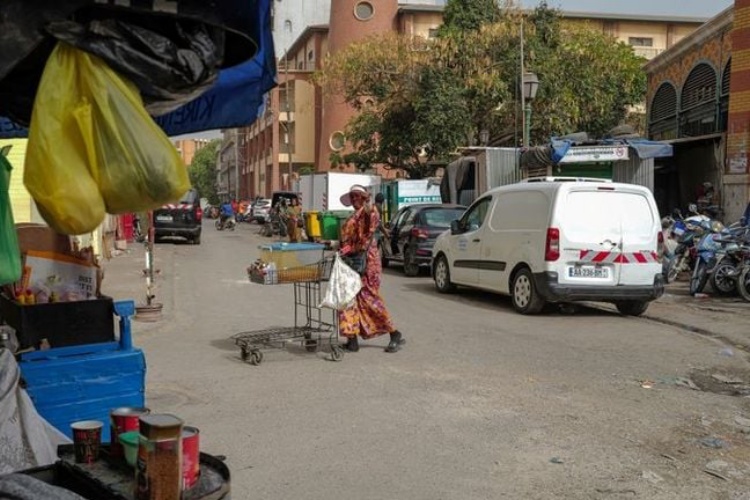
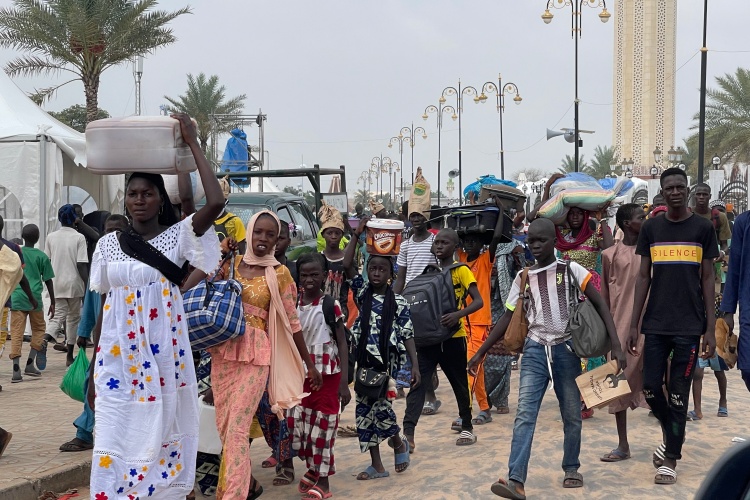
The first place to look is our markets. A large volume of goods consumed in The Gambia comes from or through Senegal. Gambian traders travel to Senegal, Senegalese businesses trade with Gambian businesses, and thousands of people depend on the movement of goods and services across the border.
The Senegambia Bridge has strengthened that connection. If Senegalese businesses face higher taxes, more expensive credit, increased transport costs, or weaker consumer demand as the country adjusts its finances, some of those costs could cross the border. This does not mean prices in The Gambia will automatically rise because Senegal is facing debt problems. But a financially stressed neighbor can affect supply chains, transport, trade, and consumer demand. For an economy as closely linked to Senegal as ours, these are not distant concerns.
Energy deserves even closer attention. As this article is being finalised, SENELEC has announced electricity disruptions affecting parts of Dakar and surrounding areas because of maintenance, network reinforcement, and a temporary technical constraint affecting the WAE power plant.
The disruption has reduced available generation and made it more difficult to meet demand during peak periods. At the same time, The Gambia is experiencing its own electricity difficulties.
These problems should not be presented as having the same cause, and there is no basis for saying that Senegal’s debt crisis caused the electricity disruptions. They are separate issues. But they demonstrate the vulnerability of interconnected systems when there is limited room to absorb shocks.
For The Gambia, this matters because cooperation with Senegal has become an important part of our energy arrangements.
Regional cooperation is essential and should be strengthened, not abandoned. But interdependence carries risks. If a major generating facility goes offline, demand rises sharply, fuel becomes more expensive, or the system on which we depend experiences difficulties of its own, the effects can travel across borders.
The answer is to make regional cooperation more resilient while strengthening our domestic capacity through a financially stronger NAWEC, more reliable generation, diversified energy sources, adequate reserve capacity, and stronger transmission and distribution networks. A system that works when everything goes according to plan can still be fragile when one major component fails.
The Gambia is not Senegal, and we should not create unnecessary alarm. Senegal has a much larger economy, a different monetary and financial structure, and greater economic resources.
Its current difficulties were also made considerably worse by the discovery of previously unreported debt. But our own debt position requires discipline.
The latest IMF assessment says that The Gambia’s public debt remains sustainable, while the country’s overall and external debt-distress risks remain high. Public debt reached about 79 percent of GDP in 2025, and the IMF has stressed the need for continued fiscal discipline given the country’s limited buffers. [IMF, 2026].
This is why our debt debate should not be reduced to the debt-to-GDP ratio. We should ask how much the government owes, how much revenue goes into servicing that debt, what interest rates we are paying, when loans mature, how much new borrowing is needed to repay old borrowing, and what we are getting in return.
Borrowing to build a power plant, productive road, hospital, irrigation scheme, or other infrastructure that expands the economy is different from borrowing simply to meet recurrent expenditure. Productive investment can create jobs, increase economic activity, and generate revenue. Borrowing to cover today’s bills can leave tomorrow’s taxpayers with the debt without giving them a stronger economy with which to repay it.
We should also watch domestic borrowing. Government borrowing from local banks can affect the availability and cost of credit for businesses. If banks find government securities more attractive or safer than lending to businesses, entrepreneurs can face higher interest rates or greater difficulty obtaining loans. A small business that cannot finance new equipment, stock, or expansion cannot create the jobs we need.
Responsible debt management is therefore not simply about satisfying the IMF or maintaining good-looking economic indicators. It is about creating enough financial space for businesses and citizens to participate in economic growth.
Senegal offers us another important lesson: transparency matters. When the true size of a country’s debt becomes known only after years of incomplete or inaccurate reporting, confidence can disappear quickly.
The consequences are eventually paid by ordinary citizens through higher borrowing costs, reduced public spending and difficult economic adjustments.
The principle for The Gambia should therefore be straightforward: citizens should be able to know how much their government has borrowed, from whom, on what terms, for what purpose, and when it must be repaid. Public debt is not merely an issue for accountants, economists, or the IMF. It is money that future Gambians will have to repay.
There may also be opportunities for The Gambia. Senegal’s difficulties could create openings in trade, logistics, tourism, agriculture, and distribution. Our geographical position, the Senegambia Bridge, and access to the Atlantic give us advantages.
But we will benefit only if we make the country competitive. Investors and businesses need reliable electricity, efficient customs and ports, good roads, predictable taxation, access to finance, and confidence that the rules will be applied fairly. A country’s economic strength is not measured only by how much it can borrow. It is measured by its ability to earn, produce, invest, repay and withstand shocks.
For The Gambia, the message is therefore not one of alarm but of vigilance. We should watch Senegal because what happens there matters to our markets, energy security, businesses, and economy. But we should watch ourselves even more closely. We should know what we owe, why we are borrowing, and whether today’s borrowing is creating tomorrow’s capacity to repay.
Countries rarely wake up one morning and suddenly discover that they have a debt crisis. Problems build gradually. Borrowing increases, interest payments rise, refinancing becomes more difficult, and the government has less room to respond when people need help. By the time the crisis becomes obvious, the choices available may already be painful.
The Gambia still has room to make the right choices. The latest IMF assessment gives us reason for cautious confidence, but it also reminds us that debt sustainability cannot be taken for granted. Senegal will have to find its own way through its present difficulties.
The proposed IMF program may help, but the latest credit rating downgrade shows that the road ahead will be difficult.
For us, the sensible response is neither complacency nor panic.
Watch Senegal. Learn from Senegal. But above all, strengthen ourselves before we have to learn the hard way.
The best time to deal with a debt problem is not when the crisis has arrived.
It is before it does.





Leave a Reply