


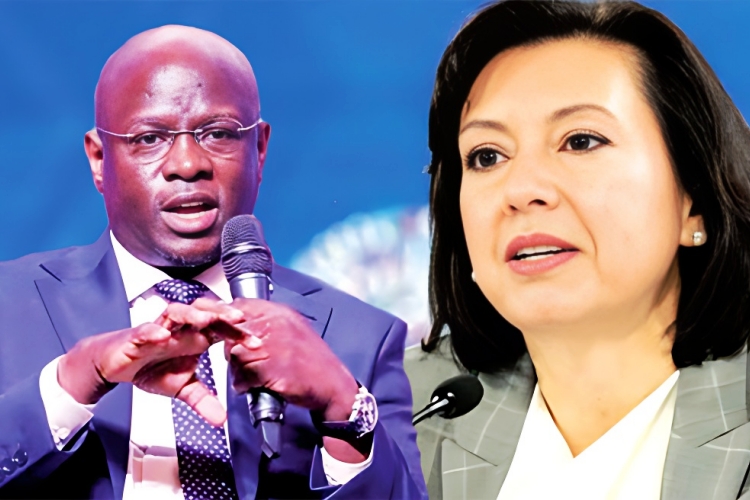
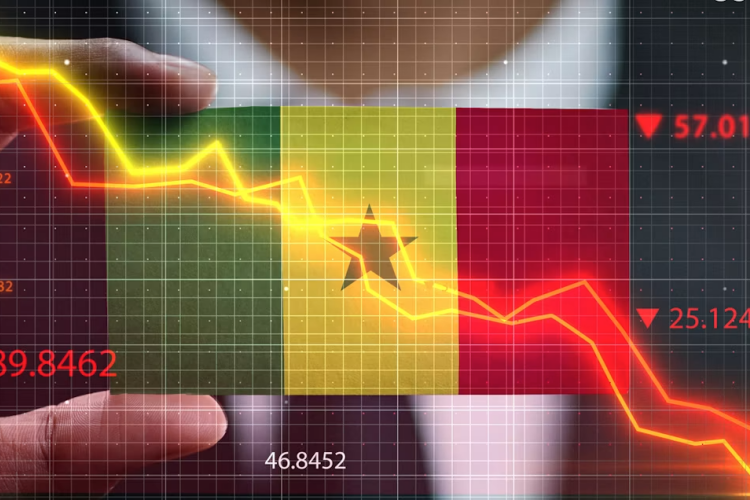
Gambiaj.com – (DAKAR, Senegal) – The International Monetary Fund (IMF) has signaled that Senegal still has significant work to do before normal cooperation and potential financing can resume, with the institution now calling for a new audit by an international private firm despite a series of previous investigations into the country’s controversial alleged “hidden debt.”
The development underscores lingering doubts within the Washington-based lender over the explanations and verification processes put forward by Senegalese authorities since President Bassirou Diomaye Faye’s administration revealed major discrepancies in the country’s public finance accounts after taking office.
IMF Demands Further Verification
At the end of a week-long IMF mission to Dakar, IMF Communications Director Julie Kozack said discussions with Senegalese authorities were continuing in pursuit of a “shared understanding” on how to address the debt issue, which the Fund estimates pushed Senegal’s debt burden to 132 percent of GDP by the end of 2024.
Kozack acknowledged that the government had taken important steps, including conducting successive audits of public debt and introducing institutional reforms aimed at centralizing debt management under a newly created Directorate General of Financing and Debt.
However, she stressed that “decisive additional actions” remain necessary.
Among the measures cited by the IMF are the launch of an audit by an international private firm, the completion of a comprehensive review of payment arrears, and stronger controls over budgetary commitments.
The IMF’s insistence on another external audit has fueled questions about whether previous investigations, including a report by the Court of Auditors, an inquiry by the Inspectorate General of Finance (IGF), and an audit conducted by the international firm Forvis Mazars, have fully satisfied the institution.
Mazars Report Remains Under Wraps
The Mazars report has become a particular source of controversy. Although government officials and supporters have frequently cited its findings as evidence of major discrepancies between official debt figures and actual liabilities, the report has never been made public despite repeated demands from opposition parties, civil society groups, and economic analysts.
The IMF’s latest position has therefore been interpreted by some observers as evidence that the existing audits have not fully resolved concerns surrounding the debt controversy.
The issue has also been complicated by evolving rhetoric from senior government figures.
Ex-Prime Minister Ousmane Sonko, who previously described portions of Senegal’s debt as “odious,” recently appeared to soften that position during an interview with France 24 and RFI, saying some of his earlier comments were made in his capacity as a political party leader rather than as a government official.
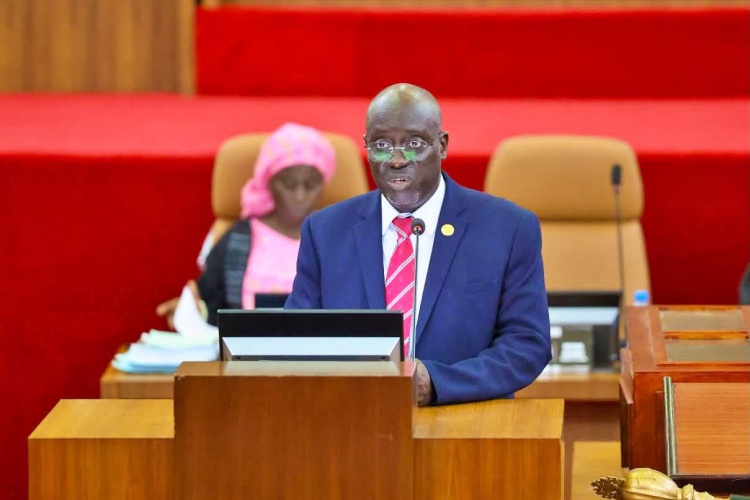
Meanwhile, former Court of Auditors President Mamadou Faye has sought to distance his institution from the politically charged phrase “hidden debt.” Reflecting on the court’s February 2025 report, he noted that the expression does not appear anywhere in the document.
“You will not find, on any page of the report, the term ‘hidden debt,'” Faye said, insisting that the court confined itself to presenting its financial findings and calculations.
The debate has had significant consequences for Senegal’s economy. Since the government’s disclosure of the alleged irregularities in late 2024, relations with key financial partners have been strained, delaying negotiations on a new IMF-supported program that authorities now openly seek.
Adding to the uncertainty, officials at the Ministry of Finance reportedly say they have not discussed the possibility of a new independent international audit with the IMF.
For Senegal, the stakes are high. Even if technical discussions produce an agreement with IMF staff, several approval stages would still need to be completed before any new IMF financing could be disbursed.
The IMF’s latest remarks suggest that, nearly two years after the controversy erupted, the institution remains unconvinced that all questions surrounding Senegal’s debt figures have been conclusively answered.
The continued secrecy surrounding the Mazars audit and the Fund’s call for an additional independent review are likely to intensify pressure on authorities to provide greater transparency on one of the most consequential economic disputes in Senegal’s recent history.






Leave a Reply