


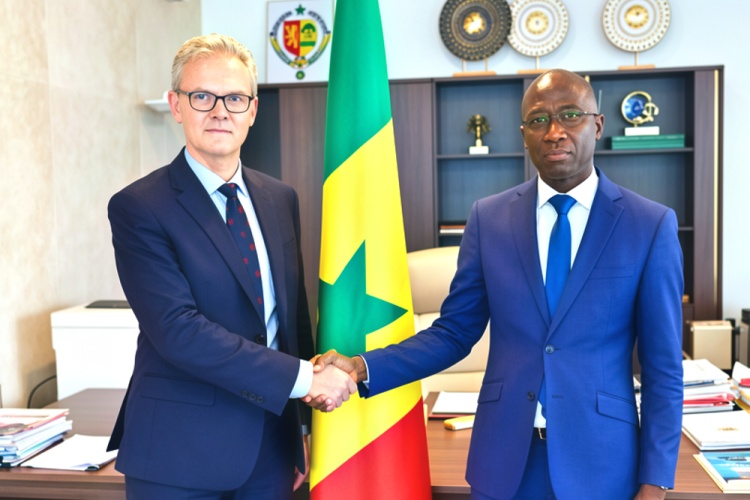
Gambiaj.com – (DAKAR, Senegal) – The Gambia is looking to Senegal’s experience in prosecuting former Chadian President Hissène Habré as it prepares to pursue criminal accountability for serious human rights violations committed during the 22-year rule of former President Yahya Jammeh.
Gambia’s Special Prosecutor, Martin Hackett, travelled to Dakar on Wednesday for discussions with Senegalese judicial authorities, with the Habré case providing an important reference point as Banjul moves towards prosecuting cases arising from the findings of the Truth, Reconciliation and Reparations Commission (TRRC).
Hackett, accompanied by Mariama Sihnaté, Special Legal Adviser at The Gambia’s Ministry of Justice, met Senegal’s Minister of Justice and Keeper of the Seals, Me Moussa Sarr, to discuss the functioning of Senegal’s judicial system and possible areas for closer cooperation.
The visit comes as The Gambia puts in place a complex accountability framework involving national institutions and the Economic Community of West African States (ECOWAS) to prosecute crimes committed during the Jammeh era.
Lessons from the Habré prosecution
The Senegalese experience is particularly relevant because Habré, who ruled Chad from 1982 to 1990, was prosecuted in Dakar by the Extraordinary African Chambers, an African Union-backed court established within Senegal’s judicial system.
The chambers ultimately convicted Habré in 2016 of crimes against humanity, war crimes, and torture and sentenced him to life imprisonment. The case was significant because it demonstrated how a former African head of state could be prosecuted in another African country through an internationalised judicial mechanism.
The process involved specialized investigative and trial chambers, international cooperation, and judicial missions to Chad. Investigators interviewed thousands of victims and witnesses and examined extensive documentary evidence relating to the former Chadian security apparatus.
That experience is of particular interest to The Gambia as Hackett and his team begin the work of translating the TRRC’s findings into prosecutable cases.
From TRRC findings to prosecutions
The TRRC, established to investigate human rights violations committed during the Jammeh era, recommended that a number of individuals be prosecuted for serious crimes. The Government subsequently accepted key recommendations relating to criminal accountability, including the prosecution of Jammeh and other individuals identified as bearing responsibility for serious violations.
The process now involves several institutions rather than a single court.
The Special Prosecutor’s Office was established under the 2024 Special Prosecutor’s Office Act as an independent and autonomous institution responsible for investigating and prosecuting serious human rights violations, international crimes, and specified domestic crimes linked to acts and omissions examined by the TRRC between July 1994 and January 2017.
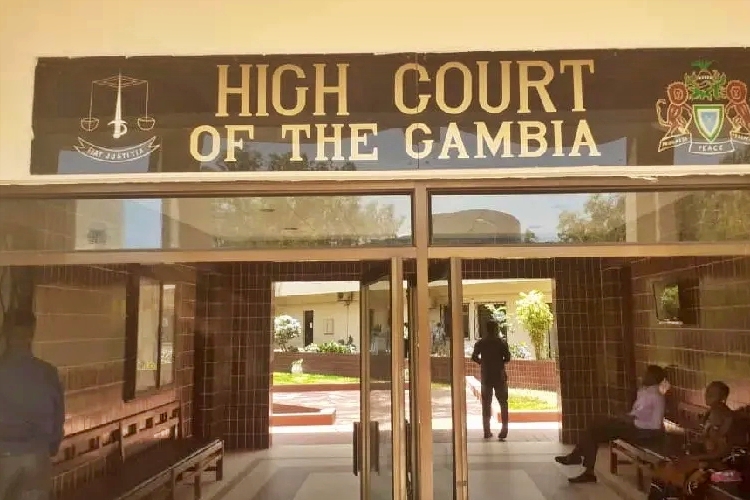
The Special Prosecutor has powers to determine which cases should proceed before the proposed Special Tribunal and which should be prosecuted before the Special Criminal Division of The Gambia’s High Court.
At the regional level, ECOWAS has also committed itself to the process. In December 2024, the ECOWAS Authority of Heads of State and Government decided to establish a Special Tribunal for The Gambia to prosecute allegations of serious human rights violations and international crimes committed between 1994 and 2017.
The framework therefore combines The Gambia’s domestic justice institutions with a regional dimension through ECOWAS, creating what officials and legal experts have described as an internationalized or hybrid accountability mechanism.
A regional model for Gambian accountability
The choice to examine Senegal’s Habré experience is not accidental. Earlier assessments of options for prosecuting Jammeh-era crimes had specifically identified Senegal as a possible venue because of its proximity to The Gambia, its judicial infrastructure, and its experience hosting the Habré proceedings.
The Habré model was also identified as an example of how an internationalised tribunal could combine domestic judicial structures with international participation and expertise.
For Hackett, the Dakar discussions therefore offer an opportunity to examine practical questions that will become increasingly important as Gambian cases move forward: how complex international-crime investigations are organized, how evidence is gathered across borders, how witnesses and victims are protected, how judicial cooperation is secured, and how specialized courts can operate within an existing national legal system.
Hackett expressed gratitude for the reception accorded to the Gambian delegation and praised Senegal’s judicial expertise. He also called for more exchanges between judicial professionals from the two countries, including opportunities for Senegalese magistrates to share their experience with their Gambian counterparts.
Dakar offers cooperation
Minister Sarr reaffirmed Senegal’s readiness to support initiatives aimed at strengthening judicial cooperation with The Gambia through appropriate institutional channels.
He pointed to the historical, cultural, and human ties between the two countries and said their geographical proximity provided a strong basis for closer institutional cooperation, including in the justice sector.
The meeting also brought together Djeynaba Touré Bathily, Director of Legal and Consular Affairs at Senegal’s Ministry of Foreign Affairs, and Younous Kane, Deputy Director of the Directorate of Criminal Affairs and Pardons.
The Dakar discussions could therefore become an important part of The Gambia’s effort to build the institutional and technical capacity needed to move from the TRRC’s extensive record of testimony and findings to courtroom prosecutions.
For victims of the former regime, the significance of the process ultimately lies in whether the accountability mechanism can turn those findings into credible investigations, fair trials, and justice for those identified as bearing responsibility for the crimes.




Leave a Reply