


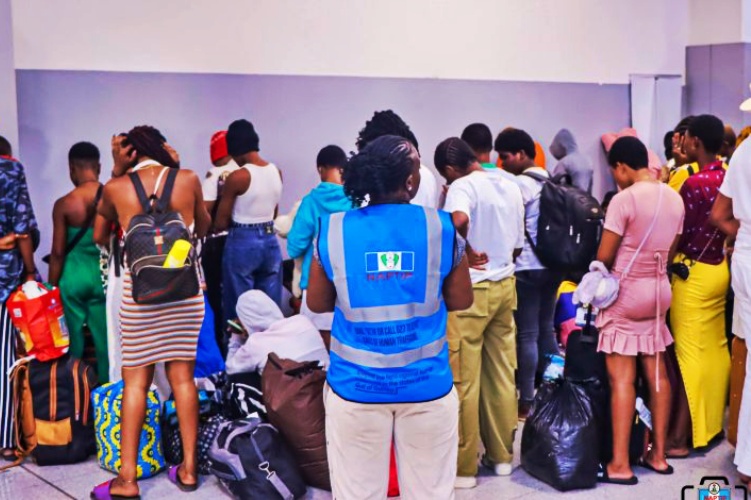
Gambiaj.com – (WASHINGTON, United States) – The Gambia has made significant progress in its efforts to combat human trafficking, including investigating more cases, identifying more victims, and strengthening training for frontline officials, but persistent resource and capacity constraints continue to hamper the country’s response, according to the 2026 US State Department Trafficking in Persons Report.
The report kept The Gambia at Tier 2, meaning the government does not fully meet the minimum standards for eliminating trafficking but is making significant efforts to do so. The assessment covers the government’s efforts during the reporting period and says overall progress increased compared with the previous period.
The report said the government’s main shortcomings included inadequate funding for anti-trafficking programs, while law enforcement agencies and the judiciary lacked sufficient specialized training and resources to investigate and prosecute trafficking cases effectively.
More investigations and prosecutions
According to the report, Gambian authorities investigated 20 trafficking cases during the reporting period, up from 16 previously. The cases included eight involving sex trafficking, four involving labor trafficking, and eight involving unspecified forms of trafficking.
Authorities also initiated prosecutions against six alleged traffickers, compared with two in the previous reporting period, while six earlier prosecutions remained ongoing.
However, only one trafficker was convicted, the same number as in the previous reporting period. The government did not provide sentencing information for that conviction.
The report said corruption and official complicity remained significant concerns, although the government reported no investigations, prosecutions, or convictions of officials for alleged involvement in trafficking.
It also noted that defendants accused of trafficking were eligible for bail and that some subsequently absconded. Social stigma, limited public confidence in the justice system, lengthy court proceedings, and inadequate victim protection were cited as factors contributing to the underreporting of child trafficking.
Victim identification rises
The government identified 26 trafficking victims, including nine victims of sex trafficking, five of labor trafficking, and 12 whose form of exploitation was unspecified.
That represented a sharp increase from the previous reporting period, when authorities identified six victims and six potential victims.
Ten victims were referred to care, compared with 12 victims referred during the previous period.
The report said The Gambia maintained a national referral mechanism under which frontline officials screen potential victims and refer cases to the National Agency Against Trafficking in Persons (NAATIP) and the Department of Social Welfare.
A new process was introduced allowing social workers to conduct initial screening interviews with victims who did not want to speak directly to law enforcement officers.
The government also provided shelter, healthcare, counseling, legal assistance, and repatriation support, both directly and through civil society organizations.
However, government funding for victim services fell to 970,000 dalasi ($13,472) from about 1.35 million dalasi ($18,754) during the previous reporting period.
Online scams and fraudulent recruitment
The report highlighted the growing threat posed by fraudulent recruitment and online exploitation.
The government conducted public awareness campaigns warning people about recruitment scams linked to exploitation in online scam operations. Authorities also investigated and prosecuted 60 Chinese nationals over alleged involvement in online scam operations involving extortion and fraud, according to media reports cited in the assessment.
NAATIP also installed anti-trafficking billboards across the country and digital screens at Banjul International Airport while translating anti-trafficking information into Arabic and Braille and operating a trafficking hotline.
The government drafted a new 2026–2030 National Action Plan against trafficking, although the plan remained pending at the end of the reporting period.
NAATIP received an allocation of 11 million dalasi ($152,778), up from 9.4 million dalasi previously, but the report said the government still lacked adequate resources for the broader anti-trafficking effort.
Children remain particularly vulnerable
The report identified children, women, and migrants among those particularly vulnerable to trafficking in The Gambia.
Traffickers exploit women, girls, and boys in sex trafficking and forced labor, including street vending and domestic work. Some Quranic school teachers were reported to exploit Gambian boys through forced begging, street vending, and agricultural labor in The Gambia and neighboring countries, particularly Senegal and Guinea-Bissau.
The report also said early child marriage remained prevalent, with some families allegedly falsifying children’s ages to facilitate early marriages. Girls subjected to such marriages may subsequently face sex trafficking or domestic servitude.
Foreign women and girls, particularly from Nigeria, were also reportedly recruited with promises of tourism-related employment before being exploited in sex trafficking.
European tourists, primarily from the United Kingdom, were reported to travel to The Gambia for the purpose of sexually exploiting children.
Gambians vulnerable abroad
The report said Gambian men and women were also vulnerable to forced labor and sex trafficking abroad, particularly in the Middle East.
It highlighted fraudulent job advertisements and recruitment schemes as a growing vulnerability, including reports of Gambians being fraudulently recruited into the Russian military to fight in the Russia-Ukraine war.
The assessment also cited reports involving African women recruited for vocational training programs and subsequently placed in Russian military drone production facilities, where workers reportedly faced hazardous conditions, surveillance, wage and working-hour violations, contract switching, and recruitment fees.
The report further cited findings from The Gambia’s Truth, Reconciliation, and Reparations Commission, which documented allegations that former government officials procured women through fraud and coercion for sexual exploitation by former President Yahya Jammeh. The commission also found that Jammeh exploited government employees and citizens through forced labor on his farm.
Despite the progress recorded in the latest assessment, the US State Department said The Gambia still needed stronger institutional capacity, specialized training, and adequate resources to ensure that trafficking investigations lead to prosecutions and convictions and that victims receive effective protection and support.













Leave a Reply