



Gambiaj.com – (BANJUL, THE GAMBIA) – Senegalese fintech company InTouch has signed a 10-year strategic partnership agreement with The Gambia’s Ministry of Finance and Economic Affairs and the Gambia Revenue Authority (GRA), in a move aimed at strengthening tax revenue collection, improving financial oversight, and reducing revenue leakages.
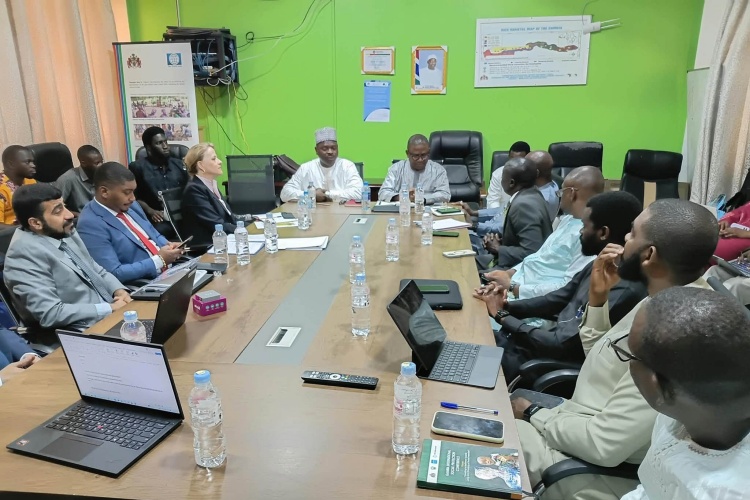
The agreement, signed on Friday, brings together Finance Minister Seedy K. M. Keita and Omar Cissé, founder and chief executive officer of InTouch Group. It follows an international tender launched by the Gambian authorities, with InTouch selected from three competing bidders.
The partnership will particularly target revenue collection in the online gaming industry, a rapidly expanding sector that the government wants to bring under closer financial and tax supervision.
Under the agreement, InTouch will serve as an independent third party supporting the country’s tax administration through a digital platform designed to monitor transactions, process government payments, and strengthen financial controls.
The system will provide the government with real-time information on financial transactions and public revenue, allowing authorities to have a consolidated picture of money collected and outstanding obligations.
It will also introduce secure and interoperable payment infrastructure through which taxpayers can make payments using different channels, alongside audit mechanisms and automated alerts intended to identify discrepancies and prevent revenue losses.
The arrangement is expected to reduce the government’s dependence on declarations submitted by taxpayers themselves, giving the authorities independent access to transaction data to improve revenue forecasting, budget management, and expenditure oversight.
“It is an important reform, and the whole government will be mobilized for its implementation,” Keita said at the signing ceremony.
For InTouch, the Gambian agreement represents an expansion of its operations into an English-speaking market after establishing partnerships with public administrations in five other African countries: Côte d’Ivoire, Cameroon, Gabon, Burkina Faso, and Guinea-Bissau.
The company, founded in Dakar in 2014, says it has spent more than five years developing financial technology solutions for governments, tax administrations, and public treasuries across the continent.
Its founder, Omar Cissé, said the partnership was also about strengthening African countries’ control over their financial data and public revenue systems.
“We are proud to support The Gambia, a brother nation, in securing its public finances. Our model is built on one conviction: African technology, designed for African realities, serving transparency and the financial sovereignty of states,” he said.
Beyond monitoring government revenue, InTouch provides digital tax payment solutions that allow taxpayers to settle taxes and fees without physically visiting government offices or waiting in queues.
Payments can be made through mobile money, partner outlets, and field agents, while tax officials gain access to transaction records, automatic reconciliation systems, and dashboards designed to identify discrepancies.
The company says its approach is intended to help governments broaden their tax base without placing additional pressure on taxpayers who already meet their obligations.
InTouch’s engineering teams are based in Dakar, where the company says its solutions are designed before being deployed in markets including Banjul, Abidjan, Bissau, Yaoundé, and Libreville.
The Gambian agreement also extends the company’s presence beyond the French- and Portuguese-speaking markets in which it has previously operated, demonstrating its ambition to expand across different regulatory and monetary environments.
For The Gambia, the 10-year partnership comes as authorities seek to improve domestic revenue mobilization and strengthen the monitoring of economic activities, particularly those increasingly conducted through digital platforms.
Its effectiveness will ultimately depend on the implementation of the system, the quality of financial data available to the authorities, and the ability of the GRA to use the technology to improve compliance and accountability in public revenue collection.










Leave a Reply