


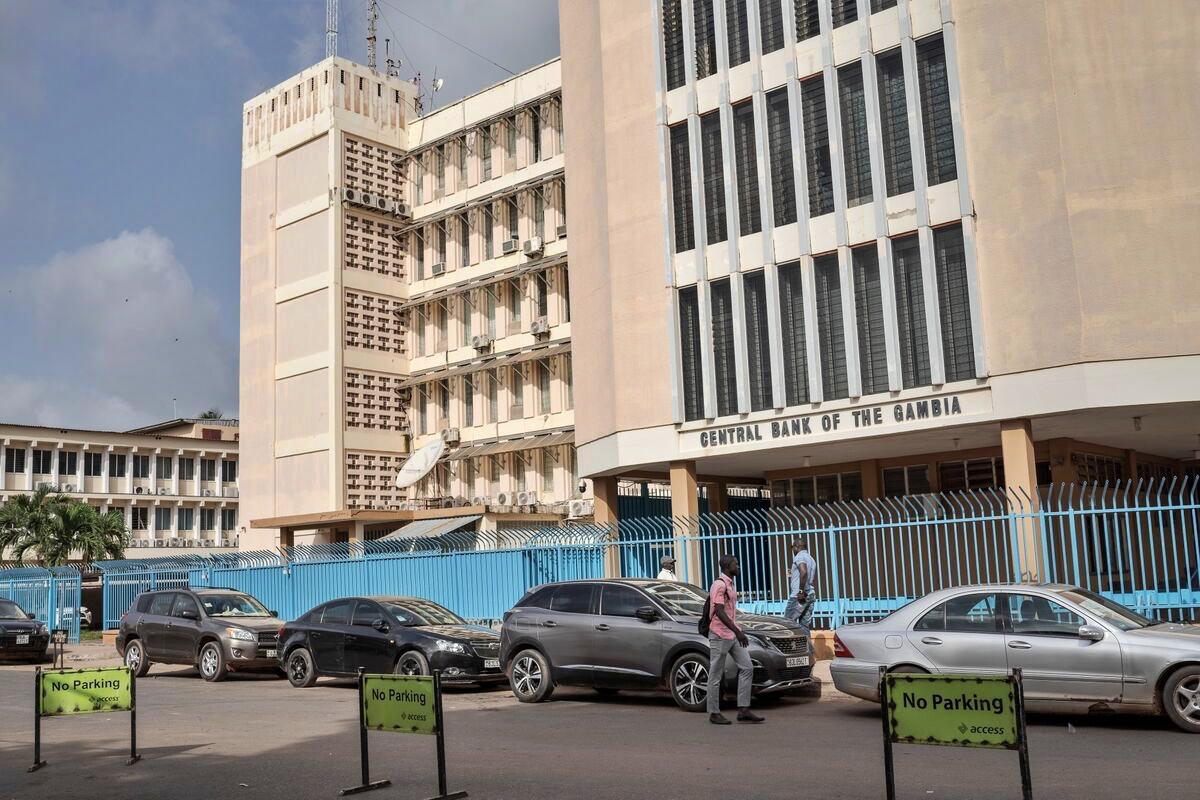
Gambiaj.com – (BANJUL, The Gambia) – The Gambia is among four African nations receiving accelerated IMF support as a ripple of economic shocks from the Middle East conflict tightens its grip on vulnerable economies.
In The Gambia, authorities have requested a 20 percent augmentation of their existing $172 million program, IMF Communications Director Julie Kozack said, with a six-month extension and rephasing of access also in the cards.
The International Monetary Fund (IMF) has moved to strengthen its financial support to The Gambia as the economic consequences of the ongoing Middle East war increasingly make themselves felt across fragile, import-dependent economies in Africa and beyond.
Julie Kozack confirmed the development at a press briefing on Thursday, naming The Gambia alongside Ethiopia and Burkina Faso as countries that will receive either additional disbursements or an acceleration of payment schedules under existing IMF programs. Discussions around a new support package for Malawi have also been fast-tracked, she added.
The conflict in the Middle East, which erupted in late February following a series of strikes by the United States and Israel against Iran, has since spiraled into a full-blown economic crisis for energy-importing nations.
Iran’s retaliatory strikes on the oil infrastructure of neighboring states and the subsequent closure of the Strait of Hormuz, through which roughly one-fifth of the world’s hydrocarbon supplies normally pass, have sent oil prices sharply upward.
The knock-on effects on fertilizer prices and availability have added a second layer of pressure on agricultural economies already operating on thin margins.
For The Gambia, a small, open economy heavily reliant on imports for both energy and food, and where the majority of the population remains vulnerable to commodity price swings, these external shocks carry significant domestic consequences.
Rising fuel prices translate directly into higher transport costs, more expensive electricity generation, and elevated prices for basic goods. Disruptions to fertilizer supply chains threaten agricultural productivity at a time when food security remains a persistent concern.
Kozack acknowledged that the economic effects of the war are now visible in macroeconomic data, including inflationary pressures and rising short-term expectations across affected countries. “There are signs that the shock is feeding inflation, with short-term expectations on the rise,” she said, while noting that the impact would vary considerably from country to country.
She was candid about the Fund’s particular concern for energy-importing developing nations. “Not all countries benefit from strong technology investments; some are more affected than others. We are especially worried about vulnerable energy-importing countries,” she said.
The IMF’s response builds on commitments made during the Spring Meetings of the IMF and the World Bank in mid-April, when Managing Director Kristalina Georgieva signaled the Fund’s readiness to assist countries that come forward with requests for support.
At the time, she estimated that between $20 billion and $50 billion in funding could be required globally, depending on the scale and duration of the conflict’s economic fallout.
The Fund is also expected to publish an updated World Economic Outlook in July, incorporating revised growth projections for 2025 and 2027, which will likely reflect the full weight of the ongoing disruption.
The confirmation that The Gambia is among the countries receiving priority IMF attention underscores both the severity of the external pressures the country faces and the importance of the government’s engagement with international financial institutions.
It also raises timely questions about the domestic policy responses needed to cushion citizens from rising living costs and whether the additional IMF support will translate into meaningful relief for ordinary Gambians in the months ahead.
The Gambia Journal will continue to follow developments on the IMF support package and its implications for the national economy.






Leave a Reply