


Gambiaj.com – (DAKAR, Senegal) – Adji Séra Trera, a Gambian businesswoman is standing trial before a specialized financial court in Senegal, accused of defrauding her Senegalese rice supplier of over 673 million CFA francs, an amount equivalent to roughly $1.1 million, in a case that has exposed the complex, and sometimes murky, world of cross-border commodity trading between The Gambia and Senegal.
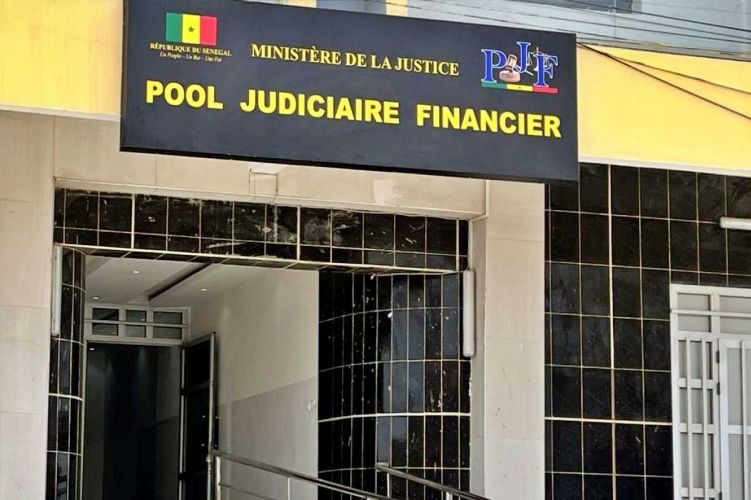
Adji Séra Trera, a trader based in The Gambia, has been in Senegalese custody since 30 April 2026. She appeared before the Pool Judiciaire Financier, Senegal’s specialized financial crimes court, on Thursday, where the case was heard in its substance for the first time.
A Friendship Built on Rice, a Relationship Destroyed by Debt
At the heart of the case is Modou Ndiaye, a Senegalese merchant from Bargny who told the court he was introduced to Trera in April 2023 through a mutual business contact in Touba.
Their working relationship began promisingly, with a first transaction involving 55 tonnes of rice completing without incident and laying the foundation of what Ndiaye described as a relationship of trust.
That trust, according to the plaintiff, was soon abused. Ndiaye told the court that Trera began accumulating debts rapidly. She allegedly owed him 220 million CFA francs before convincing him to extend further credit by presenting what she described as a reliable network of Gambian clients.
Ndiaye subsequently delivered additional quantities of rice and dairy products worth 340 million CFA francs, pushing her outstanding debt to 560 million CFA francs.
When he traveled to The Gambia to recover his money, Ndiaye told the court he was kept waiting for 33 days before Trera finally admitted she had invested the funds into 27 containers of goods arriving from Europe.
Despite his mounting frustration, Ndiaye told the court he was persuaded to continue trading, partly through the intervention of Trera’s brother, Abdoulaye Téra, who is based in Dakar.
A formal protocol was subsequently signed for the delivery of 330 tonnes of rice valued at 112.2 million CFA francs. Of that transaction, Ndiaye says 74.8 million CFA francs was never paid.
The final chapter of their dealings reads like a scene from a thriller. Trera allegedly convinced Ndiaye to lend her 39 million CFA francs to clear customs on 15,000 bags of rice in The Gambia, promising to repay him 150 million CFA francs by 15 April 2026.
That date came and went without payment. In support of his claims, Ndiaye presented the court with a signed acknowledgment of debt, unpaid invoices, and bounced cheques.
“I Lost Money on the Exchange Rate,” The Defence
Trera, for her part, does not deny the debt. She acknowledged in court that she owes the full sum of 673.8 million CFA francs. However, she firmly contests the charge of fraud, drawing a distinction between a failed commercial relationship and criminal deception.
“Since 2023, I have paid him billions in rice transactions,” she told the court. “But each time, I lose money when converting CFA francs to dalasi.”
She further alleged that Ndiaye supplied her with poor-quality rice that her Gambian clients refused to accept, pushing her into financial crisis despite having taken out a bank loan to manage her obligations.
Marabouts, Mystery, and a Courtroom Surprise
The trial took an unexpected turn when the subject of spiritual intervention entered the courtroom.
Trera alleged that she had been “maraboutée,” a term referring to being under a spiritual spell through the intervention of a religious guide, a concept deeply embedded in West African culture.
She further claimed that Ndiaye himself had connected her with his own spiritual adviser, contributing to her misfortune. He paid one million CFA francs on her behalf for prayers, she alleged.
Ndiaye partially confirmed to the court that he had connected Trera with a spiritual guide, though he maintained his intention was simply “to help her.” The exchange sparked a tense back-and-forth between the lawyers on both sides, prompting the presiding judge to suspend the hearing before proceedings were resumed.
Fraud or a Commercial Dispute?
The central legal question before the court is whether Trera’s conduct amounts to criminal fraud or an unfortunate collapse of a legitimate business arrangement.
Counsel for the plaintiff, Me Ousseynou Ngom, argued that the fraud charge is solidly established, contending that Trera deliberately presented a false image of financial strength at the outset of their dealings in order to ensnare Ndiaye.
His colleague, Me Abdy Nar Ndiaye, claimed damages of one billion CFA francs for all losses suffered.
The prosecutor called for the full application of the penal law.
For the defense, Me Youssou Camara submitted that no fraudulent scheme was ever set in motion, noting that the two parties maintained a regular commercial relationship over two years.
His colleague, the prominent criminal lawyer Me El Hadji Diouf, went considerably further, alleging that Trera had been “seized” and brought before police against her will. He accused Ndiaye of entrapment, luring her to Senegal under false pretenses, and placed responsibility for her financial ruin squarely on the quality of goods he supplied.
“It is Modou who put her in difficulty by sending her bad-quality rice,” Diouf argued. “He had her spiritually manipulated and then set a trap for her to come to Senegal.”
Before proceedings closed, Diouf applied for Trera’s provisional release. The prosecution left the matter to the court’s discretion. The judge rejected the application.
Verdict Expected 18 June
The court has reserved its judgment. Adji Séra Trera’s fate, and whether Senegalese justice views her conduct as a crime or a commercial failure, will be determined on 18 June 2026.














Leave a Reply