



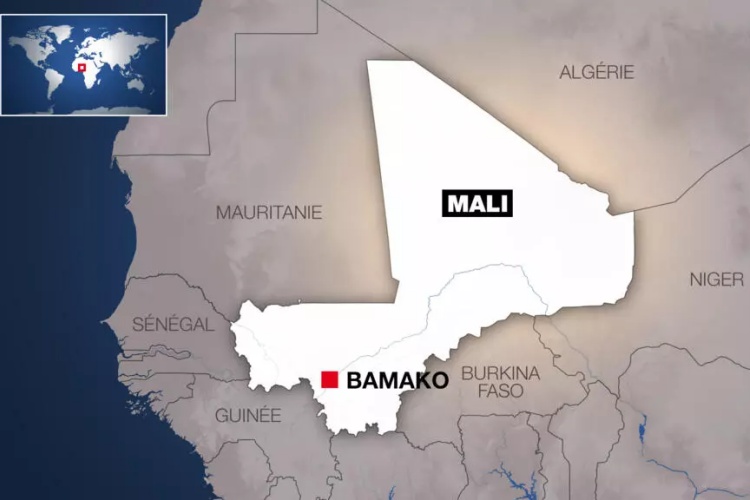
Gambiaj.com – (BAMAKO, Mali) – Mali’s transitional authorities have announced substantial financial rewards for information leading to the arrest or killing of senior leaders of jihadist and separatist groups, marking a significant escalation in the country’s fight against armed insurgencies.
In an announcement broadcast on state television ORTM on Thursday, the government pledged “financial rewards” to anyone providing information that would facilitate the “arrest or neutralization” of key figures belonging to the Jama’at Nusrat al-Islam wal-Muslimin (JNIM), an al-Qaeda-linked jihadist coalition, and the Front de Libération de l’Azawad (FLA), a separatist alliance operating in northern Mali.
The rewards range from 500 million CFA francs to 2 billion CFA francs, underscoring the authorities’ determination to dismantle the leadership structures of the armed groups that have fuelled insecurity across large parts of the country.
Among those targeted are JNIM leader Iyad Ag Ghaly, his influential deputy Hamadoun Kouffa, and Seidane Ag Hitta. The authorities have also placed rewards on leading figures of the FLA, including Alghabass Ag Intallah and Bilal Ag Acherif.
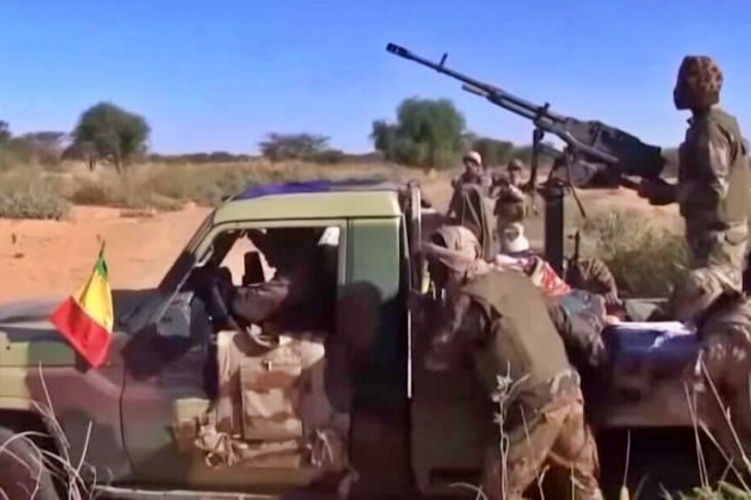
The announcement comes as Mali’s military-led government intensifies its security campaign against both jihadist and separatist movements amid persistent attacks and instability, particularly in the country’s northern and central regions.
In a parallel move, the authorities have introduced sweeping restrictions aimed at limiting the mobility of armed groups. An interministerial decree issued on June 3 imposed an immediate nationwide ban on motorcycle travel outside major urban centers.
Officials say the measure is intended to disrupt the operations of armed groups, which frequently use motorcycles for rapid movement and attacks across difficult terrain.
The decision, however, is expected to have far-reaching consequences for ordinary Malians, especially in rural areas where motorcycles are often the primary means of transportation for accessing markets, schools, healthcare facilities, and administrative services.
The motorcycle ban has already generated widespread public debate, with many citizens expressing concern over its impact on daily life and economic activities.
The government has also prohibited access to 39 locations, mainly forested areas that security authorities consider to be sanctuaries and operational bases for terrorist groups.
The latest measures reflect a broader strategy by Mali’s transitional government to combine military pressure, intelligence gathering, and restrictions on movement in an effort to weaken armed groups that continue to challenge state authority despite years of counterinsurgency operations.
Security analysts note that while financial incentives can encourage public cooperation with security forces, measures such as transportation restrictions may prove controversial if they significantly disrupt livelihoods in regions already grappling with insecurity and limited infrastructure.
Mali has faced a complex security crisis for more than a decade, involving jihadist organizations linked to al-Qaeda and the Islamic State group, as well as separatist movements seeking greater autonomy or independence for northern territories.






Leave a Reply