


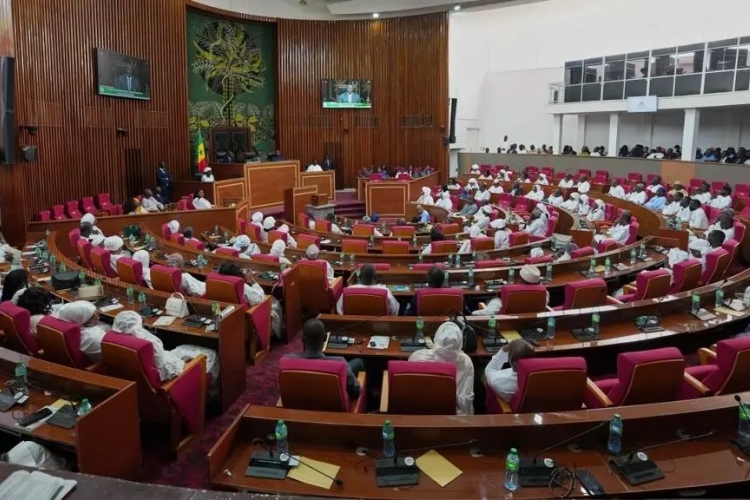
Gambiaj.com – (DAKAR, Senegal) – In a session marked by street clashes, a physical altercation on the floor of the National Assembly, and a dramatic opposition walkout, Senegal’s parliament voted unanimously on Monday to advance a sweeping constitutional reform package that will now be put to a national referendum.
All 129 deputies present voted in favor of the reform on June 29, 2026, though the tally reflected only lawmakers from the ruling majority, after opposition legislators boycotted the vote in protest.
On behalf of the Executive, the Minister of Justice announced from the floor of the Assembly that the reform would be submitted to a referendum, a declaration that did little to quell the political storm swirling around the legislation.
Tear Gas Before the Session Even Began
The day’s tensions began well before the first gavel fell. Ahead of the 10 a.m. opening of the session, security forces fired tear gas to disperse supporters of the Alliance pour la République (APR), the party of former President Macky Sall, along with activists from other opposition formations who had gathered near the National Assembly to protest the proposed reform. Several demonstrators were arrested, and all access routes to the parliament building were subsequently sealed off.
The unrest on the streets would prove to be only a prelude to what unfolded inside the chamber.
Gendarmes Remove Opposition Lawmaker
The session descended into chaos when APR deputy Abdou Mbow refused to vacate the podium stating that the Parliament is not “Sweet Beauté” saloon, after presenting a procedural motion calling for a suspension of debate on the bill.
His motion was rejected following interventions by the chairman of the Law Commission, Me Abdoulaye Tall, and Pastef parliamentary group leader Ayib Daffé, both of whom urged the chamber to proceed with deliberations.
Undeterred, Mbow attempted to retake the lectern to make a further intervention, prompting National Assembly President Ousmane Sonko, who was presiding over the session, to order that his microphone be switched off and to demand he step down.
“You leave, or I will have you removed,” Sonko warned.
Mbow refused.
Backed by fellow Takku Wallu Sénégal lawmakers and a number of independent deputies who rallied around him, Mbow held his position at the podium as Sonko pressed ahead with parliamentary business, announcing a list of 76 lawmakers registered to speak and giving the floor to deputy Guy Marius Sagna.
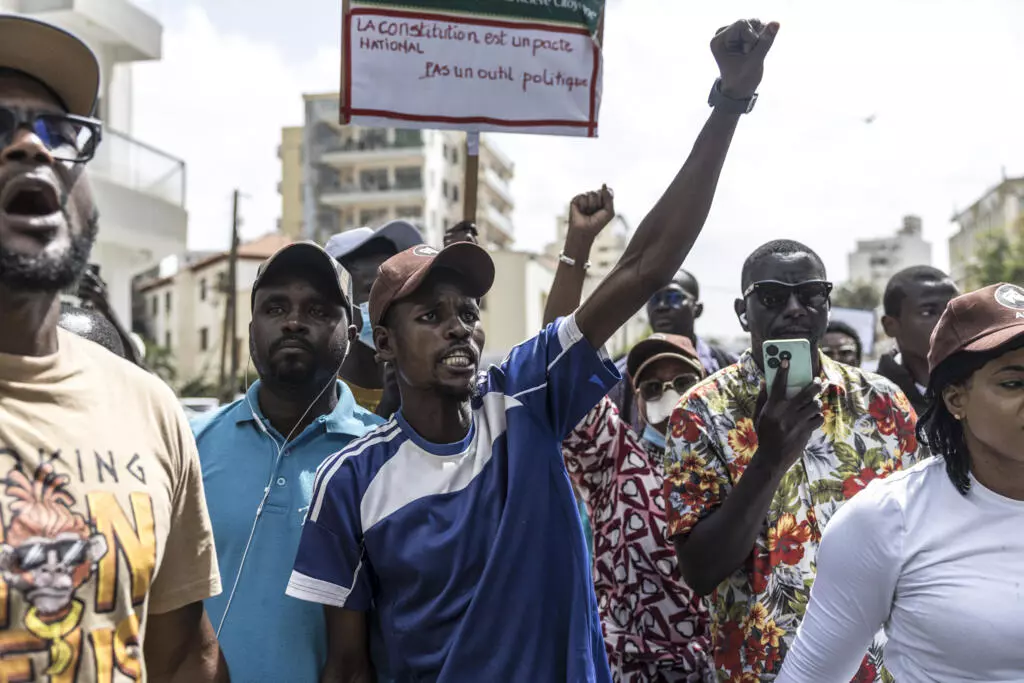
Demonstrators chant slogans and hold banners during a demonstration against a constitutional reform bill near the National Assembly in Dakar, June 29, 2026. AFP – PATRICK MEINHARDT
The chamber, however, was in no state for orderly debate. Sagna’s remarks were drowned out by opposition protests and loud disruptions.
The situation escalated sharply when several lawmakers from the ruling majority moved toward the podium in an attempt to physically remove Mbow, among them deputy Marième Mbacké, whose efforts triggered open pushing and shoving on the floor of the National Assembly. Sonko appealed to Pastef lawmakers to return to their seats to prevent a broader brawl.
With proceedings effectively paralyzed, Sonko ordered a security intervention. Agents of the National Gendarmerie stationed at the Assembly entered the plenary chamber and forcibly removed Mbow, escorting him out amid jeers and loud protests from his supporters.
The entire Takku Wallu Sénégal parliamentary group, along with several non-aligned deputies, immediately walked out in solidarity, boycotting the remainder of the session. The vote that followed, unanimous among those who remained, reflected a chamber emptied of its opposition voices.
What the Reform Proposes
At the heart of the controversy is a set of constitutional amendments that would expand the powers of parliament while curtailing certain presidential prerogatives, changes that critics argue risk destabilizing Senegal’s institutional balance.
Among the most debated provisions is a clause that would bar a sitting president from serving simultaneously as the leader of a political party. While President Bassirou Diomaye Faye remains a member of the ruling Pastef party, he no longer holds any official position within it.
Nonetheless, a political coalition aligned with the president has called for the immediate withdrawal of the bill, arguing that the head of state should be permitted to exercise his constitutional powers without further restrictions being imposed on him.
Civil society organizations and opposition parties have gone further, accusing Sonko, himself a former prime minister and now the presiding officer of the assembly, of using the reform process to consolidate his own influence and characterizing the legislation as a potential power grab.
A Deepening Political Crisis
Monday’s scenes inside and outside the National Assembly have laid bare the depth of a political fracture that has been widening since President Faye’s election.
What was framed by the ruling majority as a democratic effort to rebalance Senegal’s institutions has been received by its opponents as an assault on those very institutions.
The decision to submit the reform to a national referendum will now shift the political battleground from the floor of the Assembly to the broader Senegalese public, a contest that promises to be no less contentious than the session that set it in motion.




Leave a Reply