


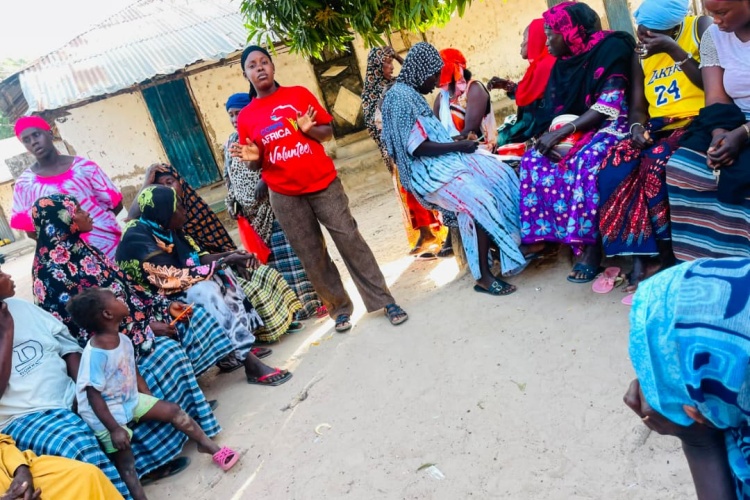
Gambiaj.com – (KIANG BURONG, The Gambia) – When Binta Ceesay first arrived in Burong, a quiet Mandinka village in Kiang West, Lower River Region, she broke down in tears. The young educator and youth leader had left the familiarity of urban life to serve as a CorpsAfrica volunteer. But her first night in the village was marked by fear, loneliness and uncertainty.
Surrounded by strangers and far from home, she wondered whether she had made the right decision.
“I cried my eyes out,” she recalled. “I was asking myself if I could really thrive here, so far from everything safe.”
What began as a difficult transition, however, would become a deeply personal lesson in service, resilience and belonging.
After ten months in Burong, Ceesay says the village did more than host her. It embraced her, changed her outlook and reshaped her understanding of community life, particularly the strength and resilience of rural women.
A village that became home
Ceesay said the turning point came the morning after her arrival, when her host mother offered her a simple reassurance.
“Feel at home. This place will be as sweet as the one you left,” she told her.
Those words, Ceesay said, gave her the confidence to begin her assignment with renewed purpose.
She started by going from house to house before attending her first community meeting at the Alkalo’s compound. There, she introduced herself, explained CorpsAfrica’s mission and listened to residents discuss their hopes, challenges and everyday struggles.
At first, she said, her voice trembled. But the community gradually responded with warmth, patience and acceptance.
“They didn’t just welcome me,” she said. “They wove me into the fabric of their lives.”
Lessons from rural women
What inspired Ceesay most during her stay was the strength of the women of Kiang Burong.
Each morning, she watched them leave early for their gardens before returning home to cook, care for children, support their families and manage household responsibilities.
Despite limited resources and the pressures of rural life, she said, the women remained cheerful, generous and united.
“These women never get tired, nor do they complain,” Ceesay said. “They help each other in difficult times as if it were their own problem. They care for one another like siblings.”
She said the women routinely shared what little they had with neighbours and others in need, without expecting anything in return.
“That taught me the power of unity,” she said. “They give without expectation, and they love without judging.”
The experience also challenged Ceesay’s previous assumptions about happiness and success. Having grown accustomed to urban life, she had once viewed the city as offering greater comfort and opportunity.
Living in Burong, she said, taught her to appreciate a different definition of wellbeing.
“I learned to appreciate the little I have,” she said. “It changed the way I think about rural people and what it means to live well.”
The burden of survival
Ceesay’s reflections also highlight the economic challenges facing women in Kiang Burong.
The community depends heavily on seasonal farming, a livelihood vulnerable to erratic rainfall, pest infestations and fluctuating market prices. For many women, this means uncertain incomes and constant pressure to provide food, education, healthcare and shelter for their families.
Although women play a central role in household welfare and community resilience, many have limited access to wider economic opportunities because of gaps in education, limited access to finance and few alternatives to agriculture.
For Ceesay, these challenges are not simply economic. They are development barriers that affect households, young people and the long-term prospects of the community.
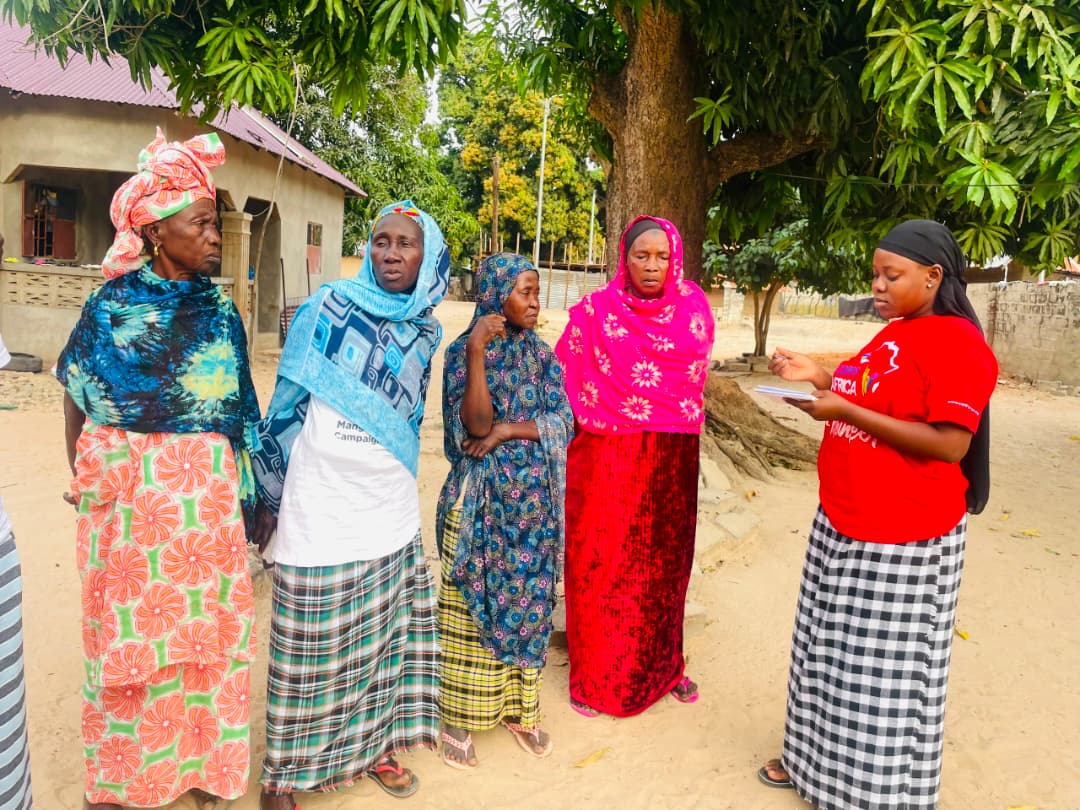
Binta Ceesay in one of her many engagements with the women of Kiang Burong
Turning experience into action
Determined to respond to the needs she witnessed, Ceesay is now proposing a food-processing training program for women and young people in Kiang Burong.
The initiative would equip participants with skills to process locally produced cereals into products such as super cereals and dukula, package them properly and develop them into viable small businesses.
The proposed program would also cover business management, financial literacy, quality control and cooperative development.
Ceesay believes such an initiative could help reduce post-harvest losses, strengthen local businesses and create new income opportunities for women and young people.
She also hopes it could encourage young people to see greater economic possibilities within their communities rather than feeling compelled to migrate to urban centres.
“It is about empowering women and youth to create value from what they already have,” she said.
Service as leadership
Born in Nyofelleh Village, Ceesay said her commitment to community service has always been rooted in a sense of purpose.
She studied in Kombo South before continuing her education at The Gambia College, developing a career that combines teaching, mentorship and youth leadership.
She currently serves as President of the Nyofelleh Youth Association and Chairperson of the Kombo South District Youth Committee, while also working as a CorpsAfrica volunteer in Kiang Burong.
She describes herself as a teacher at heart, with a passion for reading, mentoring and helping young people discover their potential.
But her experience in Burong has also taught her that community service is not simply about what a volunteer brings to a community.
It is also about what the volunteer is willing to learn.
For Ceesay, the ten-month experience offered more than an opportunity to serve. It gave her a new appreciation of rural life, the strength of women and the power of community solidarity.
In Burong, she found what she initially feared she had left behind: a sense of home.
“From the tears of doubt to a home in Kiang Burong,” she said, “I learned that being truly seen can change a person forever.”








Leave a Reply