


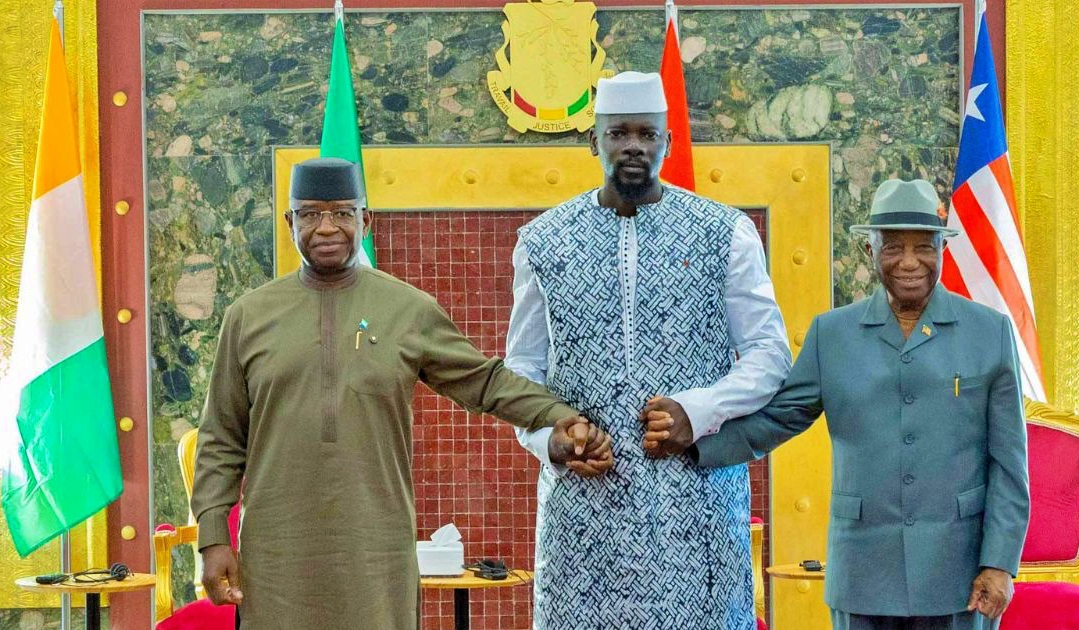
Gambiaj.com – (CONAKRY, Guinea) – Leaders of Guinea, Liberia, and Sierra Leone have pledged to ease rising border tensions and strengthen regional cooperation following an extraordinary summit held in Conakry on Monday.
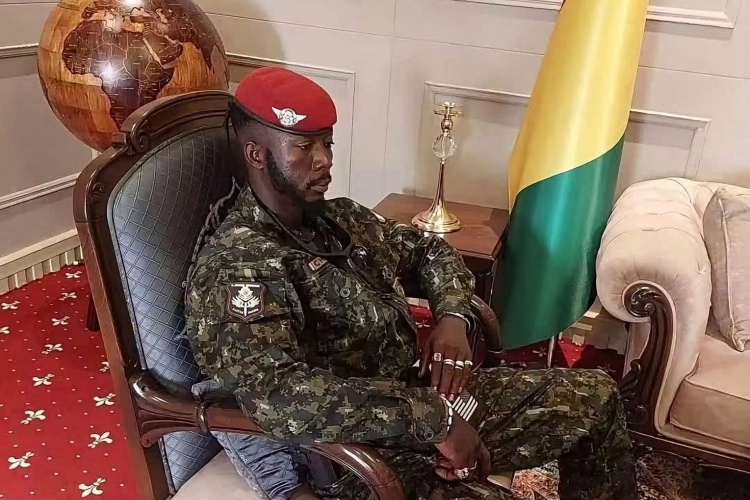
The meeting, convened under the framework of the Mano River Union (MRU), brought together Guinean leader Mamady Doumbouya, Liberian President Joseph Boakai, and Sierra Leone’s President Julius Maada Bio. Côte d’Ivoire participated as an observer.
In a joint communiqué, the three heads of state reaffirmed their commitment to resolving border disputes through dialogue and diplomatic mechanisms, stressing the need to “preserve peace and stability” and avoid any escalation along their shared frontiers.
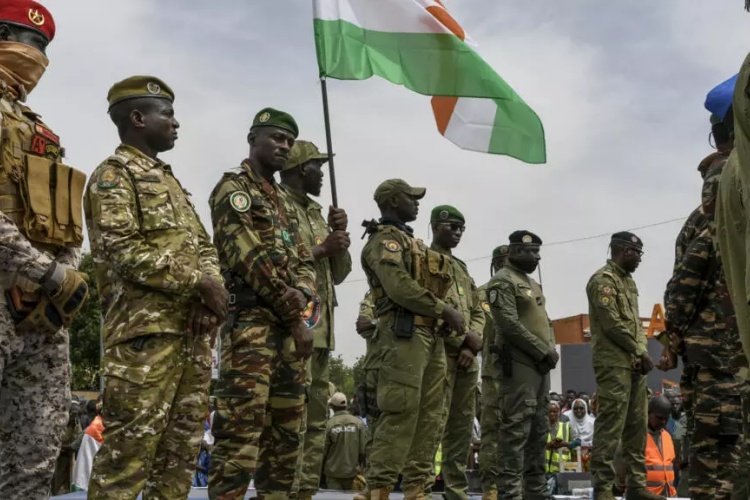
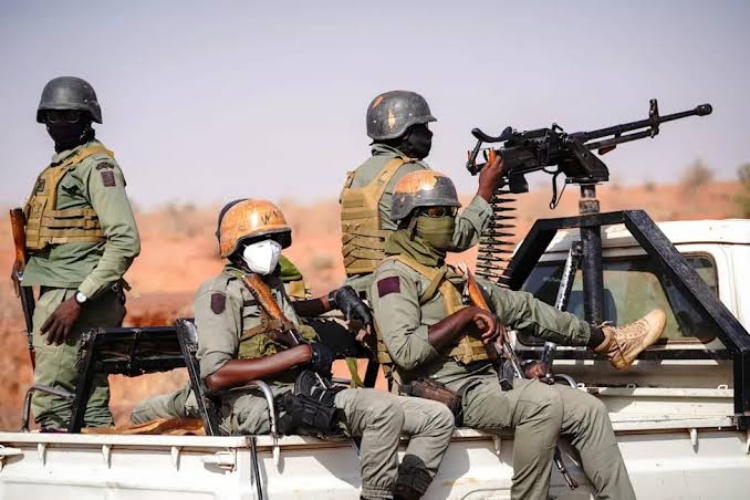
The summit followed a series of incidents that have heightened tensions in the MRU region. Just a day before the meeting, Guinea deployed troops to its border with Liberia, with President Doumbouya publicly declaring that no part of Guinea’s territory would be ceded.
Rising Border Incidents Spark Concern
Recent weeks have seen a surge in confrontations across the porous borders of the three countries, reviving long-standing territorial disputes rooted in colonial-era demarcations.
In late February, Guinean forces detained 16 Sierra Leonean soldiers following a raid in Koudaya, a village within Guinean territory. The troops were released days later after diplomatic negotiations between Freetown and Conakry.
Tensions have also persisted around the disputed Yenga region, a flashpoint since the civil wars of the early 2000s.
Meanwhile, relations between Guinea and Liberia have been strained by more recent developments.
Reports indicate that Guinean soldiers crossed into Liberian territory in the Sorlumba area of Foya District, where they allegedly removed the Liberian flag and raised their own. The incident reportedly disrupted a key infrastructure project after heavy equipment was seized.
Clashes between soldiers and civilians have also been reported near the Makona River, with at least one Liberian official wounded. The violence has forced school closures and triggered displacement in parts of Lofa County.
ECOWAS Intervention and Diplomatic Push
The growing instability prompted intervention from the Economic Community of West African States (ECOWAS), which issued a warning ahead of the summit, urging restraint and caution.
In a March 12 statement from its headquarters in Abuja, ECOWAS cautioned that unilateral actions could undermine regional peace and announced the deployment of a high-level technical assessment mission to the Mano River Basin.
Joint Security Roadmap Adopted
At the close of the Conakry summit, leaders endorsed a joint security roadmap aimed at preventing further escalation. Measures include increased joint patrols, enhanced intelligence sharing, and the establishment of rapid communication mechanisms between local authorities and security forces.
The three countries also agreed to urgently convene technical teams to stabilize volatile border zones and promote dialogue among affected communities.
Guinea’s Foreign Minister, Morissanda Kouyaté, who read the final communiqué, said the leaders reaffirmed their “unwavering commitment” to sovereignty, territorial integrity, and the inviolability of borders.
Push for Economic Integration
Beyond security concerns, the summit emphasized the need to revitalize the Mano River Union by accelerating cooperation in trade, infrastructure, energy, and the free movement of people and goods.
Leaders agreed to hold another MRU summit within a month to sustain dialogue and advance regional development initiatives.
The MRU, established in 1973, has long sought to foster economic cooperation among its members but has faced repeated setbacks due to cross-border conflicts, particularly during the civil wars that ravaged the region in the 1990s and early 2000s.
A Test for Regional Stability
The Conakry meeting is widely seen as a critical test of West African diplomacy, as the three nations attempt to balance territorial sensitivities with the need for regional integration.
With technical commissions now tasked to develop concrete proposals on border delimitation and management, attention is turning to whether sustained dialogue can prevent further escalation in one of West Africa’s most historically volatile regions.



Leave a Reply