


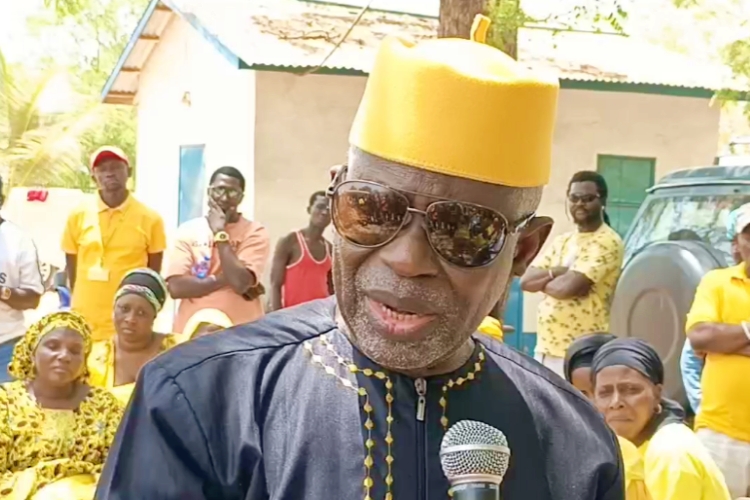
Gambiaj.com – (BANJUL, The Gambia) – The United Democratic Party (UDP) leader Lawyer Ousainou Darboe has pushed back strongly against growing narratives portraying him as the principal obstacle to opposition unity in The Gambia, dismissing claims rooted in tribal considerations as divisive, unfair, and unrepresentative of the broader Gambian public.
Speaking in an interview on SkyPower Radio, the veteran opposition leader sought to set the record straight on the UDP’s position regarding coalition building ahead of what many observers anticipate will be a highly competitive political season.
His remarks come amid intensifying debate within opposition circles about how, and under whose leadership, a unified front against the ruling government could be formed.
UDP Has Participated, Will Continue To
Darboe confirmed that the UDP has taken part in multiple coalition discussions initiated by opposition figure Talib Ahmed Bensouda and signaled that the door remains open for future engagement.
“We have responded to coalition invitations, and we will continue to participate. If we come together, it will be more beneficial and rewarding for all participants in salvaging this country,” he said.
The statement is significant, as it directly contradicts narratives suggesting the UDP has been uncooperative or absent from opposition dialogue. Darboe was unequivocal that the party’s history of engaging coalition processes stretches back more than two decades.
“Since 2001, the UDP has always been open to coalition initiatives. The issue has never been whether we support a coalition, but rather how the coalition should be structured,” he said.
Structure, Not Sentiment
At the heart of Darboe’s argument is a straightforward political logic: coalition arrangements must reflect the actual strength and support base of the participating parties. He questioned proposals that would effectively subordinate the UDP, which he describes as the largest opposition party in the country, to the leadership of smaller parties, calling such arrangements neither fair nor rational.
“What we are saying is that if UDP has 50 and another party has 10 or 20, it does not make sense for the party with the bigger support base to be asked to join under the leadership of the smaller one. It should be the other way around,” he said.
He left no room for ambiguity on where the UDP stands: “To be crystal clear to those speculating about a UDP coalition, the UDP will not enter into any coalition that is not led by the UDP. The party has the largest support base and remains the biggest political party in the country. Therefore, it is only reasonable that any coalition involving the UDP be led by the UDP.”
Darboe also denounced what he characterized as attempts to “blackmail” the UDP in coalition negotiations, arguing that his party should not be made the sole scapegoat when talks break down.
The Tribal Question
Perhaps the most politically charged dimension of his address was his response to suggestions that his Mandinka ethnic background makes him an unelectable candidate and, by extension, a liability to a broader opposition coalition. Darboe confronted the issue candidly while firmly rejecting the premise.
“Others suggest that my Mandinka background is the issue, but such views do not represent all Gambians,” he said, acknowledging that opinion remains divided over his continued leadership of the party and his viability as a presidential candidate.
He noted that while some argue the UDP needs new leadership to secure electoral victory, the party itself remains united behind him. “The reality is that Ousainou Darboe remains the UDP’s chosen candidate. Those who disagree are entitled to their opinions, but they should also respect the decisions made by the party and its supporters,” he said.
His remarks touch on a sensitive but recurring tension in Gambian politics, the interplay between ethnicity and electability, a conversation that opposition leaders have long grappled with and one that analysts say must be addressed honestly if a credible coalition is ever to materialize.
Unity, Yes – But on Equal Terms
Despite the firm language, Darboe did not close the door on cooperation. He acknowledged that a united opposition would meaningfully improve the prospects of political change in The Gambia but stressed that such unity must be built on mutual respect and recognition among parties, not on the marginalization of the largest among them.
His broader message appeared directed as much at coalition brokers and political commentators as at rival party leaders: the UDP is willing to work with others but will not accept arrangements that diminish its standing or deny its democratic weight.
As The Gambia edges closer to its next electoral cycle, the question of whether the opposition can forge a credible and durable coalition remains one of the most consequential in the country’s political landscape. Darboe’s remarks suggest the path forward, while possible, will require honest negotiations and a reckoning with the difficult questions of leadership, representation, and trust that have historically stood in the way.




Leave a Reply