


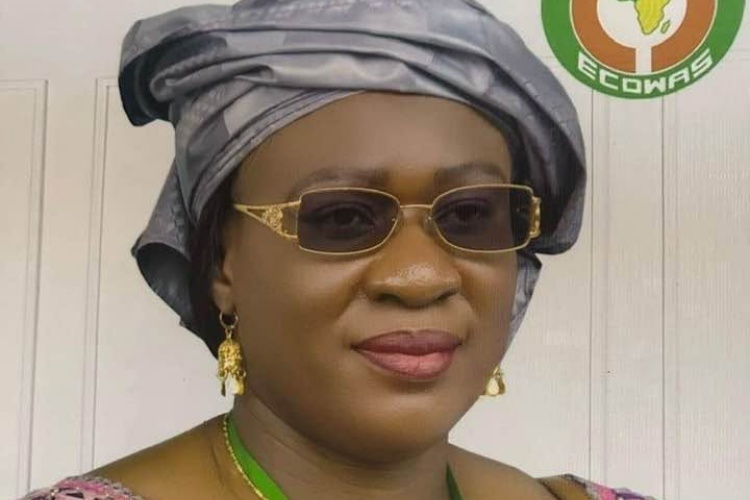
Gambiaj.com – (BANJUL, The Gambia) – Nominated National Assembly Member Maimuna Ceesay-Darboe has defended her controversial remarks about Banjulians, saying she cited the capital’s residents as an example of how politics can be pursued with “civilization and wisdom” rather than insults and conflict.
Ceesay’s comments come after her earlier remarks at a political gathering in Baddibu, where she contrasted the political experience of Banjulians with that of people in areas such as Kiang and Baddibu. Her comments triggered criticism from Banjulians, including Banjul Mayor Rohey Malick Lowe.
In a follow-up audio statement, Ceesay said she was trying to educate people about conducting politics without allowing political differences to damage relationships.
“I use the people of Banjul as an example of what they are able to achieve in politics,” she said, insisting that she did not intend to disrespect Banjulians.
She repeated her argument that Banjulians approach politics differently from people in the provinces, saying they do not have farms or gardens in the city and therefore are able to remain removed from some of the hardships associated with rural political mobilization.
Her earlier comments had been interpreted by critics as suggesting that Banjulians benefit politically from the work and sacrifices of people in the provinces. Ceesay now says her point was that Banjulians should be regarded as an example of political organization and civility rather than being attacked.
Ceesay turns criticism on Mayor Lowe
The lawmaker, however, used the latest statement to launch a strong personal attack on Mayor Lowe, accusing her of hypocrisy and of using her political position against her.
Ceesay disputed Lowe’s criticism of her remarks and said their political relationship dated back several years. She claimed that she had supported Lowe politically, including during her mayoral campaign, and alleged that she personally paid polling agents towards the end of Lowe’s campaign.
“I can beat my chest that I have never benefited anything from her, but I have been contributing to her politics until the last minutes of her campaigns,” Ceesay said.
She also questioned Lowe’s political relationship with the United Democratic Party, claiming that the mayor had left the party before Talib Bensouda’s departure and later sought to capitalize politically on his decision.
Ceesay did not provide evidence in the audio statement for her allegations concerning Lowe’s political conduct or party affiliation.
The exchange follows an increasingly public political relationship between the two women. Lowe previously criticized Ceesay after the Baddibu remarks, saying Banjulians had contributed significantly to Gambian politics and questioning the relevance of farming or owning a garden to political participation.
Warning to the Banjul mayor
Ceesay ended her statement with a direct warning to Lowe, telling her to stop responding publicly to her statements.
“Rohey, I am warning you for the last time,” Ceesay said, adding that she would respond forcefully if Lowe continued to write about her.
She also referred to Lowe’s position as mayor and said she had refrained from attacking her partly because she was a woman in a respected public position.
Ceesay further invoked their shared political history, saying Lowe should remember the circumstances surrounding her rise to the mayoralty and the role she claimed to have played in that political process.
The latest exchange has therefore shifted the dispute beyond the original controversy over Banjulians and into a broader confrontation over the political history and alliances of two prominent female politicians.
Ceesay, who is now aligned with the ruling National People’s Party, was previously associated with the UDP. Her political break with the party has featured in earlier public disagreements with UDP figures.
For now, the dispute has become another episode in the increasingly heated political exchanges ahead of the December 2026 presidential election, with the original debate over political conduct now intertwined with questions of party loyalty, political alliances, and personal history.







Leave a Reply